Best Standing Desk Height for Tall People
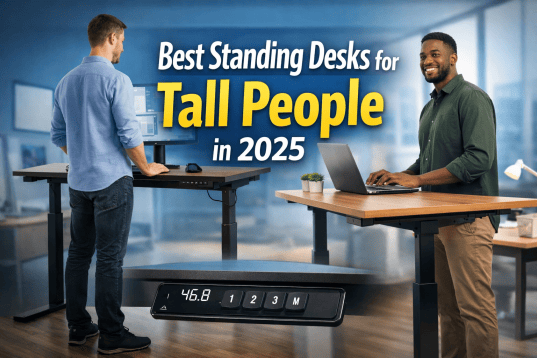
The best standing desk height for tall people plays a critical role in posture, comfort, and long-term productivity. While standing desks have become a popular solution for reducing sedentary time, simply switching to a standing desk does not automatically guarantee better ergonomics. If the desk height is incorrect, standing work can introduce just as many problems as sitting at a poorly adjusted workstation.
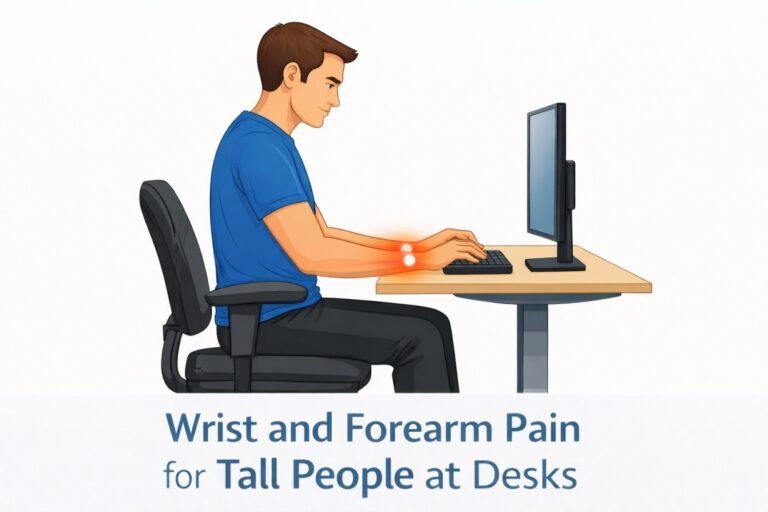
Most standing desks are designed around average-height users. As a result, tall individuals often find themselves leaning forward, bending their wrists, or shrugging their shoulders upward while working. Over time, these subtle posture issues can lead to neck pain, shoulder tension, wrist strain, and lower back discomfort. Understanding the best standing desk height for tall people is essential for building a workspace that supports long-term comfort and health.
Why Standing Desk Height Matters for Tall People
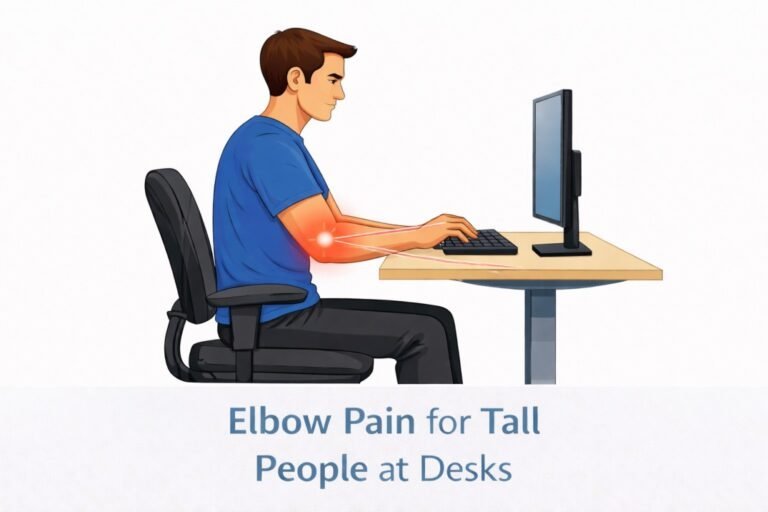
Standing desk height directly affects how your joints align during work. When the desk surface is too low, tall users are forced to hunch forward or bend at the waist, placing unnecessary strain on the spine. When the desk is too high, the shoulders elevate and the wrists bend upward, increasing pressure on the neck and forearms.
For tall people, these issues are often magnified because standard desk height ranges simply do not extend far enough. Even small height mismatches can compound over hours of daily use. Proper standing desk height allows the shoulders to remain relaxed, the elbows to stay close to the body, and the wrists to remain neutral while typing or using a mouse.
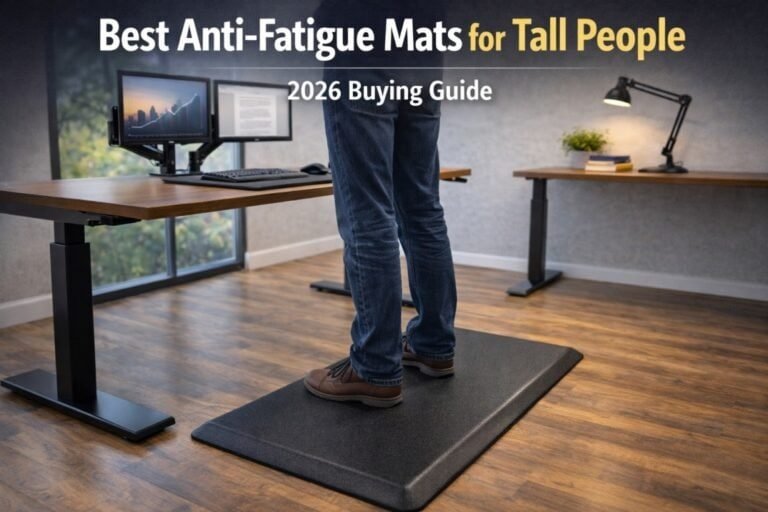
Once desk height is correct, adding one of the best anti-fatigue mats for tall people improves long-term standing comfort.
What Is the Best Standing Desk Height for Tall People?
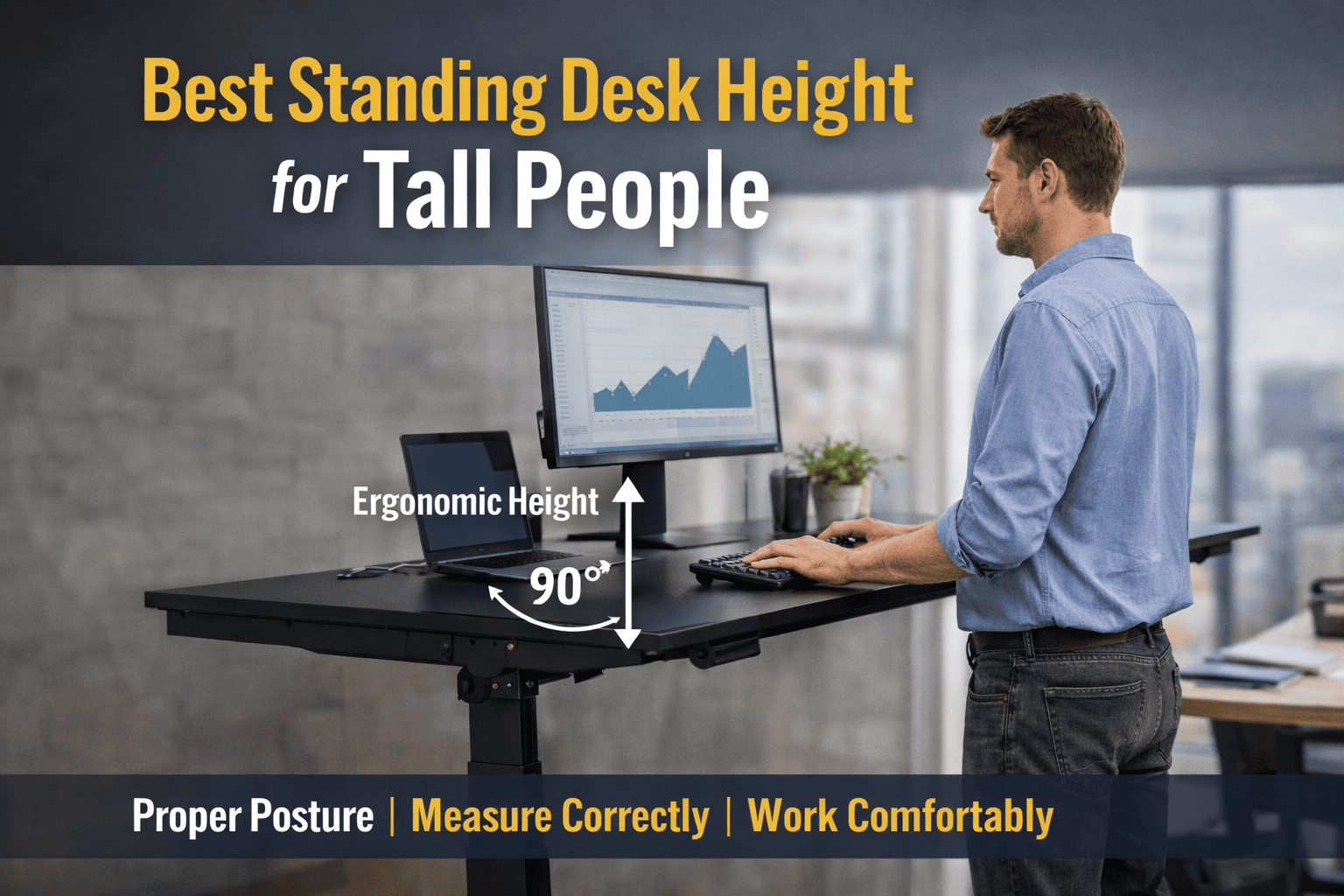
The best standing desk height for tall people is determined by elbow height, not overall body height. When standing comfortably, your desk surface should align closely with the point where your elbows bend at approximately a 90-degree angle.
This position allows your forearms to rest parallel to the floor while keeping your wrists straight and your shoulders relaxed. While general height charts can provide a starting reference, they often fail to account for individual factors such as arm length, torso length, footwear, and posture habits. For tall users, relying solely on preset desk heights frequently results in a setup that feels “almost right” but never fully comfortable.
How to Measure the Best Standing Desk Height for Tall People
Measuring the correct standing desk height is simple and only takes a few minutes. Start by standing upright in your normal working posture with your feet shoulder-width apart and your shoulders relaxed. Avoid locking your knees or leaning forward.
Bend your elbows to approximately 90 degrees and let your arms hang naturally at your sides. Measure the vertical distance from the floor to the bottom of your elbow. This measurement represents your ideal standing desk surface height. Once your desk is adjusted to this level, your forearms should rest comfortably parallel to the floor, and your wrists should remain straight while typing.
If your desk cannot be adjusted to match this measurement, it may not be suitable for a tall user over long periods of standing work.
These measurements align with general ergonomic guidelines recommended by occupational health authorities such as OSHA to reduce strain on the shoulders, neck, and wrists during prolonged standing work.
Standing Desk Height Chart for Tall Users (Reference Only)
Standing desk height charts can be useful as a rough guideline, but they should never replace individual measurements. As a general reference, people over six feet tall often require desk heights that exceed the maximum range of many fixed-height desks.
Height charts do not account for variations in arm length, posture, or footwear. Tall individuals with longer torsos or arms may require significantly higher desk surfaces than charts suggest. Use charts as a starting point, then fine-tune your setup based on comfort and elbow alignment.
For a deeper statistical breakdown, see our full tall desk height data study used to calculate these standing ranges.
Common Standing Desk Height Mistakes Tall People Make
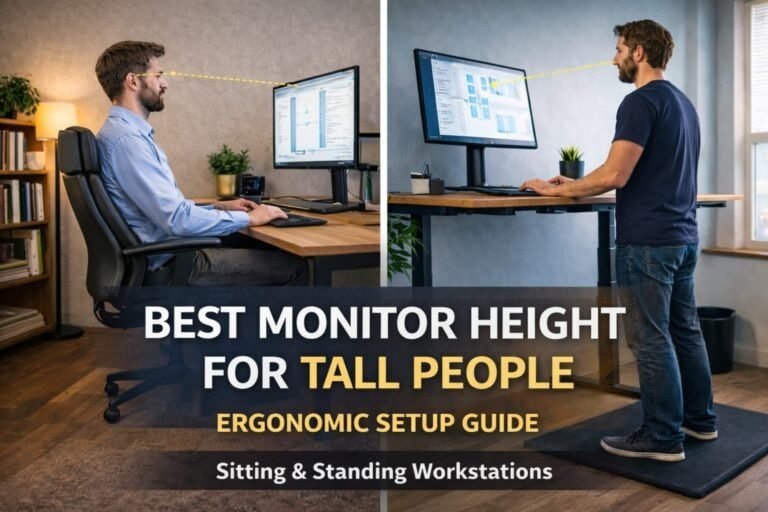
One of the most common mistakes tall people make is setting the desk too low because it “feels manageable” at first. Over time, this leads to forward leaning and lower back strain. Another frequent issue is placing the monitor too low, which causes neck flexion even when the desk height is correct.
Tall users also often lock their knees while standing, which reduces circulation and increases fatigue. Wearing shoes with inconsistent sole thickness can further alter effective desk height throughout the day. Addressing these small factors makes a significant difference in long-term comfort.
Adjustable Standing Desks vs Fixed-Height Desks for Tall People
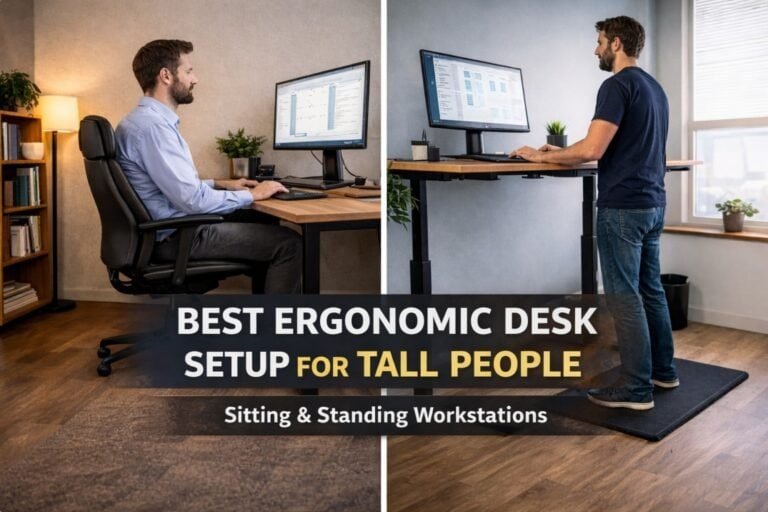
For tall users, adjustable standing desks are almost always the better option. Height-adjustable desks allow fine-tuning based on posture, footwear, and daily comfort changes. They also support transitions between sitting and standing without compromising ergonomics.
Fixed-height desks rarely offer sufficient height for tall people unless they are custom-built. Even then, they lack flexibility for different tasks or shared workspaces. When choosing a standing desk, tall users should verify the maximum height range, not just the advertised average height capability.
If your desk cannot lower enough for proper elbow alignment, one of the best keyboard trays for tall people can help you achieve neutral wrist posture without compromising chair height.
Final Thoughts: Getting the Height Right Long-Term
Finding the best standing desk height for tall people is not about following generic measurements—it is about matching the desk to your body. Proper height alignment reduces strain, supports neutral posture, and allows standing work to deliver its intended health benefits.
If you are building a complete ergonomic setup, desk height should be considered alongside chair height, monitor positioning, and overall workstation layout. For a deeper breakdown of desk height principles for tall users, refer to our complete guide on correct desk height for tall people.