Desk Depth for Tall People: Why Height Alone Is Not Enough
INTRODUCTION
Desk depth for tall people is often overlooked in ergonomic advice, even though height alone does not create a comfortable or healthy workspace.
If your desk is too shallow, you will sit too close to your monitor, pull your shoulders forward, and lose proper arm support — even if the height is perfectly adjusted.
This is where desk depth becomes critical.
In this guide, you’ll learn what desk depth means, why it matters specifically for tall people, and how to choose the right surface size for both sitting and standing desks. While desk depth is often overlooked, it works hand in hand with proper height—if you haven’t already, start with this complete guide to choosing the right desk height for tall people before optimizing surface size.
What Is Desk Depth?
Desk depth refers to the front-to-back surface measurement of a desk, not its height or width.
- Shallow desks force monitors too close
- Deep desks allow proper viewing distance
- Depth determines arm reach, keyboard placement, and posture
For tall users with longer arms and torsos, depth matters as much as height. Choosing the right desk depth for tall people ensures proper monitor distance, relaxed shoulders, and long-term comfort.
Why Desk Depth Matters More for Tall People
Tall people face unique ergonomic challenges:
Longer Arm Reach
Standard desks assume average arm length. Tall users often end up:
- Reaching forward constantly
- Leaning shoulders inward
- Losing elbow support
Monitor Viewing Distance
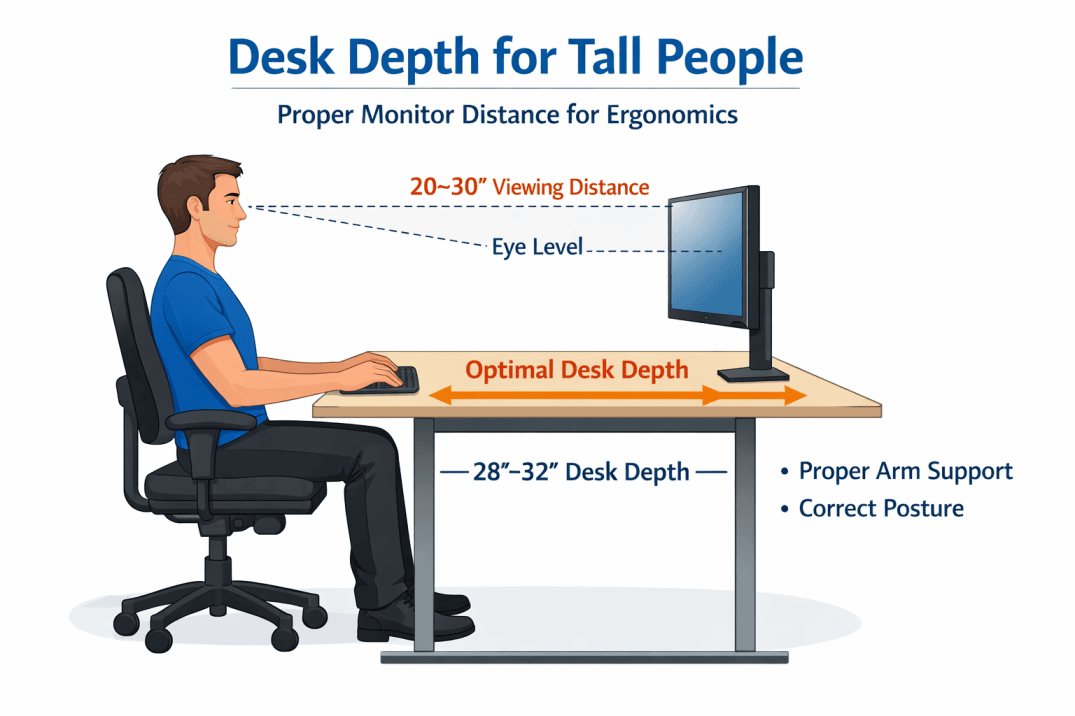
Proper monitor distance is 20–30 inches from your eyes.
Shallow desks make this impossible without:
- Wall mounting
- Extreme monitor arms
- Awkward posture
Proper desk depth also determines how far your screen sits from your eyes, which is why understanding correct monitor height for tall people is just as important as surface size.
Torso Proportion
Tall users usually have:
- Longer torsos
- Higher seated eye level
- Larger movement range
A shallow desk compresses that space.
Without sufficient seat depth, even a deep desk cannot prevent forward lean — which is why office chairs for tall people with extended seat pans are critical.
Ideal Desk Depth for Tall People (Clear Numbers)
Sitting Desk Depth Recommendations
| Height Range | Minimum Depth | Ideal Depth |
|---|---|---|
| 6’0”–6’2” | 28 inches | 30 inches |
| 6’3”–6’5” | 30 inches | 32 inches |
| 6’6”+ | 32 inches | 36 inches |
Standing Desk Depth Recommendations
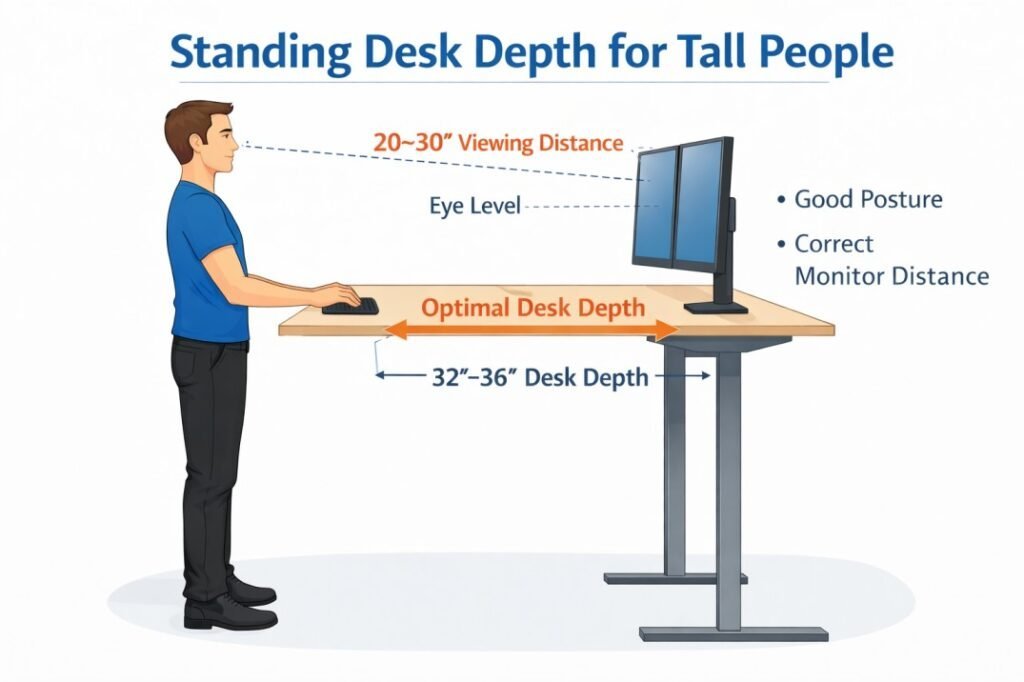
Standing desks require more depth, not less.
| Height Range | Minimum Depth | Ideal Depth |
|---|---|---|
| 6’0”–6’2” | 30 inches | 32 inches |
| 6’3”–6’5” | 32 inches | 36 inches |
| 6’6”+ | 36 inches | 40 inches (if possible) |
Depth alone won’t fix standing posture issues unless the desk is also set correctly, so make sure your setup follows these standing desk height recommendations for tall people.
Desk Depth vs Desk Height — How They Work Together
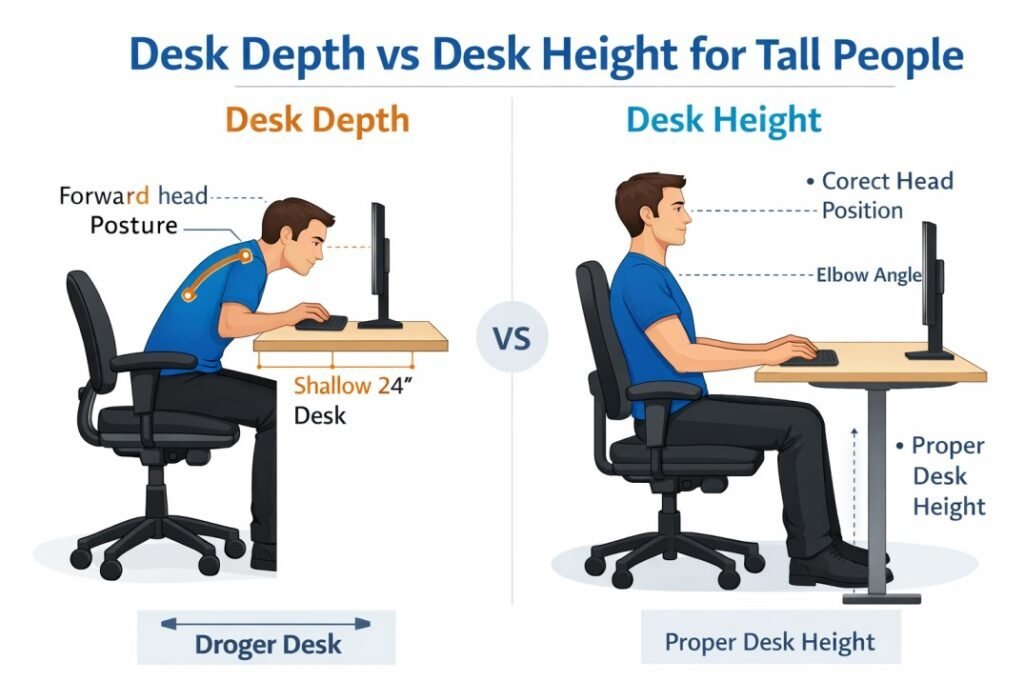
Desk height sets:
- Elbow angle
- Wrist position
Desk depth controls:
- Shoulder posture
- Neck angle
- Monitor distance
A desk with perfect height but insufficient depth will still cause:
- Neck strain
- Upper back tension
- Forward head posture
Desk depth and height should never be adjusted in isolation, and this becomes clear when you look at a complete ergonomic desk setup for tall people rather than individual measurements.
According to general ergonomic workstation guidelines published by OSHA, maintaining proper viewing distance and neutral posture reduces neck and shoulder strain during prolonged desk work.
Common Desk Depth Mistakes Tall People Make
Shallow desk depth forces tall users to sit closer to their screens, which is a major contributor to neck and upper back pain for tall people at desks. Limited desk depth also pushes the keyboard closer to the desk edge, increasing wrist extension and forearm pressure—factors that contribute to wrist pain for tall people at desks and elbow discomfort for tall desk users during prolonged desk work..
Buying “Standard” 24-Inch Desks
Most mass-market desks are 24 inches deep.
For tall people, this is almost always too shallow.
Over-relying on Monitor Arms
Monitor arms help, but they do not replace proper surface depth. This is a common workaround that often creates new posture problems, and it’s one of several standing desk mistakes tall people should avoid when optimizing their workspace.
Ignoring Keyboard and Mouse Space
You need:
- 6–8 inches for keyboard
- 4–6 inches for wrist movement
- Additional space for mouse travel
Desk Depth for Multi-Monitor Setups
If you use:
- Ultrawide monitors
- Dual monitors
- Monitor + laptop
Add 4–6 extra inches beyond minimum depth. If you spend long hours in front of multiple screens, desk depth becomes even more critical, as shown in this guide to the best monitor setup for tall people working long hours.
Desk Depth and Accessories for Tall People
Proper depth allows:
- Monitor risers
- Desk shelves
- Writing space
- Cable management trays
Shallow desks limit accessory usability. A deeper desk also makes it easier to use add-ons correctly, which is why many standing desk accessories for tall people only work well with sufficient surface depth.
Choosing the Right Desk Depth Before You Buy
Before purchasing, check:
- Manufacturer depth specs
- Edge thickness (reduces usable depth)
- Keyboard tray compatibility (often reduces depth)
To avoid ending up with a desk that feels restrictive after a few weeks, compare depth specifications carefully in this buyer’s guide to the best standing desks for tall people.
Final Thoughts — Depth Completes the Ergonomic Equation
Desk height gets attention because it’s visible.
Desk depth is ignored because it’s misunderstood.
For tall people, depth is what allows:
- Proper monitor distance
- Relaxed shoulders
- Sustainable posture
If your desk feels “almost right” but never quite comfortable, desk depth is likely the missing piece.