Elbow Pain for Tall People at Desks: Causes, Fixes, and Ergonomic Setup
INTRODUCTION
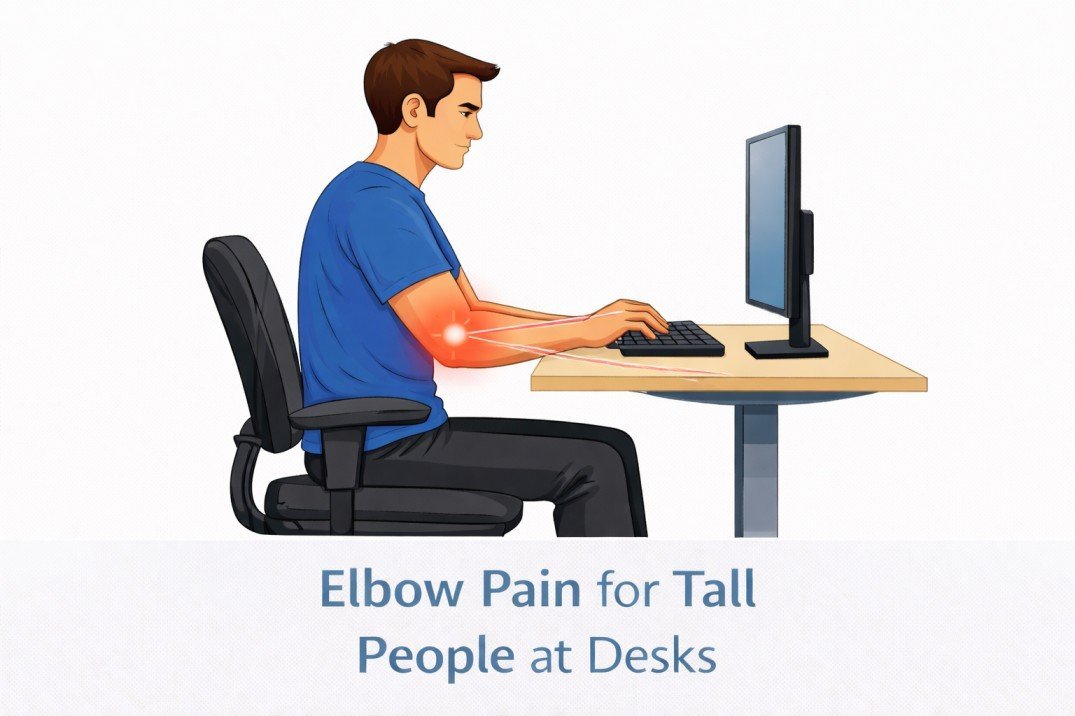
Elbow pain for tall people is a common but frequently misunderstood desk-related issue. For many tall professionals, elbow pain for tall people at desks develops slowly due to improper desk height, unsupported forearms, and prolonged static posture. Unlike wrist or shoulder pain, elbow discomfort often develops gradually as a result of prolonged arm tension and poor support rather than obvious posture problems.
When desks are too low or armrests are misaligned, tall users rely heavily on the muscles and tendons around the elbow joint to stabilize the arms. Over time, this leads to irritation, reduced endurance, and chronic pain that does not improve without correcting the workstation setup.
This guide explains why elbow pain occurs in tall desk users and how to fix it using proper desk height, arm support, and input positioning. In most cases, elbow discomfort begins with incorrect desk height, making it important to understand the best desk height for tall people before adjusting accessories.
Why Tall People Experience Elbow Pain at Desks
Tall users sit higher relative to standard desk surfaces. When the desk does not rise to elbow level:
- Arms angle downward
- Elbows lose passive support
- Forearm muscles stay engaged continuously
- Tendon strain builds around the elbow joint
These issues are especially common when standing desks for tall people are not properly sized or adjusted to match natural elbow height and arm posture, and when chairs for tall people fail to provide adequate seat height and armrest support. This is why elbow pain for tall people is usually a structural issue caused by desk height and arm positioning rather than repetitive motion alone. This same arm misalignment often contributes to wrist pain for tall people, since the forearm and elbow function as a connected system.
Common Desk Setup Mistakes That Trigger Elbow Pain
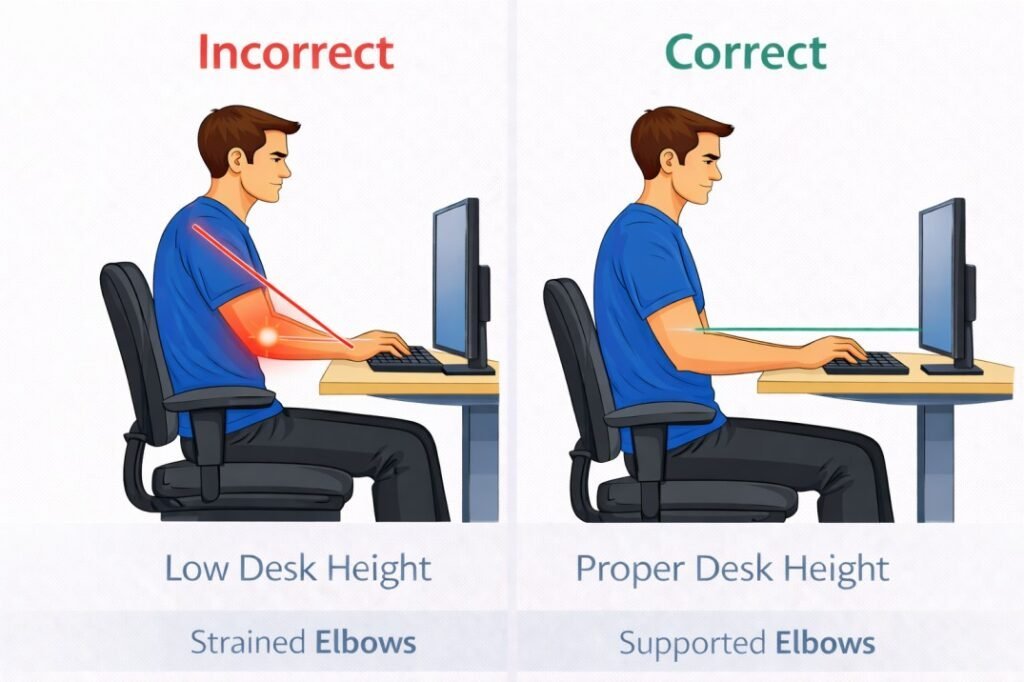
Frequent mistakes include:
- Desk height below seated elbow level
- No forearm or armrest support
- Keyboard positioned too far forward
- Hard desk edges pressing into forearms
Each of these increases load on the elbow joint and surrounding tendons.
Many of these mistakes overlap with the broader standing desk mistakes tall people should avoid, especially when switching between sitting and standing.
Desk Height and Forearm Support — The Primary Fix
Elbow joints function best when forearms are lightly supported and parallel to the floor. For tall users, this requires:
- Desk height aligned with elbow height
- Forearms resting gently on the desk or armrests
- No downward reach to access the keyboard or mouse
If elbows feel sore or fatigued, the desk is almost always too low.
For a full reference on aligning all components correctly, see the best ergonomic desk setup for tall people.
Keyboard, Mouse, and Desk Edge Pressure
Elbow pain is often worsened by pressure points along the forearm.
Key adjustments:
- Keep keyboard close to the desk edge
- Avoid sharp desk edges pressing into forearms
- Ensure mouse height matches keyboard height
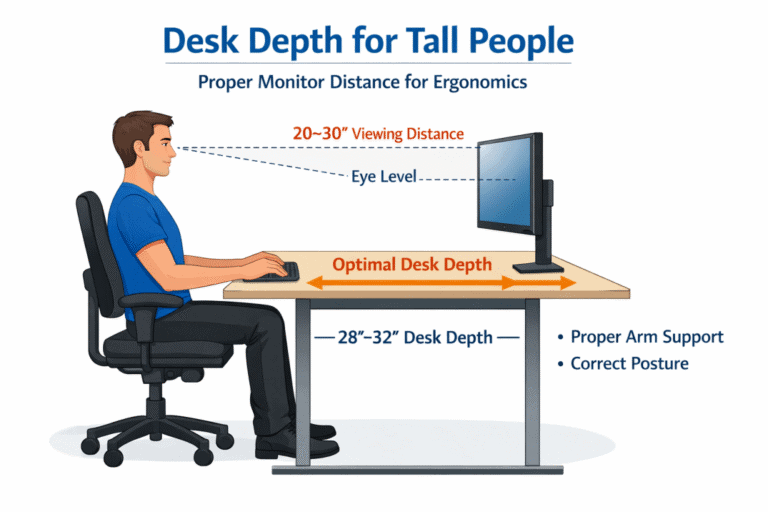
Desk depth plays an important role here, which is explained in our guide on desk depth for tall people.
Sitting vs Standing — How Elbow Load Changes
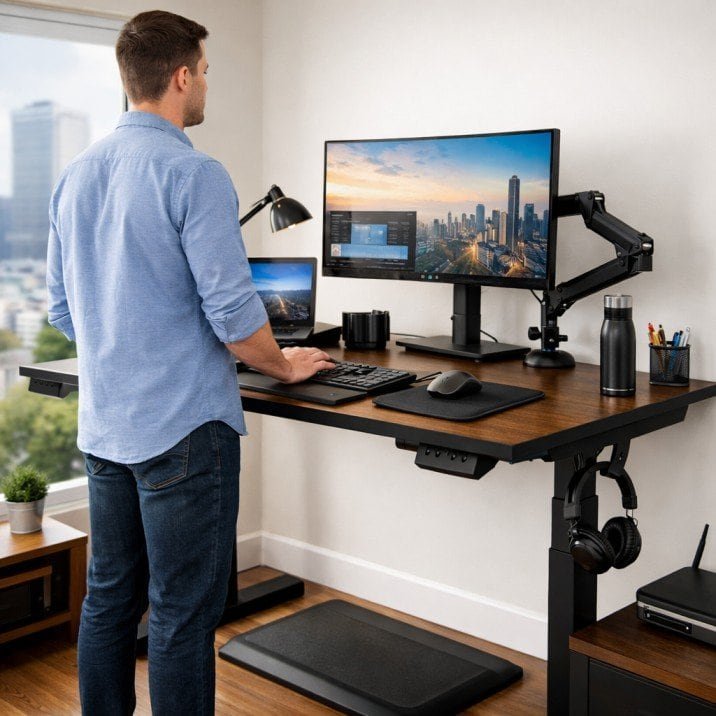
Standing desks can reduce elbow strain only when height is correct. If the desk is too low while standing:
- Forearms angle downward
- Elbow tendons absorb excess load
- Pain may worsen faster than when seated
This is why selecting the best standing desk height for tall people is critical for reducing elbow strain.
When Elbow Pain Signals a Chain Reaction
Elbow pain rarely exists in isolation. It often appears alongside:
- Wrist discomfort
- Shoulder tension
- Upper-arm fatigue
These symptoms typically share the same root cause: improper desk alignment.
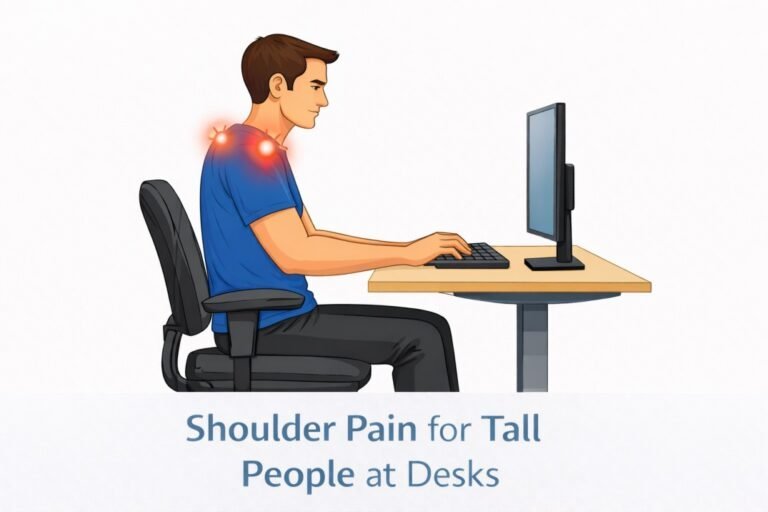
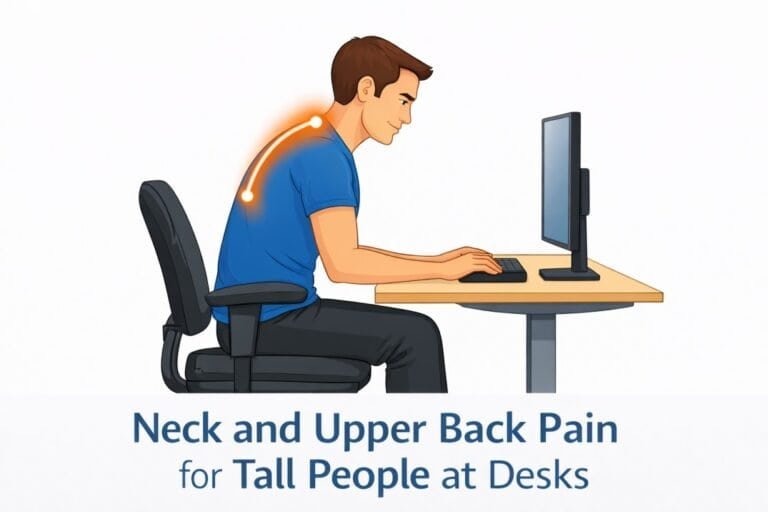
Similar patterns are discussed in our guides on shoulder pain for tall people and neck and upper back pain for tall people at desks.
Evidence-Based Ergonomic Guidance
According to guidance from the National Institute for Occupational Safety and Health (NIOSH), unsupported forearms during prolonged desk work significantly increase mechanical stress on the elbow joint and surrounding tendons.
Final Thoughts — Fix the Desk, Not the Elbows
In most cases, elbow pain for tall people resolves once desk height, forearm support, and input positioning are properly aligned.
Tall users do not need braces or exercises as a first step — they need desks and accessories that match their body dimensions.