Neck and Upper Back Pain for Tall People at Desks: Causes and Fixes
INTRODUCTION
Neck and upper back pain for tall people at desks is extremely common, yet most ergonomic advice is designed for average-height users.
When a desk, monitor, or chair is even slightly undersized, tall users are forced into forward head posture, rounded shoulders, and constant muscle tension. Over time, this leads to stiffness, fatigue, and persistent discomfort during desk work. This is why neck and upper back pain for tall people is most often caused by workstation design rather than physical weakness or poor posture habits.
In this guide, we’ll break down the real causes of neck and upper back pain for tall desk workers and show you practical, ergonomic fixes that actually work. Many of these issues start with improper desk sizing, which is why understanding the correct desk height for tall people is the first step toward reducing neck and upper back strain.
Why Tall People Experience More Neck and Upper Back Pain at Desks
Tall people are not more “fragile.” The problem is scale mismatch.
Forward Head Posture — The Hidden Neck Strain for Tall Users
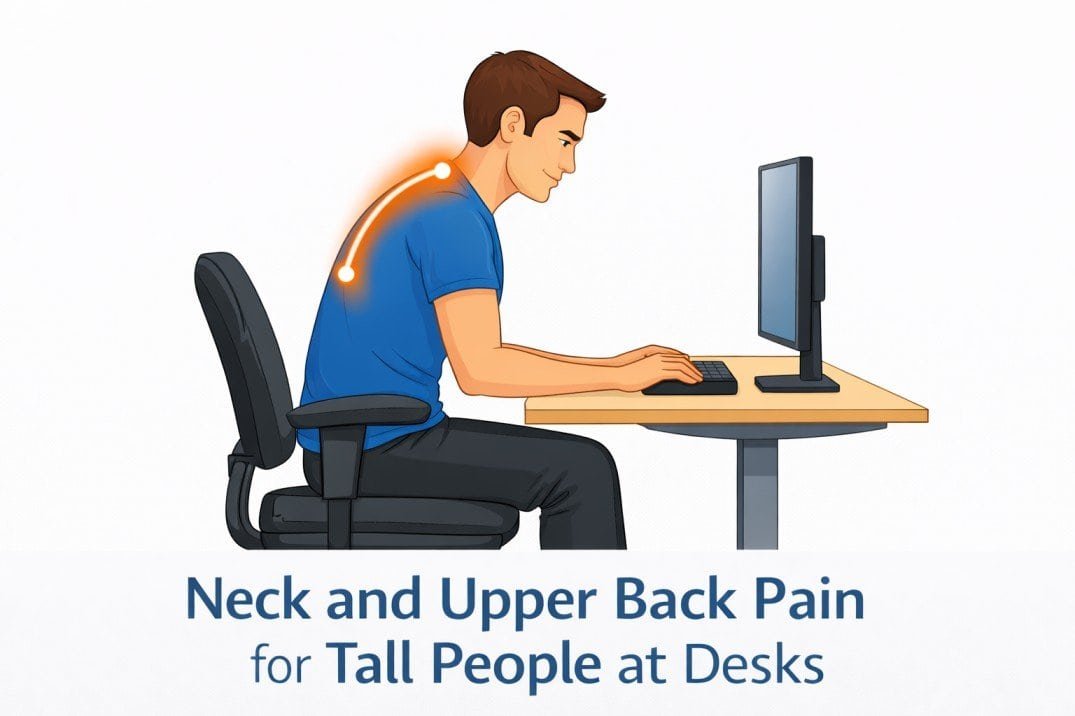
For tall people, neck pain often develops from subtle forward head posture rather than obvious slouching. When monitors sit too low or too close, the head gradually shifts forward to maintain screen visibility. This increases the load on the cervical spine and surrounding muscles, even when posture appears “mostly upright.”
Because the head weighs several kilograms, even a small forward shift significantly increases neck and upper back muscle strain over time. This is why neck and upper back pain for tall people often worsens during long desk sessions, despite regular breaks or stretching.
In many cases, ergonomic chairs for tall users provide the foundational support needed to maintain upright posture and reduce chronic neck and upper back strain.
Standard Desk Dimensions Are Too Small
Most desks are built for users between 5’7” and 5’10”. For taller users, this causes:
- Elevated shoulders
- Shrugging during typing
- Constant neck tension
Monitors Sit Too Low and Too Close
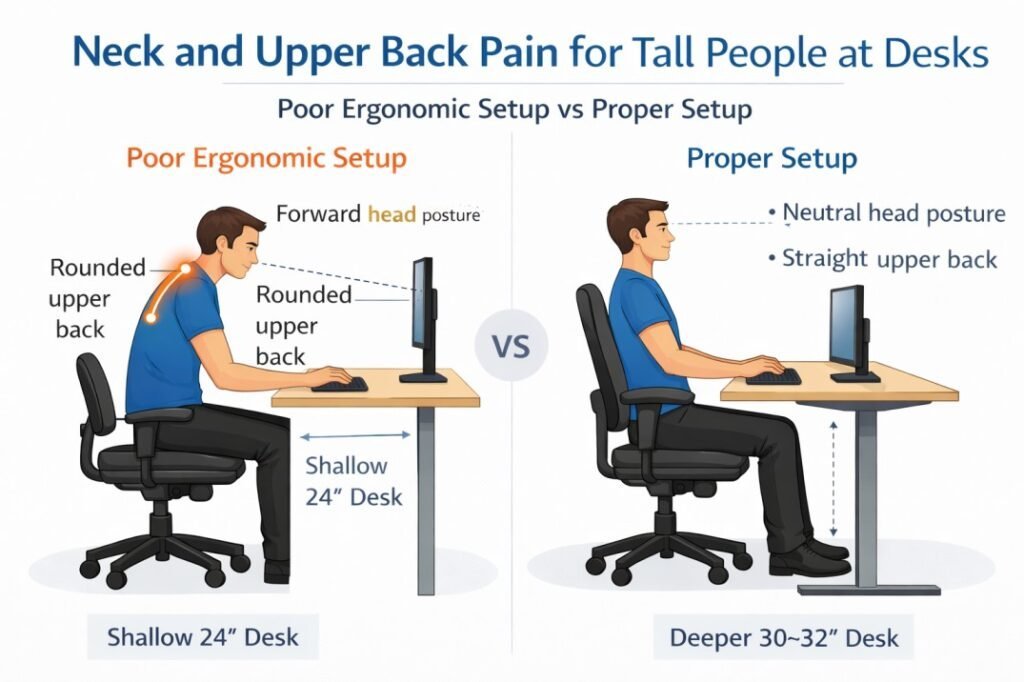
A shallow or low desk forces tall users to:
- Lean forward
- Tilt the head downward
- Compress the upper spine
When screens are positioned incorrectly, tall users are forced into forward head posture, making proper monitor height for tall people a critical part of pain prevention.
This is why neck and upper back pain for tall people at desks is usually a setup problem rather than a medical one.
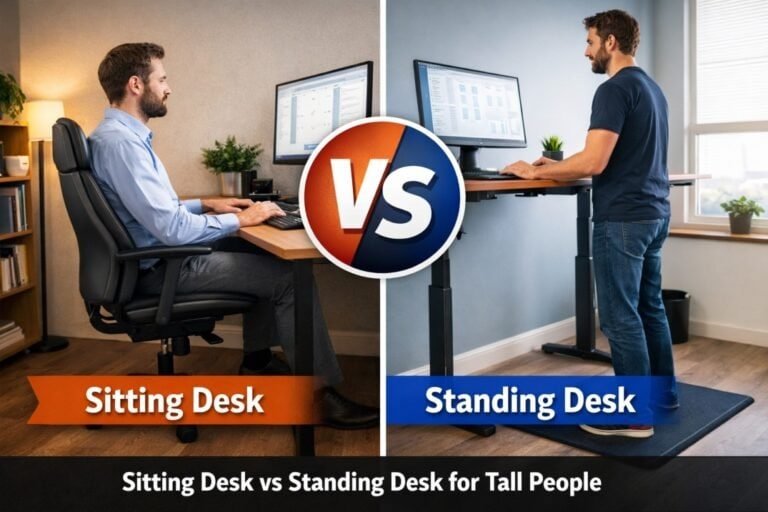
In many cases, the root cause is not the standing position itself but a desk that does not scale properly for taller users, which is why understanding how standing desks for tall people should be sized and set up is essential for preventing neck and upper back strain.
The Most Common Desk Setup Mistakes Causing Pain
Incorrect Desk Height
If your desk is too low:
- Shoulders round forward
- Traps stay engaged all day
- Upper back tightens quickly
This problem becomes even more noticeable with adjustable desks, which is why following standing desk height guidelines for tall people is essential for maintaining relaxed shoulders.
Insufficient Desk Depth
Shallow desks force monitors closer than the recommended 20–30 inches, increasing neck strain. A shallow work surface limits monitor distance, which is a common issue explained in detail in this guide to desk depth for tall people.
Poor Chair–Desk Alignment
Even a good chair fails if:
- Seat height doesn’t match desk height
- Armrests don’t support elbows
- Backrest doesn’t support the thoracic spine
Without proper seat height and back support, even a well-sized desk can cause discomfort, which is why choosing from the best office chairs for tall people matters.
How to Fix Neck and Upper Back Pain for Tall Desk Workers
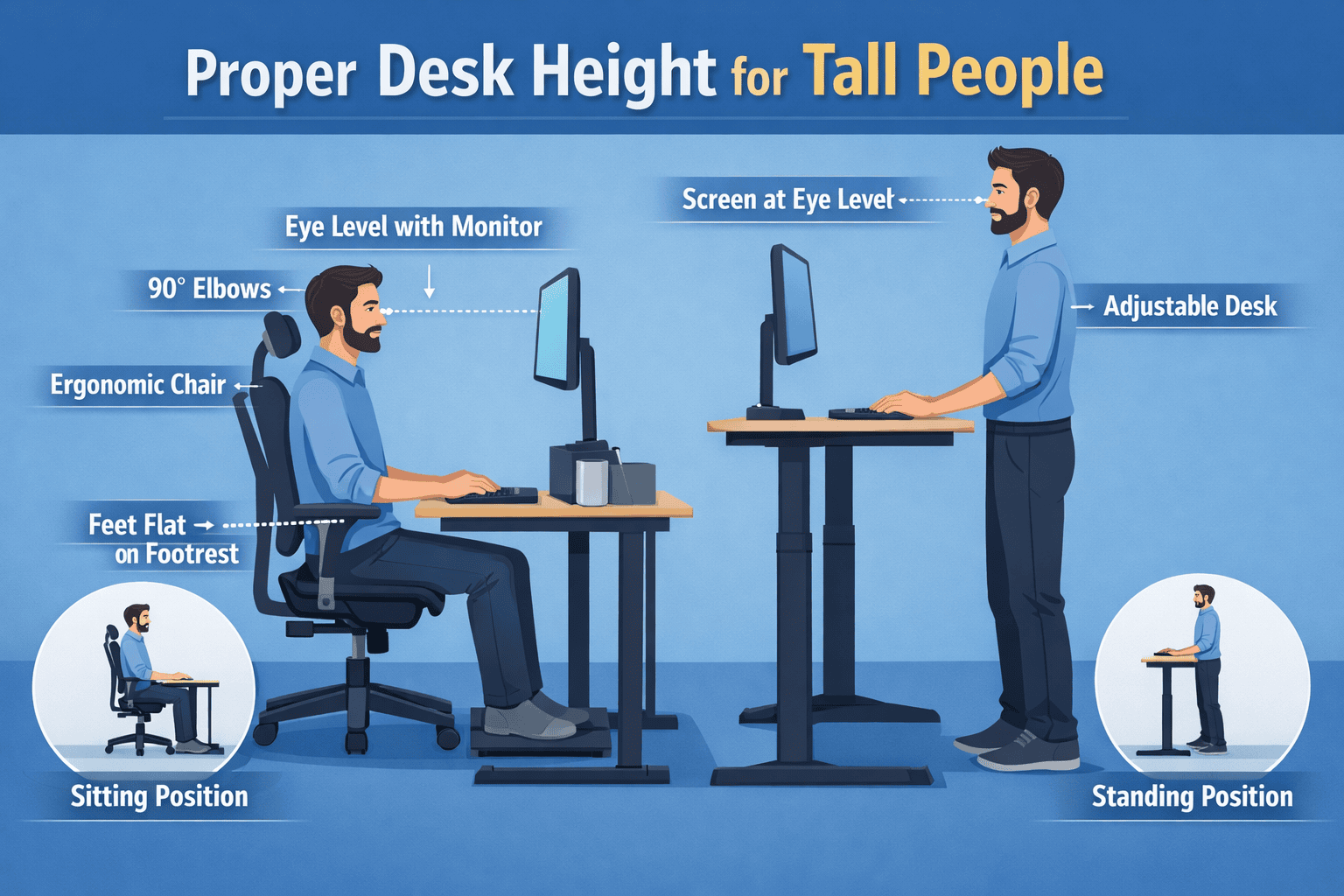
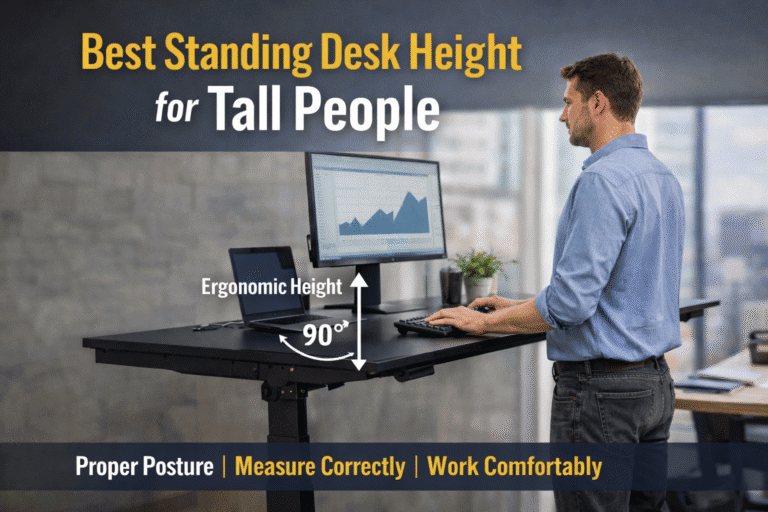
Set Desk Height First
Your elbows should sit:
- At or slightly above desk height
- At a 90–100° angle
- With relaxed shoulders
This applies to both sitting and standing desks. These adjustments work best when viewed as part of a complete ergonomic desk setup for tall people, rather than isolated changes.
Increase Desk Depth for Proper Monitor Distance
Aim for:
- Minimum 30–32 inches depth (sitting)
- 32–36 inches depth (standing)
This allows proper screen distance without leaning forward.
Raise and Reposition the Monitor
Monitor setup rules for tall users:
- Top of screen at or slightly below eye level
- Screen centered, not angled downward
- Distance maintained without leaning
For those working extended hours, this becomes even more important, as outlined in the best monitor setup for tall people working long hours.
Monitor Height and Neck Angle — Why Small Adjustments Matter
For tall users, monitor height errors are amplified. A screen positioned just a few inches too low can force the neck into sustained flexion throughout the workday. Over time, this leads to stiffness, reduced range of motion, and persistent neck tension.
The goal is to keep the head stacked directly over the shoulders, with the eyes naturally aligned to the upper portion of the screen. When this alignment is achieved, neck muscles remain relaxed rather than constantly engaged.
Use a Chair Designed for Tall People
Key chair features:
- Higher seat height range
- Adjustable lumbar and upper-back support
- Longer seat depth
Generic chairs often worsen pain.
For many tall users, reducing neck and shoulder strain also depends on using the right desk accessories for tall people with neck and shoulder pain, especially monitor arms and forearm support that maintain proper alignment.
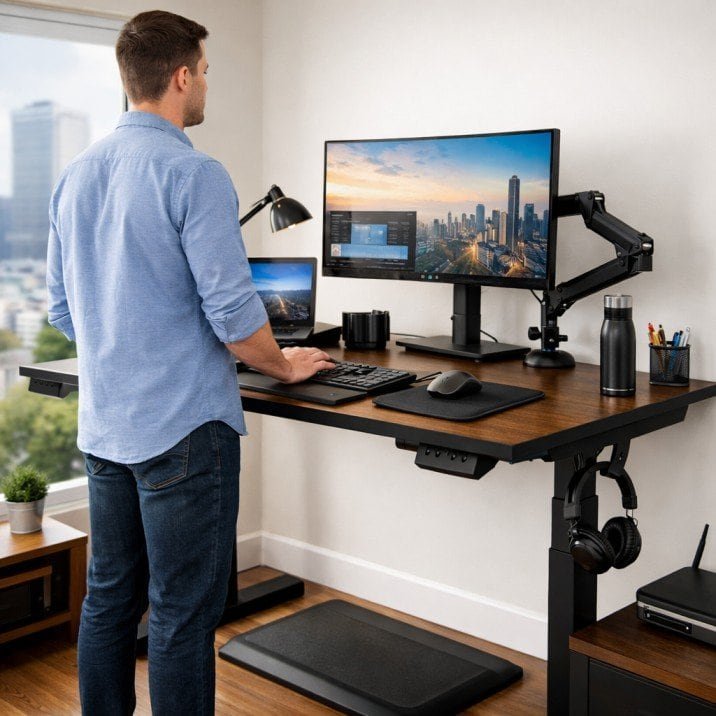
Standing Desk Use and Neck Pain — What to Watch Out For
Standing desks help only if used correctly.
Common mistakes include:
- Standing too close to the desk
- Looking down at a laptop
- Locking knees and leaning forward
Many of these issues stem from positioning errors that are commonly listed among the standing desk mistakes tall people should avoid.
How Neck and Upper Back Pain Connects to Arm Discomfort
Neck and upper back pain rarely exists in isolation. When posture breaks down, strain often spreads through the shoulders, elbows, and wrists. Tall users may notice arm fatigue or joint discomfort before recognizing neck tension as the root cause.
This chain reaction reinforces the importance of treating the workstation as a complete system rather than addressing individual symptoms in isolation.
When Pain Is a Setup Problem — Not a Medical Issue
In many cases, neck and upper back pain improves significantly once:
- Desk height is corrected
- Desk depth is sufficient
- Monitor position is optimized
According to ergonomic workstation guidance published by OSHA, neutral posture and proper viewing distance are critical for reducing neck and shoulder strain during prolonged desk work.
Final Thoughts — Fix the Setup, Not Just the Symptoms
Stretching and breaks help, but they don’t fix a poor desk setup.
For tall people, neck and upper back pain at desks is usually caused by:
- Incorrect desk height
- Insufficient desk depth
- Poor monitor positioning
In most cases, neck and upper back pain for tall people at desks improves dramatically once desk height, desk depth, and monitor positioning are corrected together. Fix the workspace first. Your body will follow.