Shoulder Pain for Tall People at Desks: Causes, Fixes, and Ergonomic Setup
INTRODUCTION
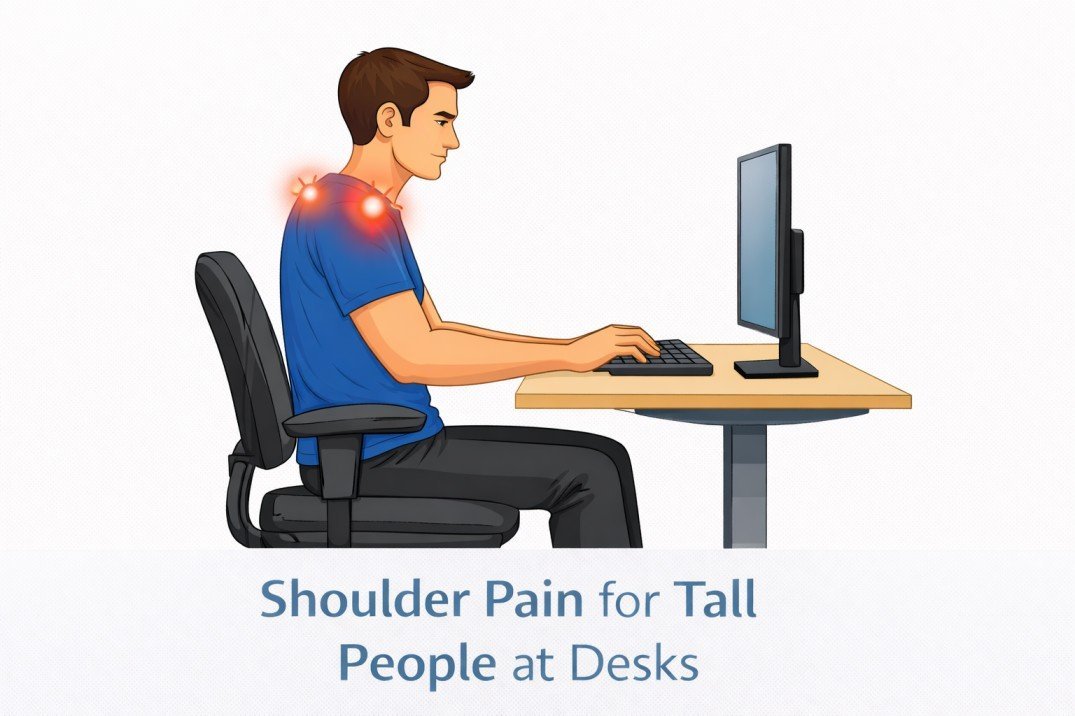
Shoulder pain for tall people is one of the most overlooked consequences of working at desks designed for average-height users. When desk height, monitor position, and arm support are misaligned, shoulder muscles remain constantly engaged instead of relaxed.
Over time, this leads to tension, reduced range of motion, and chronic discomfort that does not improve with posture corrections alone. The real issue is almost always ergonomic mismatch, not physical weakness.
This guide explains why shoulder pain develops for tall users and how to fix it using proper desk height, monitor placement, and arm positioning. Shoulder strain often begins with incorrect desk height, which is why understanding the best desk height for tall people is essential.
Why Tall People Experience Shoulder Pain at Desks
Tall users naturally sit higher relative to the desk surface. When desks are too low:
- Shoulders elevate unconsciously
- Upper trapezius muscles stay engaged
- Arm weight is unsupported
- Tension accumulates throughout the workday
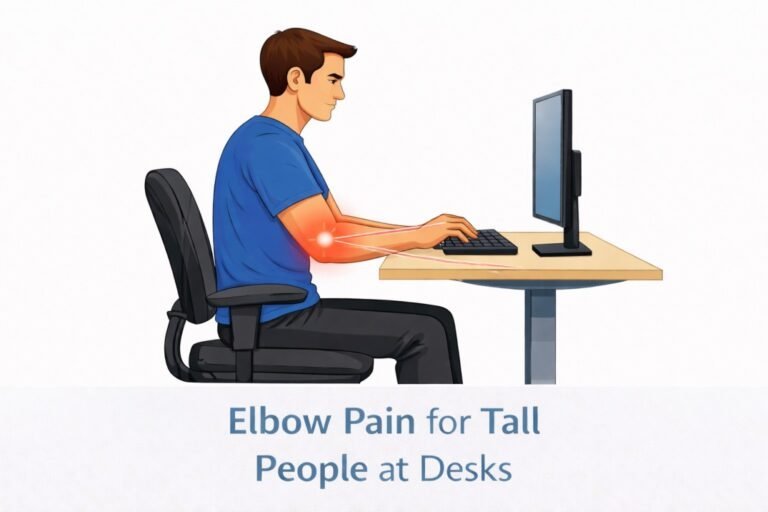
This is why shoulder pain for tall people is strongly correlated with desk height and arm positioning rather than posture alone. This same height mismatch also contributes to wrist pain for tall people, as the entire arm chain becomes misaligned.
Common Desk Setup Mistakes That Cause Shoulder Pain
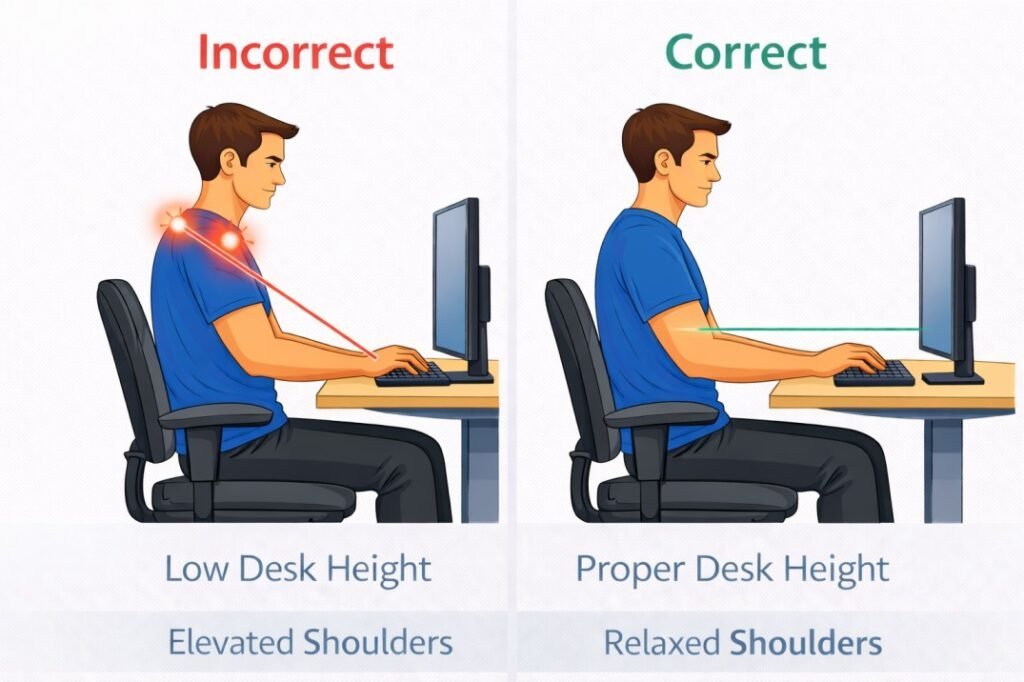
The most common mistakes:
- Desk surface below seated elbow height
- Armrests set too low or removed entirely
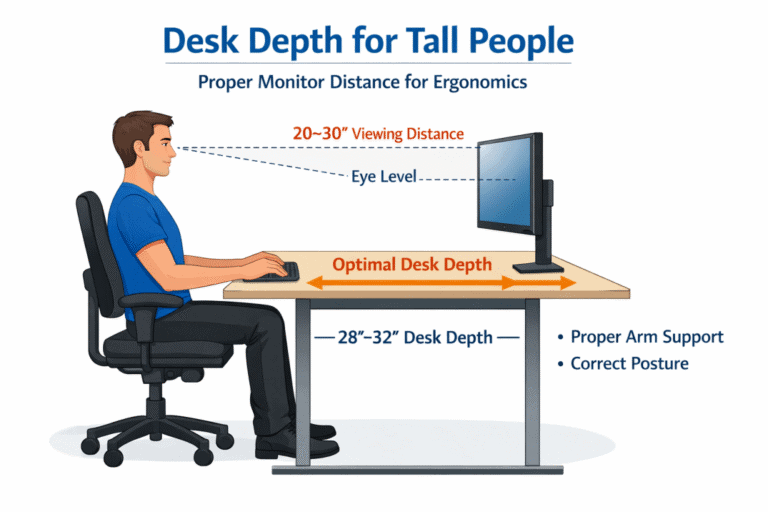
- Monitor positioned too far forward
- Keyboard placed too far from the body
Each of these forces shoulder muscles to compensate continuously.
Many of these issues are explained further in our breakdown of standing desk mistakes tall people should avoid.
Desk Height and Arm Support — The Primary Fix
For tall users, shoulders should remain relaxed and neutral while typing. This is only possible when:
- Desk height aligns with elbow height
- Forearms rest lightly on the desk or armrests
- Shoulders are not lifted or shrugged
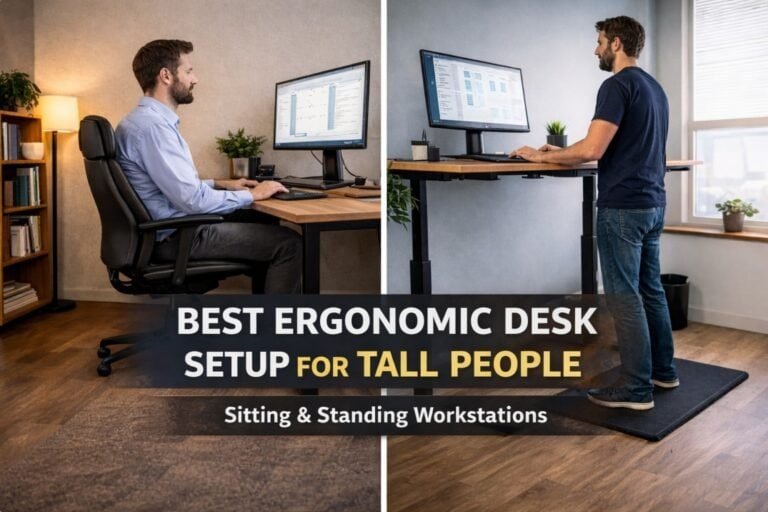
If shoulders feel tense within minutes, the desk is almost always too low. For a complete setup reference, see our guide on the best ergonomic desk setup for tall people.
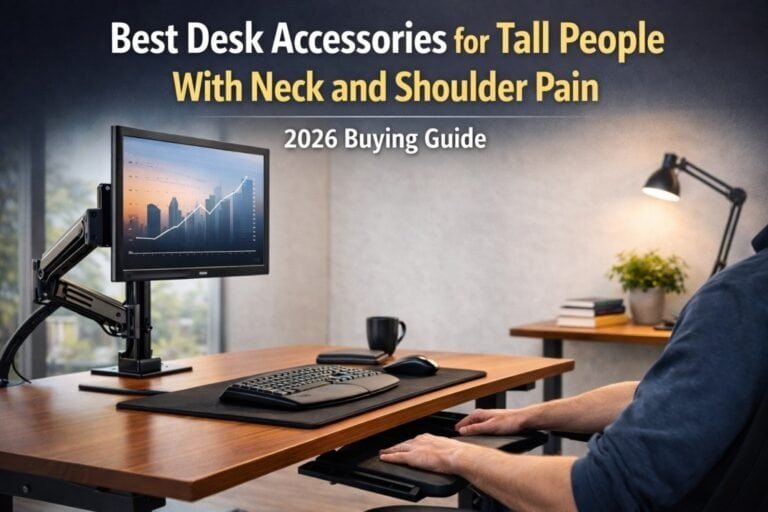
In addition to correcting desk height, many tall users benefit from targeted desk accessories designed to reduce neck and shoulder pain, such as adjustable monitor arms and properly positioned input supports.
Monitor Position and Its Impact on Shoulder Tension
Monitors that are:
- Too low
- Too far away
- Off-center
force tall users to reach forward or tilt the upper body, activating shoulder stabilizers unnecessarily. Proper screen alignment is covered in detail in our guide to the best monitor setup for tall people working long hours.
Sitting vs Standing — How Shoulder Load Changes
Standing desks can reduce shoulder pain only if adjusted correctly. If the desk is too low while standing:
- Shoulders elevate
- Arm weight increases muscle load
- Fatigue builds faster than when seated
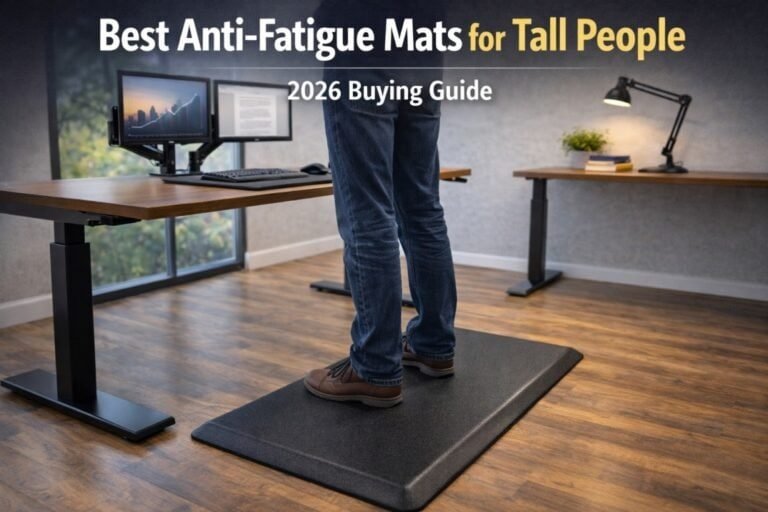
This is why choosing the best standing desk height for tall people is critical for shoulder health.
When Shoulder Pain Signals a Broader Ergonomic Problem
Persistent shoulder pain often appears alongside:
- Neck stiffness
- Upper back discomfort
- Reduced arm endurance
These symptoms usually share the same root cause: poor desk alignment.
Similar warning patterns are discussed in our guide on neck and upper back pain for tall people at desks.
Evidence-Based Ergonomic Guidance
According to occupational ergonomics research, sustained shoulder elevation significantly increases muscle fatigue and risk of chronic pain during desk work. Ergonomic studies show that unsupported arm elevation during computer work increases shoulder muscle activity and fatigue over time.
How Chair Height and Armrests Affect Shoulder Pain
Chair height and armrest positioning play a critical supporting role in reducing shoulder pain for tall people who work at desks for long hours. When a chair sits too low relative to the desk surface, tall users are forced to lift their shoulders slightly to reach the keyboard, even if the desk height itself seems reasonable. Over time, this constant elevation creates muscle tension and fatigue in the shoulders and upper arms.
Armrests that are too low, too narrow, or poorly aligned worsen the problem by failing to support the natural weight of the arms. For tall individuals, the chair should allow feet to rest flat on the floor while keeping elbows level with the desk surface. Armrests should provide light forearm support without pushing the shoulders upward or outward. When desk height and stability are not designed for taller body proportions, shoulder muscles remain engaged all day, a problem commonly seen with improperly sized standing desks for tall people. Chair height, armrests, and desk height work together to reduce shoulder strain significantly.
Final Thoughts — Fix the Desk, Not Your Shoulders
In most cases, shoulder pain for tall people resolves once desk height, arm support, and monitor placement are corrected.
Tall users do not need special exercises or posture training — they need workstations that fit their body dimensions.