Standing Desk vs Sitting Desk for Tall People: Which Is Better?
Introduction
Choosing between a standing desk and a sitting desk is not a simple decision—especially for tall people. While both options can support productivity, the wrong choice or poor setup can lead to discomfort, posture issues, and long-term strain.
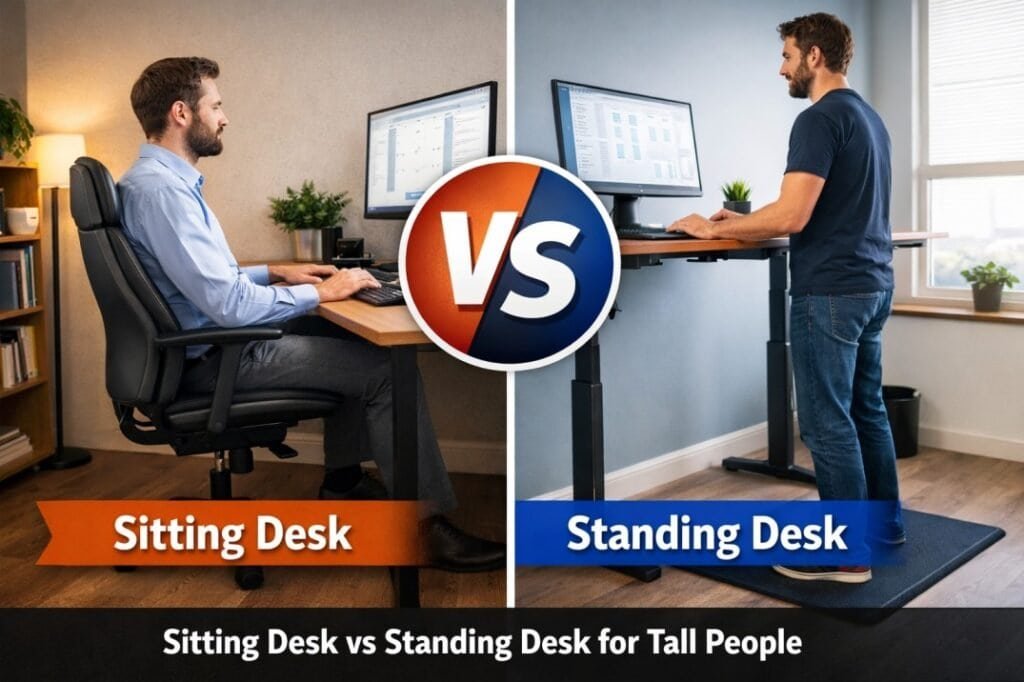
This comparison of standing desk vs sitting desk for tall people breaks down the advantages, limitations, and ergonomic considerations of each option. By understanding how desk height, posture, and movement affect taller users, you can make an informed decision that supports comfort, health, and long-term productivity.
Why Desk Choice Matters More for Tall People
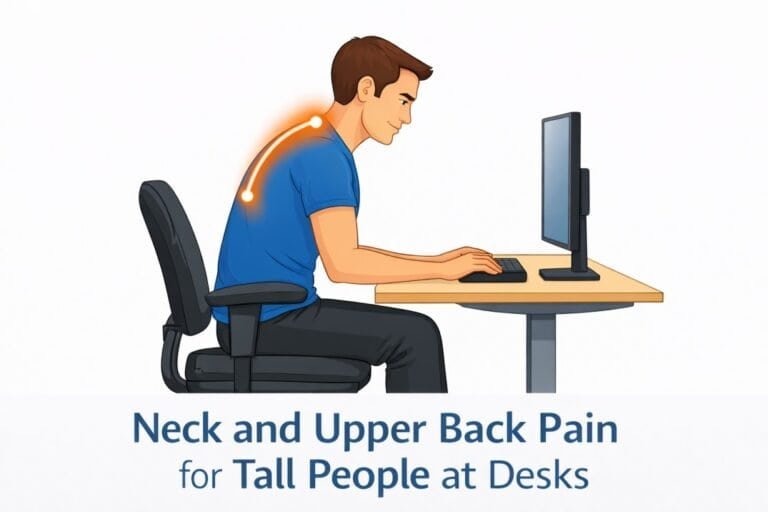
Most desks are designed around average-height users, which often creates ergonomic challenges for taller individuals. When desk height does not align with elbow height, tall users may compensate by slouching, raising their shoulders, or leaning forward.
Over time, these adjustments can lead to neck strain, shoulder discomfort, wrist pain, and lower back issues. Whether sitting or standing, tall users must prioritize desks that offer sufficient height range and allow neutral joint positioning throughout the workday.
According to ergonomic research published by the Mayo Clinic, alternating between sitting and standing can help reduce musculoskeletal strain and improve overall workplace comfort.
Sitting Desks for Tall People — Pros and Cons
Benefits of Sitting Desks
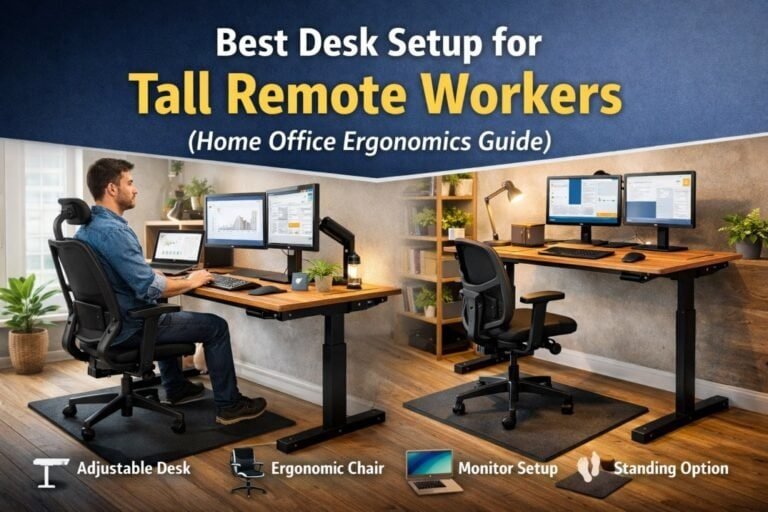
Sitting desks can work well for tall people when paired with proper chairs and accessories. A seated workstation allows users to reduce leg fatigue and maintain stability during focused tasks.
Key advantages include:
- Reduced lower-body fatigue
- Easier typing and precision tasks
- Lower learning curve for new setups
However, sitting desks must be paired with chairs designed for tall users and desks that provide adequate knee clearance and surface height.
Limitations of Sitting Desks
Many fixed-height sitting desks are too low for tall users, forcing awkward posture. Extended sitting can also increase hip tightness and reduce circulation if not balanced with movement.
Without proper ergonomics, sitting desks may contribute to:
- Rounded shoulders
- Forward head posture
- Reduced mobility over time
Standing Desks for Tall People — Pros and Cons
Benefits of Standing Desks
Standing desks offer tall users the opportunity to maintain a more open posture and reduce prolonged sitting. When adjusted correctly, standing desks can support neutral spine alignment and improved circulation.
Advantages include:
- Better posture potential
- Increased movement throughout the day
- Reduced pressure on hips and lower back
Standing desks are particularly beneficial when they provide a high maximum height range suitable for taller users.
Limitations of Standing Desks
Standing all day is not ideal. Tall users may experience leg fatigue or back discomfort if they stand continuously without breaks or proper accessories.
Common issues include:
- Knee locking
- Foot fatigue without anti-fatigue mats
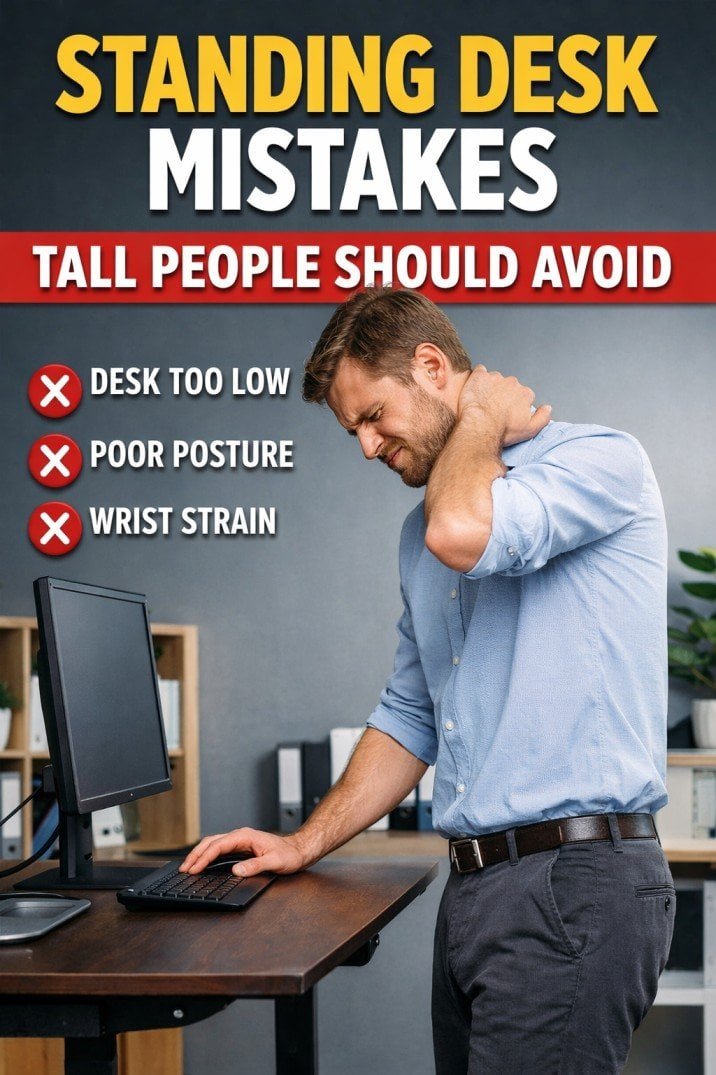
- Poor setup leading to wrist or shoulder strain
This reinforces why avoiding standing desk mistakes for tall people is essential for long-term comfort.
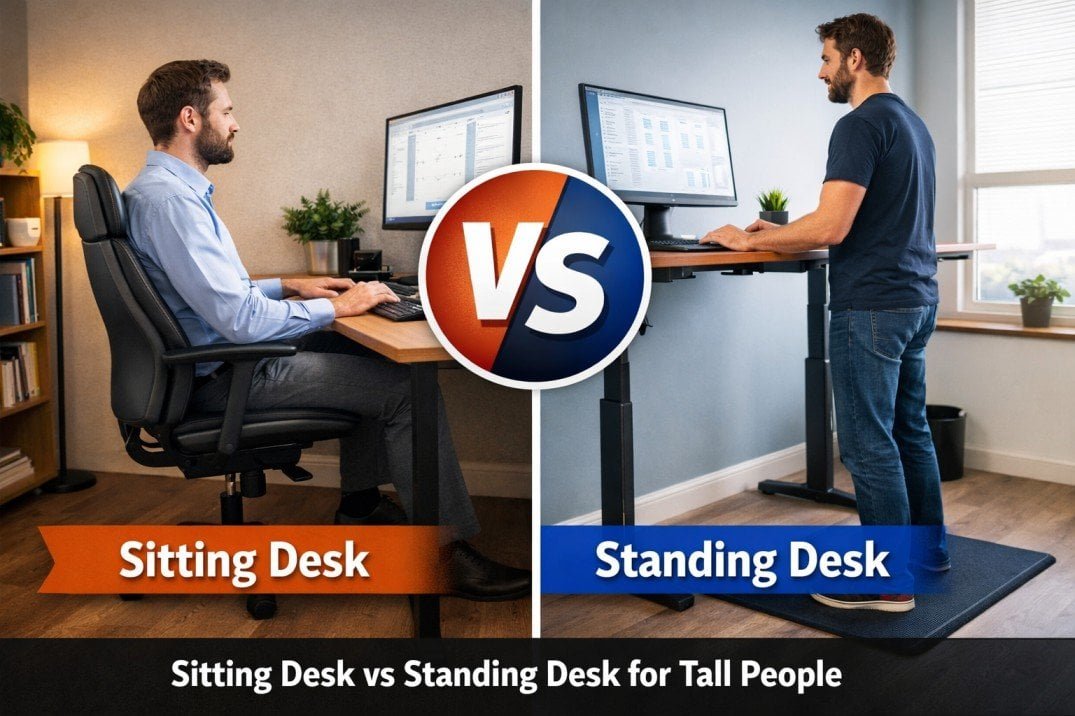
Standing Desk vs Sitting Desk for Tall People — Key Comparison
When comparing a standing desk vs sitting desk for tall people, the decision often comes down to flexibility and adjustability.
- Sitting desks favor stability and endurance for long tasks
- Standing desks promote movement and posture awareness
- Adjustable desks combine both benefits when height range is sufficient
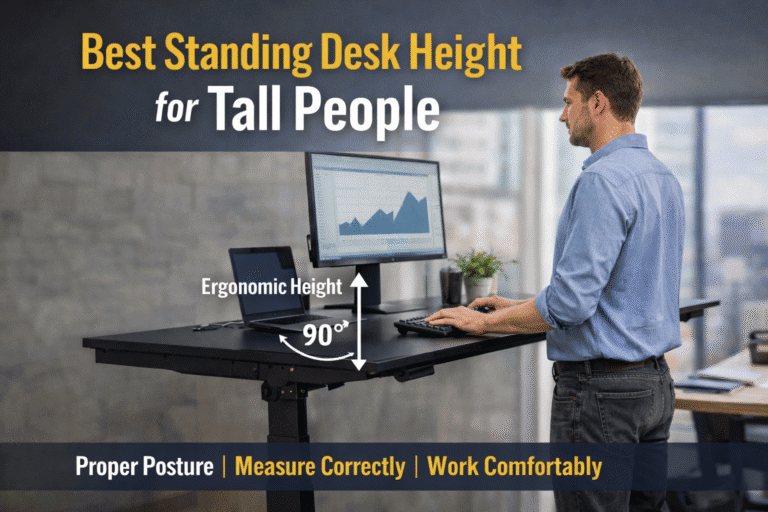
For tall users, the best option is often a height-adjustable desk that allows seamless transitions between sitting and standing. Understanding the ideal desk height for tall people is essential, as incorrect height settings can negate the ergonomic benefits of both sitting and standing work.
Which Option Is Better for Long-Term Health?
Neither sitting nor standing alone is the perfect solution. Research consistently shows that alternating positions throughout the day reduces strain and improves comfort.
Tall users benefit most from:
- Adjustable desks with wide height ranges
- Proper monitor positioning
- Alternating between sitting and standing every 30–60 minutes
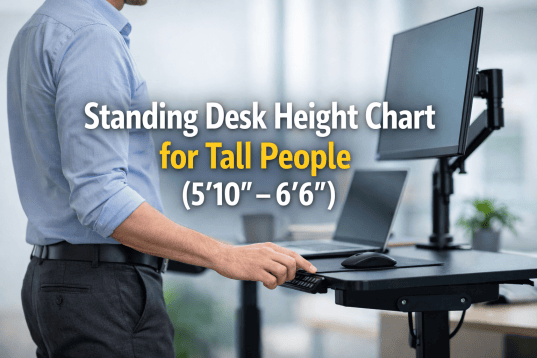
Understanding proper standing desk height for tall people plays a critical role in making either option effective.
How to Choose the Right Desk Based on Your Work Style
Consider the following when deciding:
- Your height and elbow measurement
- Type of work performed daily
- Available space and accessories
- Budget and long-term usability
If you work long hours at a desk, flexibility should be a top priority. A desk that supports both sitting and standing allows tall users to adapt their posture throughout the day.
Conclusion
The debate between a standing desk vs sitting desk for tall people is not about choosing one over the other—it is about choosing adaptability. Tall users face unique ergonomic challenges, and desk height plays a critical role in comfort and productivity.
By selecting equipment that accommodates your height, prioritizing proper posture, and alternating positions throughout the day, you can build a workstation that supports long-term health and performance.