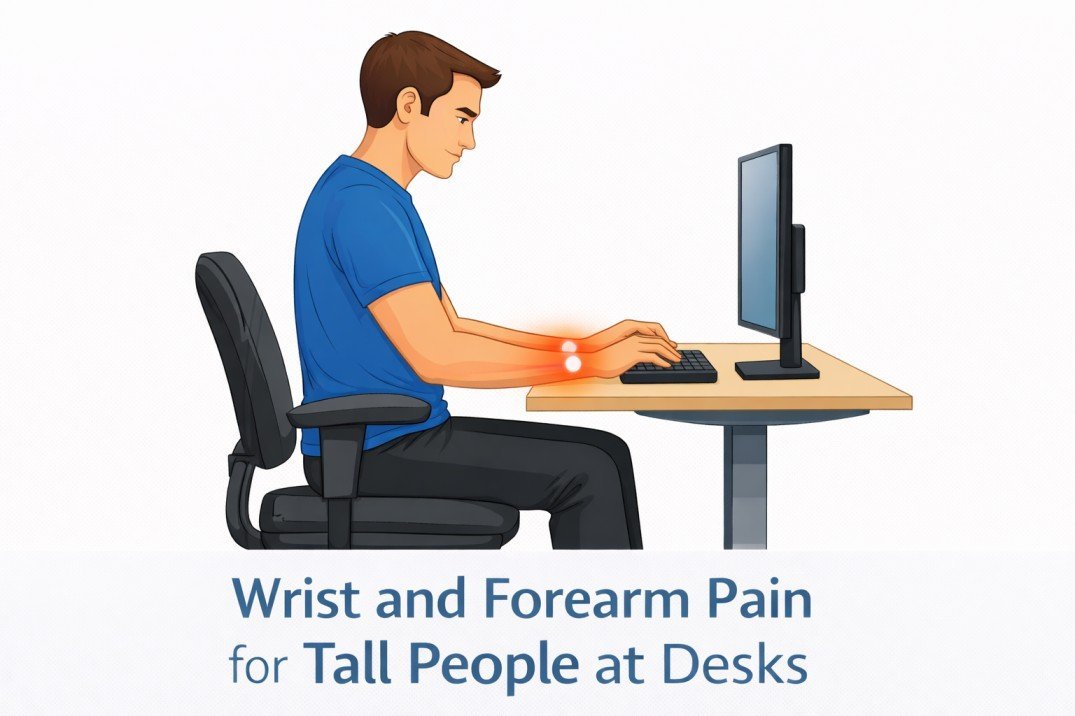
Wrist and Forearm Pain for Tall People at Desks: Causes and Fixes That Work
INTRODUCTION
Wrist pain for tall people is one of the most common consequences of using desks designed for average-height users. The reason is simple: most desks, keyboards, and arm positions are designed around average-height users.
When desk height is too low, forearms angle downward, wrists bend upward, and pressure builds through the carpal tunnel and forearm muscles. Over time, this leads to discomfort, numbness, and reduced productivity.
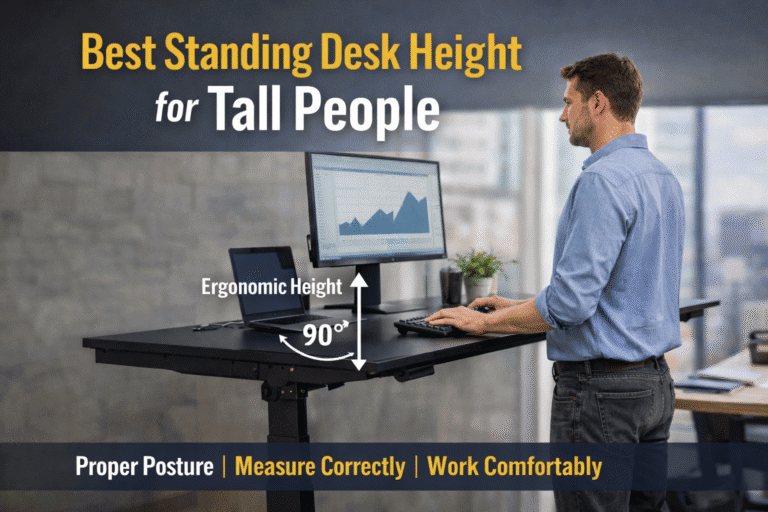
This guide explains why wrist and forearm pain for tall people at desks happens, and how to fix it using proper desk height, keyboard positioning, and arm support — without medical guesswork. This issue often starts with incorrect desk height, which is why understanding the best desk height for tall people is critical before adjusting accessories.
Why Tall People Experience Wrist and Forearm Pain at Desks
Tall users sit higher relative to the desk surface. When the desk does not rise to elbow height:
- Forearms slope downward
- Wrists extend upward to reach the keyboard
- Pressure concentrates at the wrist joint
- Forearm muscles remain constantly engaged
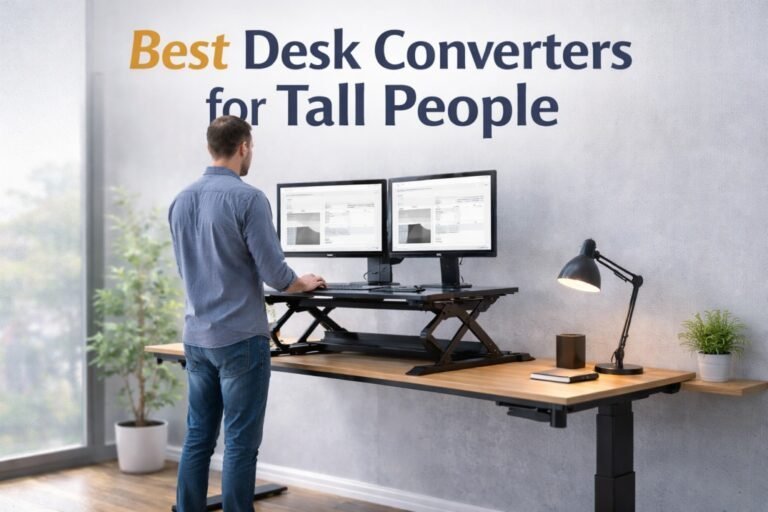
This type of arm misalignment is common when standing desks for tall people are not properly sized or adjusted to match natural elbow and forearm height. This biomechanical mismatch is why Forearm and wrist pain for tall people at desks is a setup problem, not a posture flaw. This misalignment is often compounded by shallow desks, which is explained in detail in our guide on desk depth for tall people. Using office chairs for tall people with correct seat height and adjustable armrests helps reduce wrist extension by supporting the forearms at the correct working level.
The Most Common Desk Setup Mistakes Causing Wrist Pain
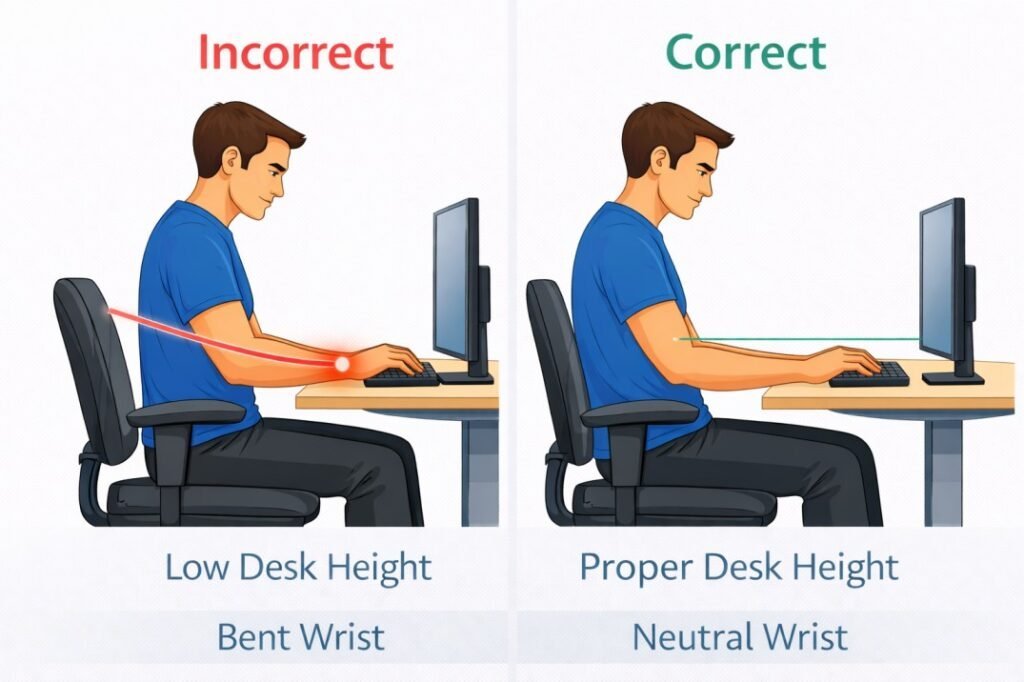
Common mistakes:
- Desk surface below seated elbow height
- Keyboard placed too far forward
- No forearm support
- Rigid wrist rests used incorrectly
Many of these errors overlap with the broader standing desk mistakes tall people should avoid, especially when transitioning between sitting and standing.
Desk Height and Elbow Position — The Foundation Fix
For tall people, the correct seated desk height places the keyboard at or slightly below elbow level, allowing forearms to remain parallel to the floor.
If your desk height is wrong, no keyboard or mouse will fully solve the problem. For exact measurements and setup guidance, refer to our complete breakdown of best ergonomic desk setup for tall people.
Keyboard and Mouse Placement for Tall Users
Key rules:
- Keyboard should sit close to the desk edge
- Wrists should remain neutral, not resting heavily
- Mouse height must match keyboard height
Avoid compact keyboards placed too far forward — they force wrist extension. According to ergonomic guidelines from occupational health research, neutral wrist positioning significantly reduces repetitive strain injuries during desk work.
Forearm Support — What Helps and What Hurts
Forearm support can reduce load, but only when used correctly.
Helpful:
- Desk edge support at elbow height
- Adjustable armrests aligned with desk surface
Harmful:
- Hard wrist rests
- Elevated gel pads that bend wrists upward
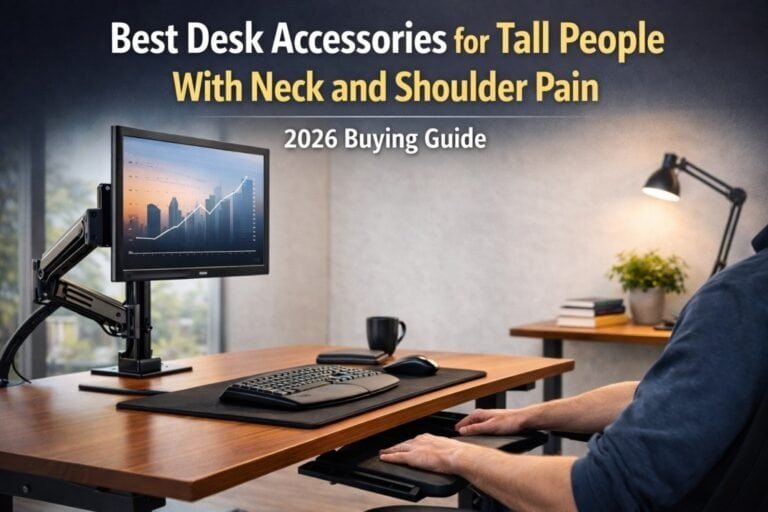
Accessory choices matter, especially for tall users — see our recommended standing desk accessories for tall people.
Standing Desks and Wrist Pain — What Changes?
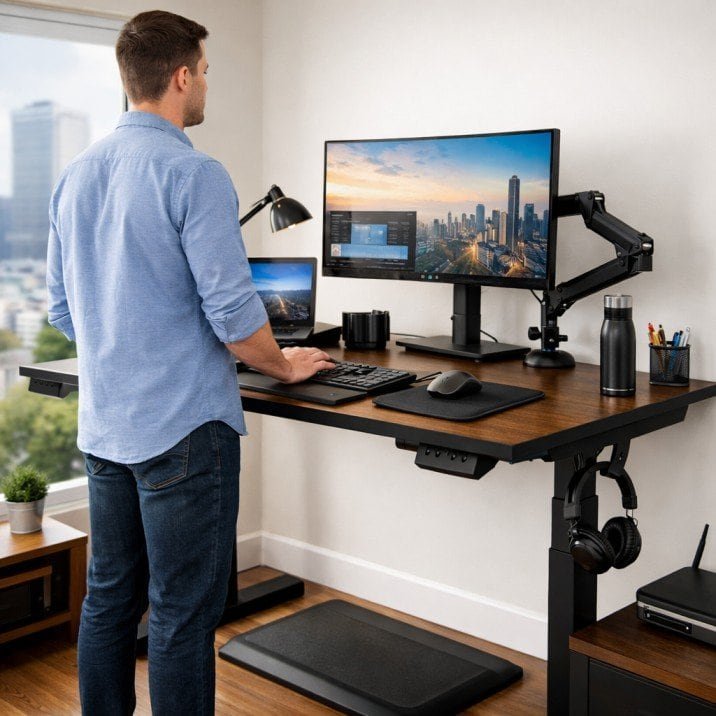
Standing desks reduce wrist pain only when height is correct.
If the desk is too low:
- Wrist extension increases
- Forearm fatigue worsens
This is why choosing the best standing desk height for tall people is just as important as keyboard placement.
When Wrist Pain Is a Warning Sign, Not Just Discomfort
Persistent wrist or forearm pain may indicate:
- Chronic nerve compression
- Poor long-term ergonomics
- Progressive repetitive strain
Fix the setup first before considering medical intervention. Similar warning patterns appear in neck and upper back pain for tall people at desks, often caused by the same misalignment chain.
Final Thoughts — Fix the Setup, Not Your Body
In most cases, forearm and wrist pain for tall people at desks resolves once desk height, keyboard position, and arm support are aligned correctly.
Tall users do not need special posture training — they need desks and setups that match their body dimensions.