Best Desk Height for Tall People (Complete Ergonomic Guide)
For tall people, desk height is not a minor comfort detail — it directly affects posture, joint health, and long-term productivity. Finding the correct desk height for tall people is essential because most desks are designed around average-height users, often forcing taller individuals to hunch forward, elevate their shoulders, or sit in awkward positions for hours at a time.
Whether you work seated, standing, or alternate between both, an improperly adjusted desk can contribute to chronic back pain, neck strain, shoulder tension, and wrist discomfort. Understanding the correct desk height for your body is essential to building a workspace that supports proper alignment and reduces unnecessary physical stress.
In this guide, we break down the ideal desk height ranges for tall people, explain the differences between sitting and standing desk ergonomics, and show you how to measure and adjust your workspace correctly for long-term comfort.
What Is the Ideal Desk Height for Tall People?
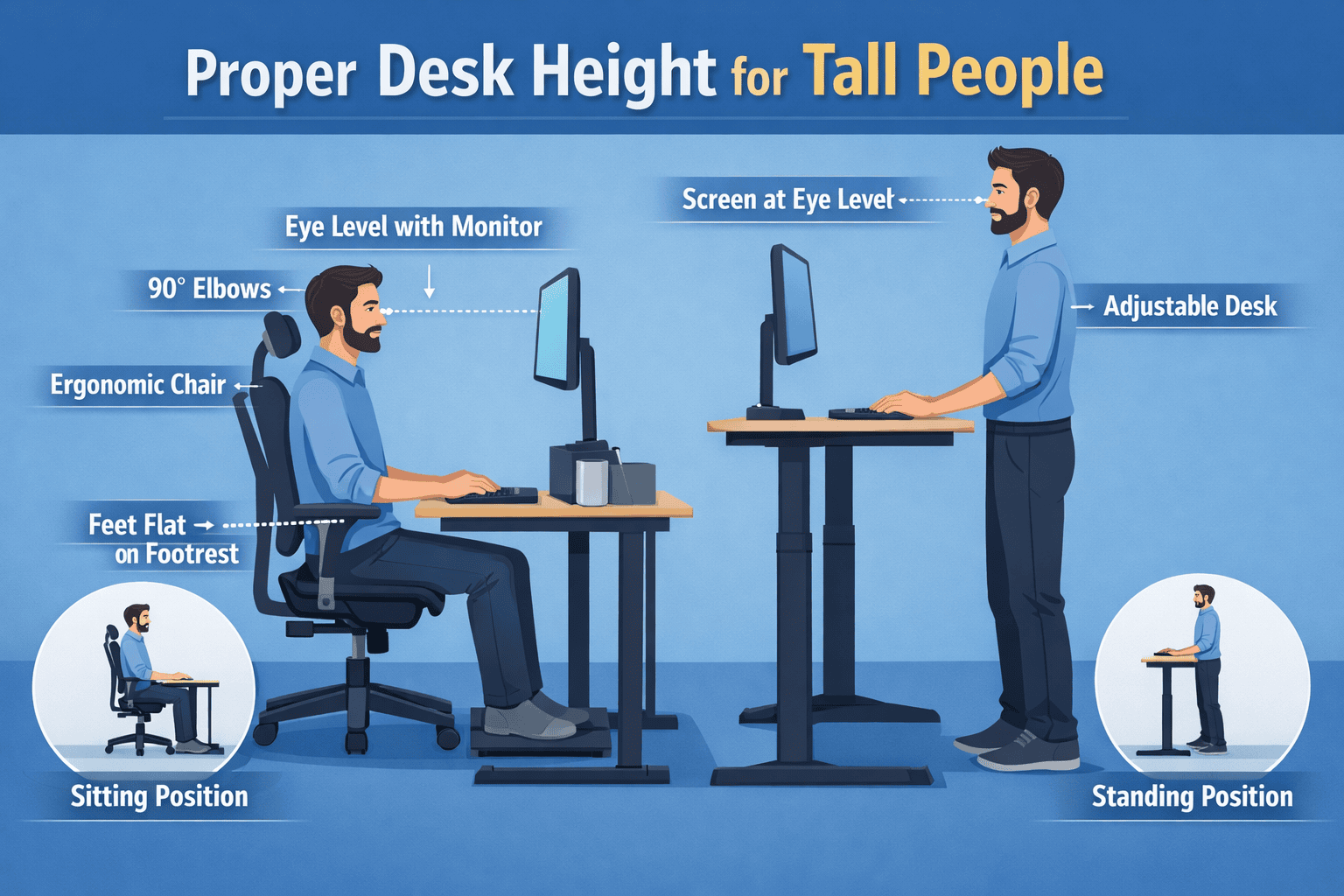
The ideal desk height for tall people depends on overall height, arm length, and whether the desk is used while sitting or standing. As a general ergonomic rule, your desk surface should align with your elbows when your arms are bent at roughly a 90-degree angle and your shoulders are relaxed.
For tall users—typically those 6’2″ and above—standard desk heights are often too low. This forces the upper body to lean forward or the shoulders to round, both of which increase strain on the neck and upper back over time. A desk that is too low can also cause wrist extension, leading to discomfort or repetitive strain injuries.
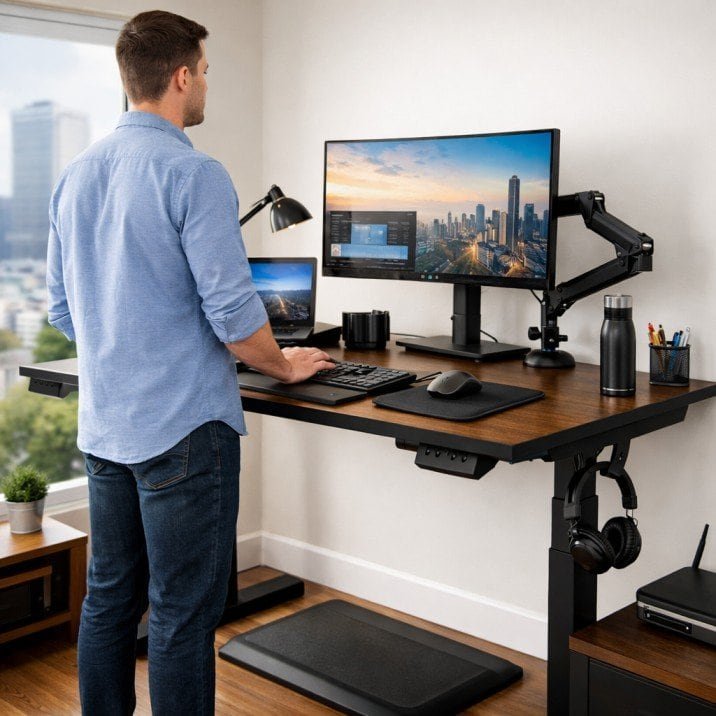
In practical terms, standing desks for tall people usually require a height that exceeds the standard 29–30 inches used for seated desks. The correct height allows your forearms to rest comfortably parallel to the floor while keeping your spine upright and your head balanced over your shoulders. This neutral posture reduces muscular fatigue and supports long-term comfort during extended work sessions.
Desk Height Chart for Tall People (6’2″–6’8″+)
While elbow height is the most accurate way to determine proper desk height, many tall users prefer a practical reference chart to estimate their ideal setup. The table below provides general ergonomic ranges for seated and standing desk heights based on body height.
These measurements assume average arm-to-torso proportions and neutral posture alignment.
| User Height | Seated Desk Height | Standing Desk Height |
|---|---|---|
| 6’2″ (188 cm) | 29–30.5 inches | 44–45.5 inches |
| 6’3″ (191 cm) | 29.5–31 inches | 45–46 inches |
| 6’4″ (193 cm) | 30–31.5 inches | 46–47 inches |
| 6’5″ (196 cm) | 30.5–32 inches | 47–48 inches |
| 6’6″ (198 cm) | 31–32.5 inches | 48–49 inches |
| 6’7″–6’8″+ | 31.5–33 inches | 49–50+ inches |
The numbers above are derived from our compiled tall desk height data study covering users between 6’2” and 6’8”.
These ranges ensure that:
- Forearms remain parallel to the floor
- Shoulders stay relaxed
- Wrists remain neutral
- Spine maintains upright alignment
If your desk cannot reach these height ranges, it may not be suitable for tall users without additional modifications such as risers or adjustable frames.
Keep in mind that individual body proportions vary. If you have longer arms relative to your torso, your required desk height may differ slightly from the chart above. Always confirm using the elbow measurement method described below.
If you’re shopping for adjustable options that meet these height requirements, see our guide on the best standing desks for tall people and recommended desk converters designed for extended height ranges.
Standing Desk Height vs Sitting Desk Height
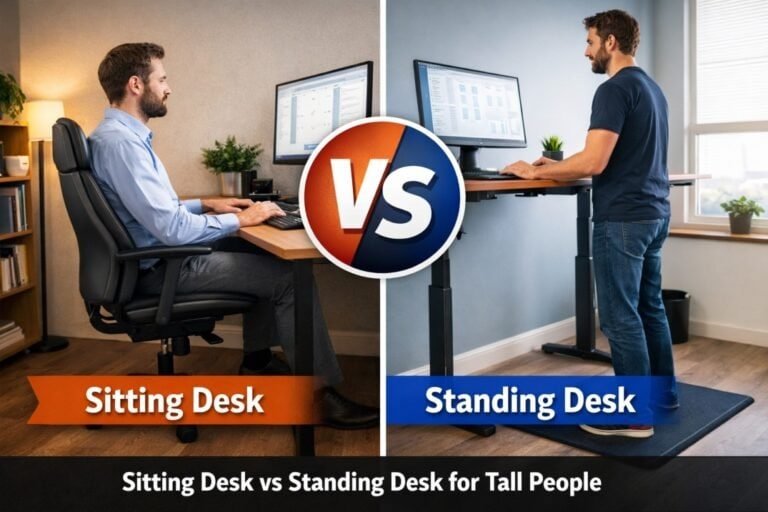
Standing and sitting desk heights are not interchangeable, and this distinction is especially important for tall users. When seated, your elbow height is lower, and the desk should allow your forearms to rest naturally without lifting your shoulders. When standing, your desk must rise significantly higher to maintain the same neutral arm position.
For seated work, proper desk height should allow your elbows to rest comfortably at desk level while your feet remain flat on the floor and your thighs stay parallel to the ground. Because standard furniture rarely accommodates taller body proportions, many tall individuals require either an adjustable-height desk or a setup that combines a raised work surface with ergonomic chairs designed for tall users to maintain correct posture and long-term comfort. So, correct desk height must be supported by chairs for tall people that allow the elbows to align naturally with the work surface.
When standing, the desk should be set so your elbows rest at or slightly above the desk surface, with your wrists in a neutral position. A standing desk that does not extend high enough forces tall users to bend forward or widen their stance unnaturally, which defeats the ergonomic benefits of standing work.
This is why height-adjustable standing desks are often the most practical solution for tall people, especially when evaluating are standing desks good for tall people from both a health and long-term usability perspective. They allow proper positioning in both seated and standing modes without compromising posture.
How to Measure the Correct Desk Height for Tall People
Measuring the correct desk height is straightforward, but it must be done using your body measurements rather than generic charts. The most reliable reference point is your elbow height, not your overall height alone.
Start by standing or sitting in your normal working posture with your shoulders relaxed and your elbows bent at approximately 90 degrees. Measure the vertical distance from the floor to the bottom of your elbow. This measurement represents your ideal desk surface height for that position. For seated work, ensure your feet are flat on the floor and your thighs are level before measuring. For standing work, stand upright without locking your knees.
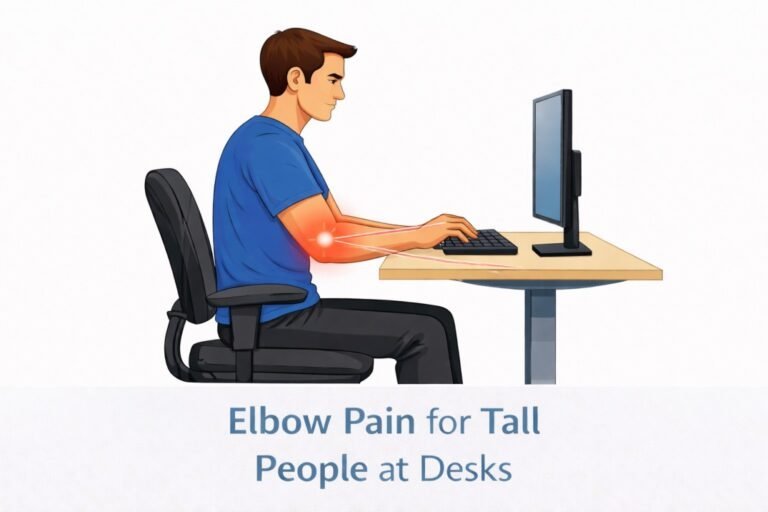
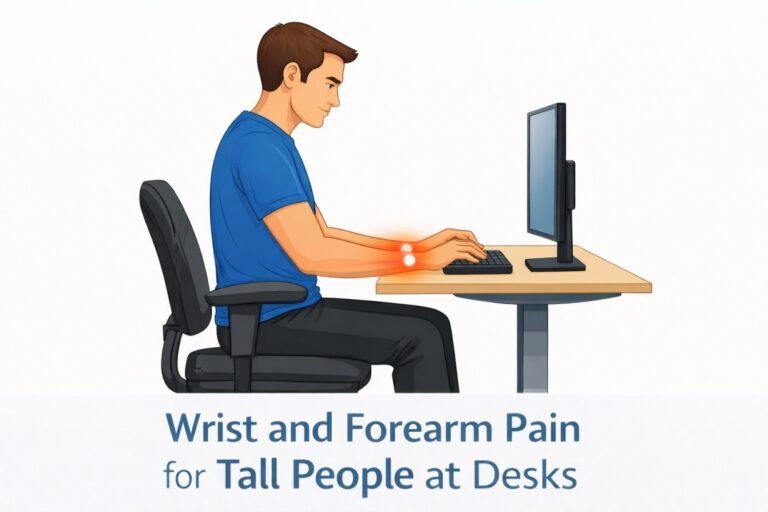
When desk height is too low for tall users, it often leads to wrist pain for tall people and elbow pain for tall people, as constant wrist extension and unsupported forearms place excessive strain on the entire arm. That is why, once you have this measurement, adjust your desk so the surface aligns closely with your elbow height. Your forearms should rest comfortably parallel to the floor, and your wrists should remain straight rather than bent upward or downward. If your desk cannot be adjusted to this height, it is a clear sign that the desk may not be suitable for a tall user.
Using elbow height as the primary reference helps ensure neutral joint positioning and reduces unnecessary strain on the shoulders, neck, and wrists over long periods of work.
According to ergonomic guidelines published by the Occupational Safety and Health Administration (OSHA), proper desk height plays a critical role in injury prevention and long-term musculoskeletal health.
Common Desk Height Mistakes Tall People Make
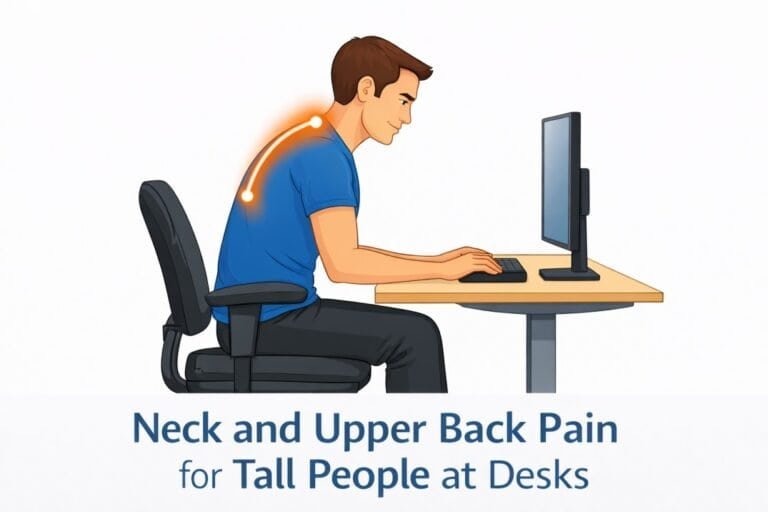
One of the most common mistakes tall people make is adapting their posture to the desk instead of adjusting the desk to fit their body. If your desk height is wrong, it often leads to neck and upper back pain for tall people at desks, not because of posture alone, but because the entire setup is misaligned.
Another frequent issue is relying on standard desk height recommendations without accounting for individual proportions. Two people of the same height can have very different arm lengths and torso proportions, which means a one-size-fits-all desk height rarely works well for taller users. When desk height is too low for tall users, it commonly leads to shoulder pain for tall people due to constant shoulder elevation and muscle tension.
Using a standing desk that does not extend high enough is also a major problem. When the desk surface is too low, tall users may lean forward or rest excessive weight on their wrists, increasing strain on the lower back and shoulders.
Finally, many tall users overlook the importance of chair height and monitor positioning. Even with a properly adjusted desk, an improperly set chair or monitor can undo the ergonomic benefits and contribute to discomfort over time.
Frequently Asked Questions About Desk Height for Tall People
What is the ideal desk height for someone who is 6’4”?
For someone who is 6’4” (193 cm), the ideal seated desk height typically ranges between 30 and 31.5 inches. For standing work, the ideal height usually falls between 46 and 47 inches. However, exact measurements should be based on elbow height rather than total body height to ensure proper ergonomic alignment.
Is a standard 29–30 inch desk too low for tall people?
In most cases, yes. Standard desks are designed for individuals around 5’8” to 5’10”. For users above 6’2”, a fixed 29-inch desk often forces shoulder elevation or forward hunching, increasing strain on the upper back, neck, and wrists over time.
What standing desk height does a 6’5” person need?
A person who is 6’5” (196 cm) typically requires a standing desk height between 47 and 48 inches. Desks that do not extend to at least 48 inches may not provide sufficient adjustment range for proper elbow alignment.
Can tall people use regular desks safely?
They can, but usually only with modifications. Raising the desk surface, increasing chair height, or using a keyboard tray may help temporarily. However, long-term comfort typically requires a desk designed to accommodate extended height ranges.
Should desk height match chair height?
Desk height should align with elbow height, while chair height should allow feet to rest flat on the floor and thighs to remain parallel to the ground. The two must work together, but desk height should never be lowered simply to match a chair.
How high should a monitor be for tall users?
The top of the monitor should be at or slightly below eye level. Many tall users require monitor arms or risers to achieve proper alignment, especially when using standard desks that sit too low.
What Desk Height Range Should Tall People Look for When Buying a Desk?
Understanding the correct desk height is only half the solution. The next step is ensuring the desk you purchase can actually support those height requirements.
Many standard desks are designed around average-height users and often have fixed heights between 28 and 30 inches. For tall individuals—especially those 6’2″ and above—this range is frequently too low for proper elbow alignment.
When shopping for a desk, tall users should look for:
- A seated height adjustment range that reaches at least 31–33 inches
- A standing height range that extends to 48–50 inches for users 6’5″ and taller
- Stable frame construction at maximum height
- Sufficient desk depth to prevent monitor crowding
- Weight capacity that supports dual monitors and accessories
Height range is the most critical specification. A desk that cannot reach your required elbow height will force you to compensate with posture, increasing strain over time.
For adjustable solutions that meet extended height requirements, explore our detailed breakdown of the best standing desks for tall people, where we compare models based on maximum height range, stability, and long-term usability.
If you prefer a sit-stand converter instead of replacing your entire desk, our guide to the best desk converters for tall people outlines options that extend high enough for taller professionals while maintaining platform stability.
Pairing the correct desk height with proper monitor positioning is equally important. For that reason, many tall users also benefit from adjustable monitor arms designed to increase vertical reach and reduce neck strain.
Choosing a desk that supports your body dimensions from the beginning prevents years of avoidable discomfort and improves long-term productivity.
Final Ergonomic Tips for Tall Remote Workers
In addition to setting the correct desk height, tall remote workers should pay attention to the entire workstation setup. Building the best ergonomic desk setup for tall people requires aligning the desk, chair, monitor, and accessories so they work together rather than in isolation. Monitor height is especially important — the top of the screen should be at or slightly below eye level to prevent neck strain. Following the best monitor setup for tall people helps reduce cervical strain and supports a neutral head position during long work sessions. Taller users often need monitor arms or risers to achieve proper alignment.
Foot positioning also plays a role in overall comfort. When seated, your feet should rest flat on the floor, and if raising your chair to match desk height causes your feet to lift, a footrest can help maintain proper leg support. For standing work, using an anti-fatigue mat can reduce pressure on the joints and encourage subtle movement throughout the day.
Proper desk height is only one component of a healthy workstation. Research from occupational health organizations consistently shows that monitor placement, posture, standing desk setup, and workstation design all contribute to long-term comfort and productivity. For a broader overview of workplace studies and evidence-based findings, see our guide to tall people ergonomic statistics.
Finally, remember that ergonomics is not static. Even a well-adjusted desk should be paired with regular posture checks, short breaks, and occasional movement. Small adjustments over time make a significant difference in reducing discomfort and supporting long-term health for tall professionals. At TallErgoDesk, we publish research-backed guides to help tall professionals build healthier workspaces.