Common Standing Desk Mistakes Tall People Should Avoid
Standing desks can significantly improve posture, energy levels, and overall productivity. However, for tall people, simply using a standing desk does not automatically guarantee better ergonomics. Many standing desk setups are designed around average-height users, which often leads taller individuals to unknowingly adopt poor posture, experience joint strain, or feel fatigued throughout the day. Understanding the most common standing desk mistakes for tall people is essential for building a workstation that supports comfort, posture, and long-term health. Are standing desks good for tall people article discussed about how standing desks are truly good for tall people and outlines the benefits and risks, and shares best practices for using them correctly.
Standing Desk Mistakes for Tall People: Using a Desk That Is Too Low
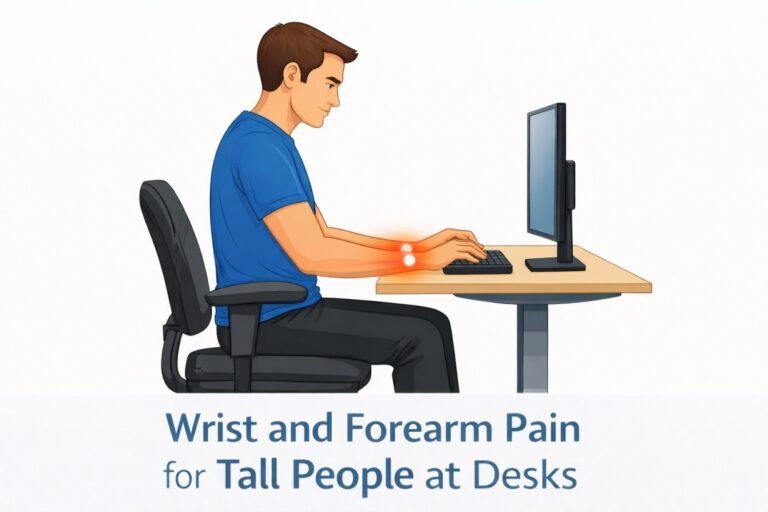
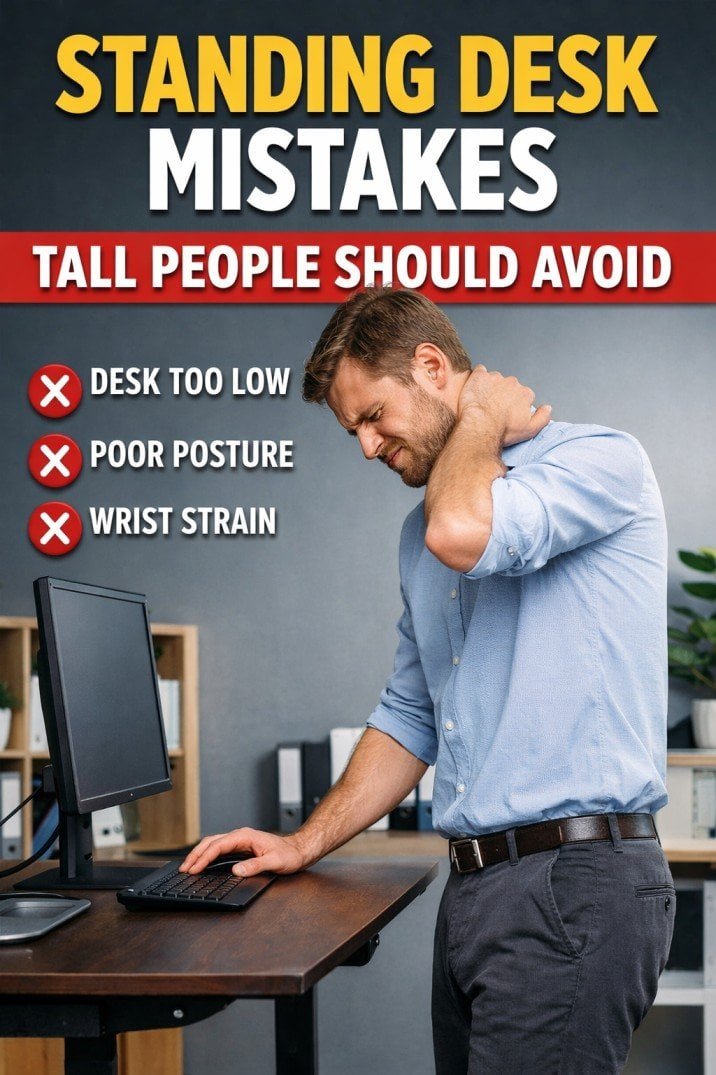
One of the most common mistakes tall people make is using a standing desk that is too low. Standard desks rarely accommodate taller users properly, forcing them to lean forward, round their shoulders, or bend their wrists upward while typing. Over time, this posture can contribute to neck pain, shoulder tension, and upper back strain.
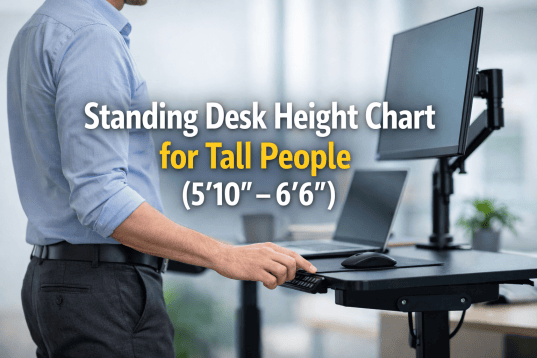
For tall users, proper desk height for tall people must align with elbow height rather than average desk standards. If your desk cannot be raised high enough to support neutral arm positioning, it may not be suitable for long-term standing work. The standing desk height chart for tall people provides a quick reference to set your desk correctly based on typical tall height ranges and ergonomic elbow alignment.
Ignoring Elbow Height When Standing
Many people assume that standing desk height should be determined by overall body height, but this approach often results in poor ergonomic alignment. According to established ergonomics research, elbow height is the most reliable reference point for setting the correct standing desk height, particularly for tall individuals.
When standing, your elbows should rest at approximately 90 degrees, with your forearms positioned parallel to the floor. If the desk surface sits too high or too low relative to your elbows, it can place unnecessary strain on the wrists, shoulders, and neck. Measuring and adjusting desk height based on elbow position helps maintain neutral joint alignment and reduces physical stress throughout the workday.
Locking Knees While Standing
Standing for long periods with locked knees is a subtle but serious mistake. This posture restricts circulation, increases pressure on the lower back, and often leads to fatigue and discomfort after only a short time.
Tall users should stand with a slight bend in the knees and distribute weight evenly between both feet. Shifting positions occasionally and maintaining relaxed posture helps reduce strain and supports better circulation during standing work.
Standing All Day Without Alternating
Standing desks are not meant to replace sitting entirely. Another common mistake is standing continuously without alternating between sitting and standing positions.
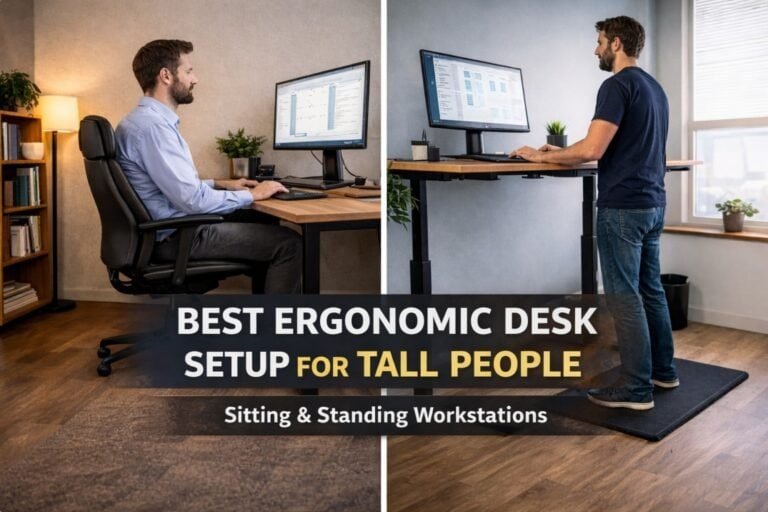
Even with perfect desk height, prolonged standing can lead to joint fatigue and lower back discomfort. Tall users benefit most from sit-stand cycles, alternating positions every 30 to 60 minutes. This approach supports better circulation, reduces fatigue, and promotes sustained productivity throughout the day.
Choosing the Wrong Monitor Height
Monitor height plays a critical role in overall ergonomics, yet it is often overlooked. Tall users frequently position monitors too low, forcing them to tilt their heads downward and strain their necks.
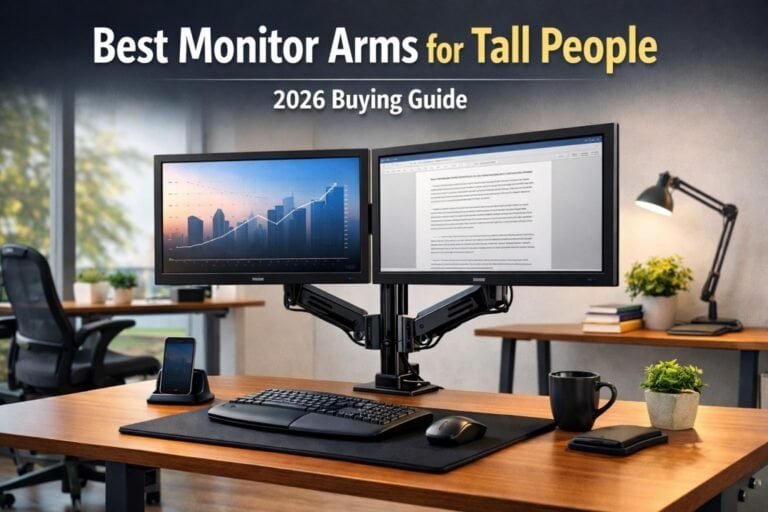
One of the most common standing desk mistakes is choosing the wrong monitor arm, which often lacks the vertical travel tall users need for proper alignment.
The top of the screen should be at or slightly below eye level when standing. Proper monitor positioning helps maintain a neutral neck posture and reduces long-term strain, particularly for taller individuals with longer torsos.
Overlooking Anti-Fatigue Mats
Standing directly on hard floors for extended periods increases pressure on joints and contributes to leg and foot fatigue. This effect is often more pronounced for tall users due to higher body weight distribution.
Anti-fatigue mats provide cushioning and support, helping reduce joint stress and improve standing endurance. Incorporating a quality mat into your standing desk setup can significantly enhance comfort and reduce fatigue over time.
Not Using Accessories Designed for Tall Users
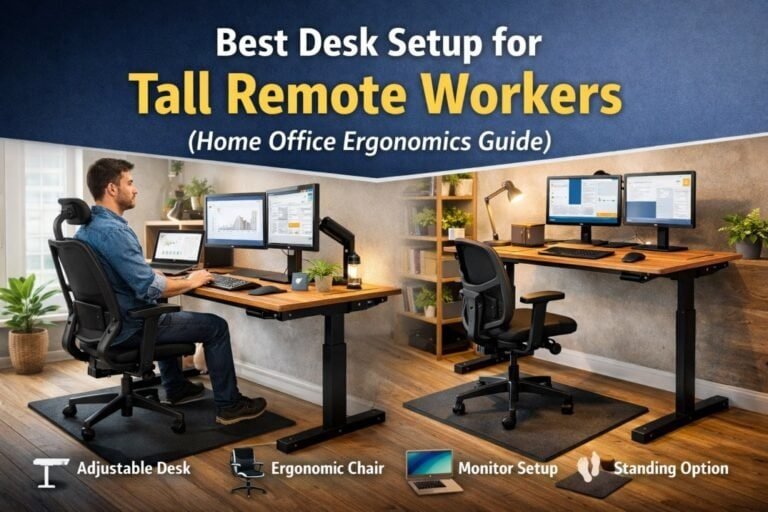
Many standing desk setups fail to account for the need for ergonomic accessories designed specifically for tall users. Monitor arms, extended keyboard trays, and appropriately sized ergonomic chairs can dramatically improve comfort and posture.
Accessories that allow greater adjustability help tall individuals fine-tune their workstation and maintain proper alignment, especially when alternating between sitting and standing throughout the day.
How to Set Up a Standing Desk Correctly if You’re Tall
Avoiding common standing desk mistakes for tall people starts with choosing adjustable equipment and prioritizing proper measurements. Focus on elbow height rather than generic height charts, ensure your monitor is positioned at eye level, and alternate between sitting and standing regularly.
By paying attention to these details, tall users can create a standing desk setup that supports long-term health, reduces discomfort, and enhances productivity.
Conclusion
Standing desks can be an excellent ergonomic solution for taller users—when set up correctly. Avoiding common errors such as using a desk that is too low, ignoring elbow height, or standing for long periods without breaks can significantly improve comfort and posture. By addressing standing desk mistakes for tall people early, you can create a healthier, more sustainable standing workstation that supports long-term productivity.