Best Standing Desks for Tall People (2025 Buyer’s Guide)
Introduction
Finding the right standing desk can be challenging, but for tall people, the difficulty is significantly greater. Many standing desks on the market are designed around average height ranges, leaving taller users struggling with desks that do not rise high enough for proper ergonomics.
Choosing the right standing desk involves more than picking a popular model or checking basic specifications. For taller users, factors like height range, desktop depth, and stability at full extension play a critical role. Our complete guide to standing desks for tall people explains these requirements in detail and outlines why standard desks often fail taller body proportions.
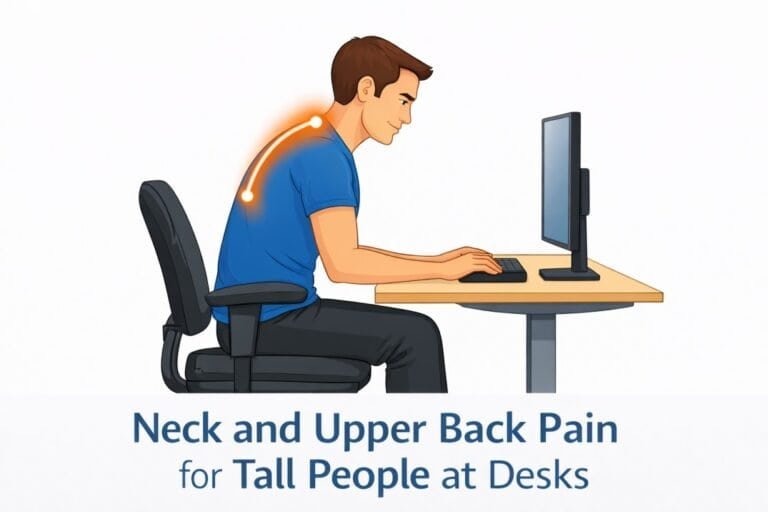
When a standing desk is too low, it can force tall users into poor posture, leading to shoulder strain, wrist discomfort, and long-term back issues. Simply choosing a popular or highly rated desk does not guarantee it will work well for someone above average height.
This buyer’s guide is designed specifically to help tall people identify the best standing desks for tall people based on height range, stability, and ergonomic flexibility. Below, we explain what to look for in a standing desk built for taller users and review the best standing desks available in 2025 based on real-world usability, adjustment range, and long-term comfort.
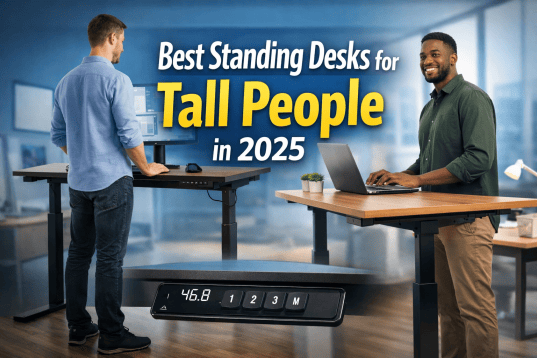
This guide reviews the best standing desks for tall people in 2025, focusing on height range, stability, and long-term ergonomic performance.
Disclosure: This article may contain affiliate links. If you make a purchase through these links, we may earn a commission at no additional cost to you.
What to Look for in a Standing Desk if You’re Tall
Not all standing desks are suitable for tall users, even if they are marketed as “adjustable.” The most important factor to consider is maximum height range. Tall users should look for desks that can comfortably adjust beyond standard height limits without compromising stability.
Stability is equally critical. At higher settings, poorly designed desks may wobble, making typing uncomfortable and reducing productivity. A solid frame, strong lifting columns, and a higher weight capacity all contribute to a stable standing desk at full height.
Desktop size and depth also matter. Tall users often require monitors positioned farther back to maintain proper viewing distance. A deeper desktop allows for correct monitor placement without forcing the user to lean forward.
Finally, consider control options and adjustability features. Memory presets, smooth motor operation, and anti-collision sensors improve usability and help tall users fine-tune desk height throughout the day.
If you want a deeper explanation of why these criteria matter and how they affect posture and comfort, our guide to standing desk height for tall people breaks down the ergonomic principles behind these requirements.
Best Standing Desks for Tall People in 2025
Tall users require standing desks with extended height ranges, strong frames, and reliable stability at maximum elevation. The following options represent some of the best standing desks for tall people in 2025 based on adjustability, build quality, and long-term ergonomic performance.
🪑 Comparison Table — Best Standing Desks for Tall People (2025)
| Standing Desk | Max Height* | Weight Capacity | Motor Type | Best For | Price |
|---|---|---|---|---|---|
| Fully Jarvis Standing Desk | ~51″ | ~350 lbs | Electric | Premium ergonomic performance for tall users | [Check Price] |
| Uplift V2 Commercial Standing Desk | ~52″+ | ~355 lbs | Electric | Heavy-duty & ultra-stable tall setups | [Check Price] |
| FlexiSpot E7 Pro Plus Standing Desk | ~50″+ | ~275 lbs | Dual motor | Strong value + good performance | [Check Price] |
| Vari Electric Standing Desk (ProDesk) | ~49″+ | ~220–250 lbs | Electric | Easy setup & reliable everyday use | [Check Price] |
*Height range figures are approximate and may vary by desktop size. Always check the manufacturer’s specs.
For those working with limited space, a high-quality desk converter can be a flexible alternative — see our full comparison of the best desk converters for tall people. Also our standing desk height chart for tall people provides a quick reference to set your desk correctly based on typical tall height ranges and ergonomic elbow alignment.
Quick Recommendations
Not every tall user has the same requirements. Based on height range, stability, and overall value, here are our top recommendations:
Best Overall for Tall People
Uplift V2 Commercial Standing Desk — Excellent stability, industry-leading height range, and extensive customization options make it one of the best choices for users 6’2″ and taller.
Best Value Option
FlexiSpot E7 Pro Plus — Offers strong performance, dual motors, and a generous height range at a more affordable price than many premium competitors.
Best Premium Choice
Fully Jarvis Standing Desk — Smooth operation, excellent build quality, and a proven track record among ergonomic workstation users.
Best for Easy Setup
Vari Electric Standing Desk — Quick assembly and reliable everyday performance make it ideal for users who want a straightforward standing desk solution.
For long-term comfort, prioritize maximum height range and stability over appearance or extra features. A standing desk that properly matches your elbow height, as explained in our standing desk height chart for tall people, will have a greater impact on posture and comfort than any accessory or aesthetic upgrade.
Standing Desk Option #1: Fully Jarvis Standing Desk
The Fully Jarvis Standing Desk is one of the most recommended choices for tall users who need a wide height adjustment range and reliable daily performance. Its electric lift system offers smooth transitions and memory presets that allow quick switching between sitting and standing positions. Taller users appreciate that the desk can be raised sufficiently high without compromising stability.
Key Specifications (Tall Focus):
- Approx. Max Height: ~51″
- Motor Type: Electric
- Weight Capacity: ~350 lbs
- Deep desktop support for monitor setup
Pros:
- Excellent height range for tall users
- Sturdy and wobble-resistant
- Customizable desktop sizes
- Programmable memory settings
Cons:
- Premium price point
- Accessories (monitor arm, cable management) often sold separately
Affiliate link will be added after approval
Standing Desk Option #2: Uplift V2 Commercial Standing Desk
The Uplift V2 Commercial Standing Desk is built for durability and exceptional height range, making it ideal for tall professionals with heavier setups. Its commercial-grade frame helps maintain stability even at higher heights, which can be a challenge for tall users. It also supports larger desktops, which can be beneficial for dual-monitor setups.
Key Specifications (Tall Focus):
- Approx. Max Height: ~52″+ (varies by desktop)
- Motor Type: Electric
- Weight Capacity: ~355 lbs
- Spacious desktop options
Pros:
- Highly stable at maximum height
- Excellent customization options
- Great for heavy setups
- Wide range of accessories
Cons:
- Price tends to be high
- Assembly may require two people
Affiliate link will be added after approval
Standing Desk Option #3: FlexiSpot E7 Pro Plus Standing Desk
The FlexiSpot E7 Pro Plus offers an excellent balance of performance and value for tall users. Its dual-motor system provides smooth height transitions, and its reinforced steel frame helps reduce movement at taller settings. This desk delivers many premium features without the premium price tag.
Key Specifications (Tall Focus):
- Approx. Max Height: ~50″+
- Motor Type: Dual-motor electric
- Weight Capacity: ~275 lbs
- Good desktop depth potential
Pros:
- Strong stability at taller heights
- Excellent price-to-performance ratio
- Smooth height adjustments
Cons:
- Slightly lower max height than premium desks
- Some accessories may be optional
Affiliate link will be added after approval
Standing Desk Option #4: Vari Electric Standing Desk (ProDesk)
The Vari Electric Standing Desk (often known as the ProDesk series) is known for its easy setup and reliable electric performance. While not the absolute tallest on this list, it still accommodates many tall users when paired with proper monitor arms and ergonomic accessories. It’s a solid choice for those who prioritize quick assembly and everyday use.
Key Specifications (Tall Focus):
- Approx. Max Height: ~49″+
- Motor Type: Electric
- Weight Capacity: ~220–250 lbs
- Good starter desk for tall users
Pros:
- Fast assembly
- Consistent electric lift
- Reliable brand reputation
Cons:
- Max height slightly lower than top-tier competitors
- Fewer customization options
Affiliate link will be added after approval
Electric vs Manual Standing Desks for Tall Users
When choosing a standing desk, tall users often face an additional decision beyond size and height range: whether to select an electric or manual adjustment mechanism. While both options can work, the difference in usability becomes more pronounced for taller individuals who frequently operate desks at higher settings.
Electric standing desks are generally the preferred option for tall users. They allow precise height adjustments at the push of a button, making it easier to reach and maintain an ergonomic standing position based on elbow height. Many electric models also include memory presets, which are especially useful for tall users who alternate between sitting and standing throughout the day. This convenience encourages more frequent posture changes, reducing fatigue and strain over long work sessions.
Manual standing desks, typically adjusted using a hand crank, can be a viable option for tall users on a tighter budget. However, adjusting a desk to higher standing heights often requires more effort, and frequent height changes can become inconvenient over time. This can discourage proper ergonomic adjustments, especially for users who need precise positioning to avoid shoulder or wrist discomfort.
For tall individuals who plan to use their standing desk daily or for extended periods, electric desks usually provide better long-term comfort, consistency, and ease of use. Manual desks may still be suitable for occasional standing or static setups, but they require more discipline to maintain correct ergonomics.
Common Buying Mistakes Tall People Should Avoid
One of the most common standing desk mistakes for tall people is relying solely on overall height charts provided by manufacturers. Many desks advertise suitability for tall users but fail to offer sufficient maximum height once a monitor, keyboard, and accessories are added. Always verify the desk’s maximum standing height and ensure it aligns with your elbow height rather than your full body height.
Another frequent error is overlooking stability at higher elevations. Some standing desks perform well at sitting height but become unstable when raised near their maximum limit. For tall users, even minor wobble can affect typing accuracy, monitor positioning, and overall comfort. Checking weight capacity and frame construction is essential to avoid long-term usability issues.
Tall users also often underestimate the importance of surface depth and width. A desk that is too shallow can force monitors too close to the eyes or limit keyboard and mouse positioning, increasing strain on the neck and shoulders. Adequate desktop space is critical for maintaining proper posture at taller standing heights.
Finally, many buyers fail to account for future adjustments. As work habits change, tall users may alternate between sitting, standing, or using different footwear. Choosing a desk with limited adjustability can quickly lead to ergonomic compromises. Investing in a desk with a broad height range and fine adjustment control helps ensure long-term comfort and flexibility.
How to Set the Correct Standing Desk Height After Buying
Once a standing desk is purchased, proper setup is critical—especially for tall users. Even a high-quality desk can cause discomfort if it is not adjusted correctly. Even the best standing desk cannot compensate for poor seated posture, which is why pairing it with proper chair support for tall people is essential.
The first step is to choosing the right desk height for tall people using elbow alignment rather than relying on preset desk markings or generic height charts. Desk height is especially critical for tall users, as even small mismatches can lead to shoulder tension and arm fatigue — a problem explained in detail in our guide to standing desks for tall people. This approach is supported by ergonomic research, which shows that correct desk height reduces joint strain and improves long-term comfort during standing work.
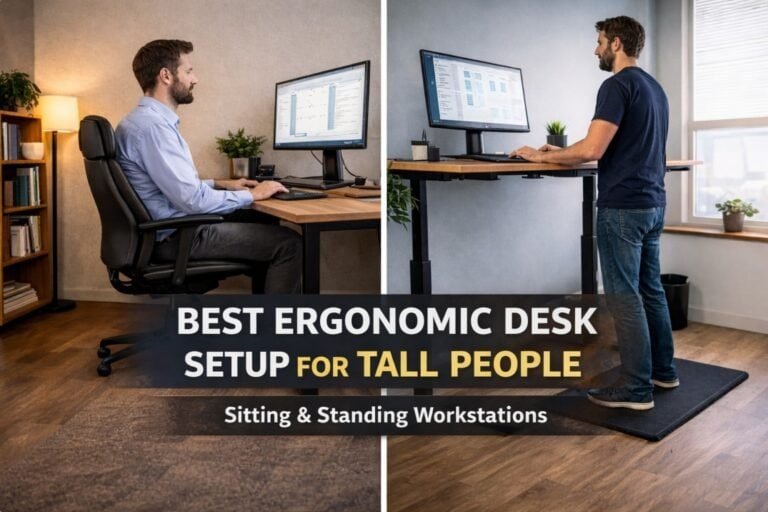
Stand upright in your normal working posture with your shoulders relaxed and your feet flat on the floor. Bend your elbows to approximately 90 degrees and measure the distance from the floor to the bottom of your elbow. Adjust the desk surface to closely match this measurement. When positioned correctly, your forearms should rest parallel to the floor, and your wrists should remain neutral while typing.
Next, position your monitor correctly. The top of the screen should be at or slightly below eye level to prevent neck strain. Tall users often need monitor arms or risers to achieve this alignment, especially when using large displays. The screen should be approximately an arm’s length away to maintain visual comfort.
Foot positioning also plays an important role. Standing with locked knees can lead to lower back discomfort and fatigue. Slightly bending the knees and shifting weight periodically helps maintain circulation. Many tall users benefit from an anti-fatigue mat to reduce pressure on the feet and legs during extended standing sessions.
Finally, remember that standing all day is not the goal. Alternating between sitting and standing throughout the day reduces strain and supports long-term comfort. Setting preset height controls—if available—makes transitions easier and encourages consistent ergonomic habits.
How Tall Should a Standing Desk Be for Tall People?
Choosing the correct standing desk height is essential for maintaining proper posture, especially for taller users. A standing desk should rise high enough so that your elbows remain at approximately a 90-degree angle while typing, with your forearms parallel to the floor. If the desk is too low, tall users may lean forward or raise their shoulders, which can lead to long-term discomfort in the neck, shoulders, and wrists.
For most tall users, the ideal desk height depends on elbow height rather than total body height. As a general guideline, people between 6’2″ and 6’6″ typically require a standing desk that can extend well above the standard ranges offered by many desks on the market.
The following table shows approximate standing desk heights that work well for taller users.
| Height of User | Recommended Desk Height |
|---|---|
| 6’2″ | 44–45 inches |
| 6’3″ | 45–46 inches |
| 6’4″ | 46–47 inches |
| 6’5″ | 47–48 inches |
| 6’6″ | 48–49 inches |
These numbers are general guidelines and can vary depending on arm length, keyboard thickness, and footwear. For the most accurate setup, measure the distance from the floor to the bottom of your elbow while standing comfortably with your shoulders relaxed.
If you want a deeper explanation of how to measure desk height correctly and why these ranges matter, see our complete guide to standing desk height for tall people.
Best Standing Desk Height Range for Users 6’2″ to 6’6″+
Many standing desk manufacturers advertise broad user-height compatibility, but tall users should focus on maximum desk height rather than marketing claims.
The table below provides general recommendations for taller users.
| User Height | Recommended Standing Desk Height |
|---|---|
| 6’2″ | 44–45 inches |
| 6’3″ | 45–46 inches |
| 6’4″ | 46–47 inches |
| 6’5″ | 47–48 inches |
| 6’6″ | 48–49 inches |
| 6’7″ | 49–50 inches |
| 6’8″ | 50–51 inches |
These measurements are based on typical body proportions and should be adjusted according to elbow height, footwear, and keyboard thickness. Users with longer torsos may require even greater desk height than indicated above.
When comparing standing desks, always verify the actual maximum desk height rather than relying on manufacturer height recommendations.
Frequently Asked Questions
What is the ideal standing desk height for tall people?
The ideal standing desk height for tall users is based on elbow height rather than overall body height. When standing upright with elbows bent at approximately 90 degrees, the desk surface should align closely with the bottom of the elbows. This positioning allows the forearms to remain parallel to the floor and helps prevent shoulder, wrist, and neck strain.
Can tall people use standard standing desks?
Many standard standing desks do not extend high enough for tall individuals, particularly those over six feet tall. While some may work with monitor arms or keyboard trays, tall users often benefit from desks specifically designed with extended height ranges or highly adjustable electric frames.
Is an electric standing desk better for tall users than a manual one?
Electric standing desks are generally more suitable for tall users because they offer a wider height adjustment range and allow precise positioning. Manual desks may require compromise or frequent readjustments, which can discourage proper ergonomic use.
How often should tall users alternate between sitting and standing?
Tall users should alternate between sitting and standing every 30 to 60 minutes. Prolonged standing can cause fatigue and joint stress, while regular movement helps maintain circulation, reduce stiffness, and improve overall comfort throughout the workday.
Do tall users need special accessories for standing desks?
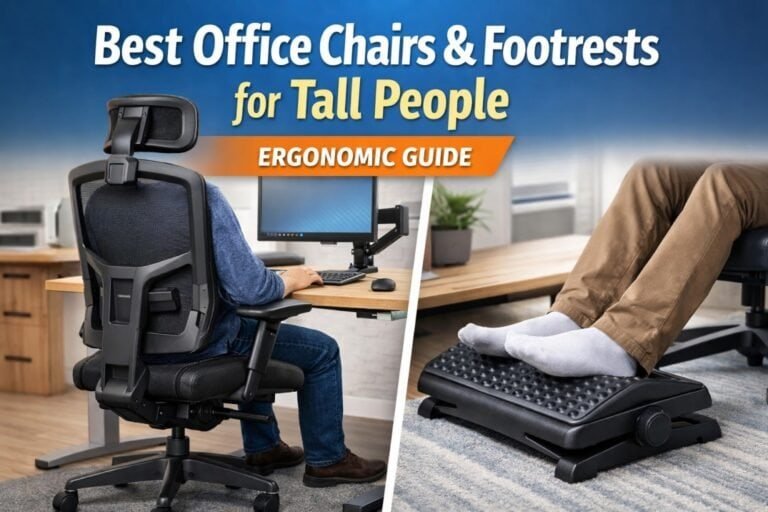
Yes, tall users often benefit from ergonomic standing desk accessories such as monitor arms, anti-fatigue mats, footrests, and chairs designed for taller body proportions. These accessories help fine-tune workstation setup and support proper posture during both sitting and standing work.
Are standing desks for tall people different from standard standing desks?
Yes. Standing desks for tall people typically offer a higher maximum height range, stronger frames for stability at full extension, and better support for proper ergonomic alignment.
Are Standing Desks With 50-Inch Height Ranges Worth It?
For average-height users, a standing desk that reaches 48 inches may be sufficient. However, taller users often require additional height to maintain neutral shoulder positioning and proper elbow alignment.
A standing desk that extends to 50 inches or higher provides greater flexibility for users above 6’4″, especially when wearing shoes, using thicker keyboards, or working with monitor arms.
The additional height range also helps future-proof a workstation. Many tall users discover that a desk that initially feels adequate becomes limiting after ergonomic adjustments are made to monitor height, keyboard placement, and overall posture.
For users 6’6″ and taller, choosing a desk with a maximum height of 50 inches or more is often the safest long-term investment.
Conclusion
Choosing the best standing desk for tall people requires more than selecting a popular brand or standard desk size. Height range, stability at full extension, ease of adjustment, and long-term comfort all play a critical role in creating an ergonomic workspace for taller users.
By focusing on desks with extended height capabilities, reliable adjustment mechanisms, and compatibility with ergonomic accessories, tall users can avoid common setup issues and build a workstation that supports productivity and posture throughout the day. Whether you prefer an electric or manual option, the key is selecting a standing desk that aligns with your body measurements rather than generic sizing charts.
Investing in the right standing desk setup helps tall users work more comfortably, reduce strain, and maintain healthier work habits over the long term. Choosing from the best standing desks for tall people ensures proper posture, comfort, and long-term productivity for taller users.