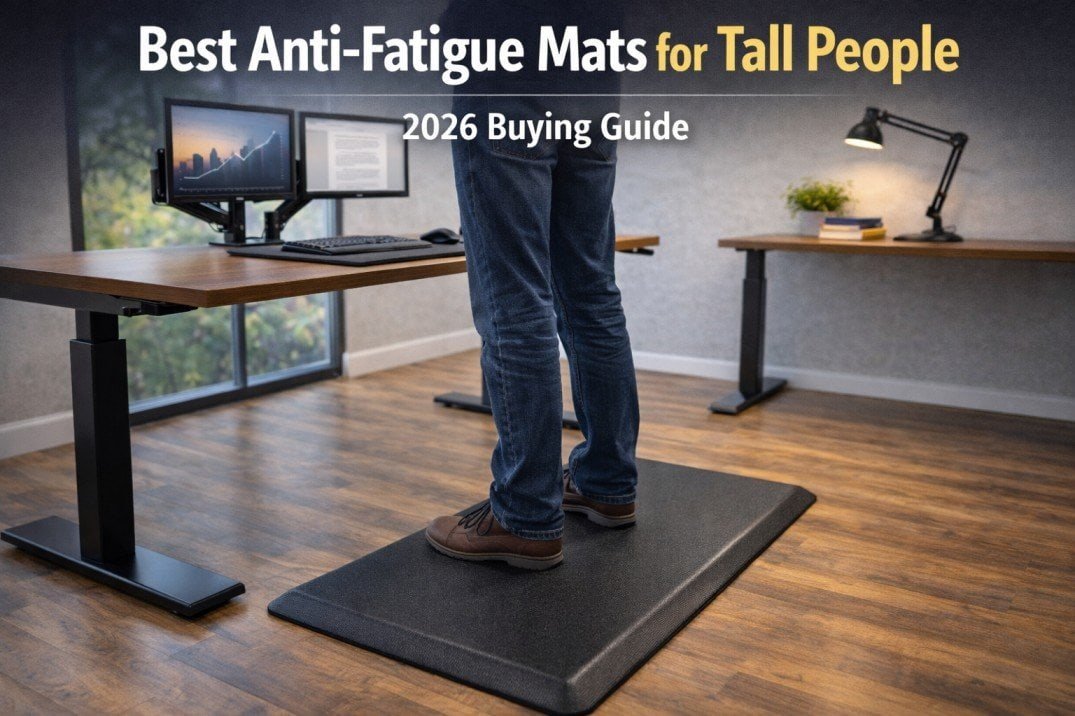
Best Anti-Fatigue Mats for Tall People (2026 Buying Guide)
Introduction
Best anti-fatigue mats for tall people are not just thicker floor pads — they are an essential ergonomic upgrade for tall professionals using standing desks. When desk height is correctly adjusted but foot support is ignored, pressure accumulates in the heels, knees, and lower back. The right anti-fatigue mat reduces joint compression, improves circulation, and allows tall users to stand longer without discomfort.
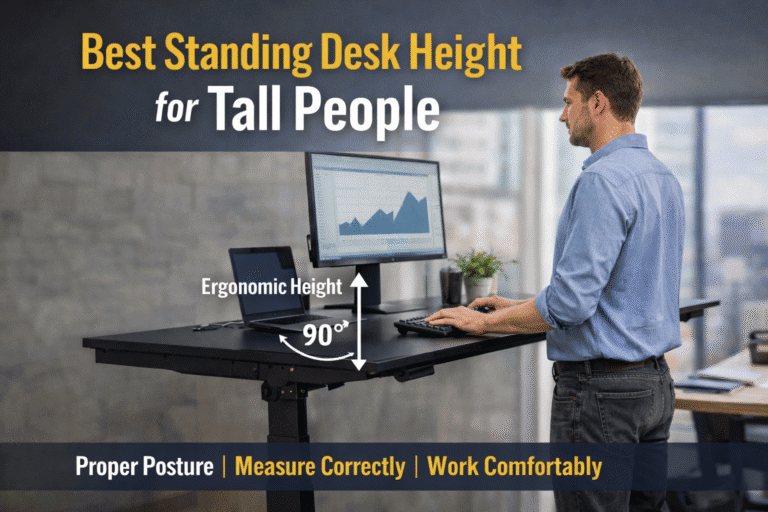
As explained in our guide to best desk height for tall people, standing posture starts with elbow alignment — but comfort begins at the floor.
Why Standard Mats Fail Tall Users
Most anti-fatigue mats are designed around average-height users. For taller individuals:
- Weight distribution is higher through the heel
- Center of gravity shifts slightly forward
- Longer femur length increases knee extension angle
- Standing desk height is higher, increasing load chain stress
Thin or low-density mats compress too quickly under taller users, eliminating ergonomic benefit within months.
This is why choosing from the best anti-fatigue mats for tall people requires different criteria than standard office mats.
What to Look for in the Best Anti-Fatigue Mats for Tall People
1️⃣ Thickness: 0.75″ to 1″ Minimum
Tall users generate greater downward force due to height leverage and body mechanics. Mats under 0.5″ typically bottom out quickly.
Optimal range:
- 0.75″ for moderate use
- 1″ for all-day standing
Anything thicker than 1″ may create instability.
2️⃣ High-Density Core Material
Look for:
- High-density polyurethane foam
- Multi-layer construction
- Non-permanent compression rating
Avoid:
- Low-cost memory foam
- Soft kitchen mats
- Low-density PVC
The best anti-fatigue mats for tall people maintain structural rebound over time.
3️⃣ Larger Surface Area
Tall users have longer stride length and shift stance more frequently.
Minimum recommended size:
- 30″ x 20″
Ideal: - 36″ x 24″
Smaller mats restrict natural movement and defeat circulation benefits.
4️⃣ Beveled Edges (Safety Critical)
Because standing desk height is higher for tall users, stepping off a mat creates greater ankle drop.
Beveled edges:
- Reduce trip hazard
- Allow smoother transition
- Prevent toe catching
This is especially important when alternating positions — a habit encouraged in our article on standing desk mistakes tall people should avoid.
5️⃣ Non-Slip Bottom Surface
Standing desks are frequently adjusted. A sliding mat disrupts balance and posture alignment.
Choose:
- Textured bottom grip
- Rubberized backing
- Anti-skid base
When Tall Users Actually Need an Anti-Fatigue Mat
You likely need one if:
- You stand more than 60–90 minutes daily
- You feel heel or arch discomfort
- Your knees lock while standing
- You shift weight constantly
Even when using one of the best keyboard trays for tall people, lower-body strain can persist if floor cushioning is inadequate.
Recommended Types of Anti-Fatigue Mats
Flat Performance Mats
Best for clean professional setups and predictable standing posture.
Contoured or Terrain Mats
Encourage micro-movement and improve circulation.
Useful for long-duration standing sessions.
Commercial-Grade Polyurethane Mats
Highest durability. Best choice for tall professionals over 6’2″.
Common Mistakes Tall People Make
• Choosing mats under 0.5″ thickness
• Buying small kitchen-style mats
• Ignoring density rating
• Standing with locked knees
• Failing to pair mat use with correct desk height
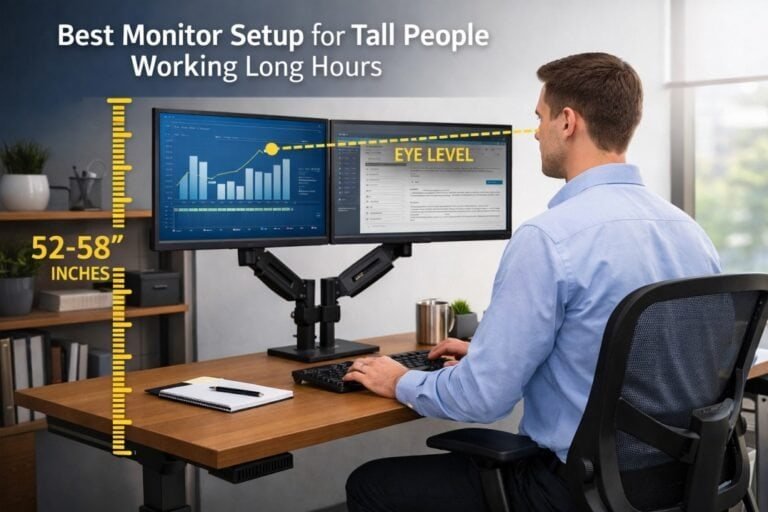
Remember, even the best anti-fatigue mats for tall people cannot compensate for incorrect monitor height. Review proper screen alignment in our monitor height guide for tall people.
How Anti-Fatigue Mats Fit Into a Complete Ergonomic Setup
The correct order of optimization:
- Set desk height properly
- Adjust monitor height
- Ensure keyboard alignment
- Add floor support
Mats complement standing desks — they do not replace structural alignment. According to NIOSH standing workstation ergonomics guidance, prolonged static standing increases lower-limb discomfort, making proper floor support essential.
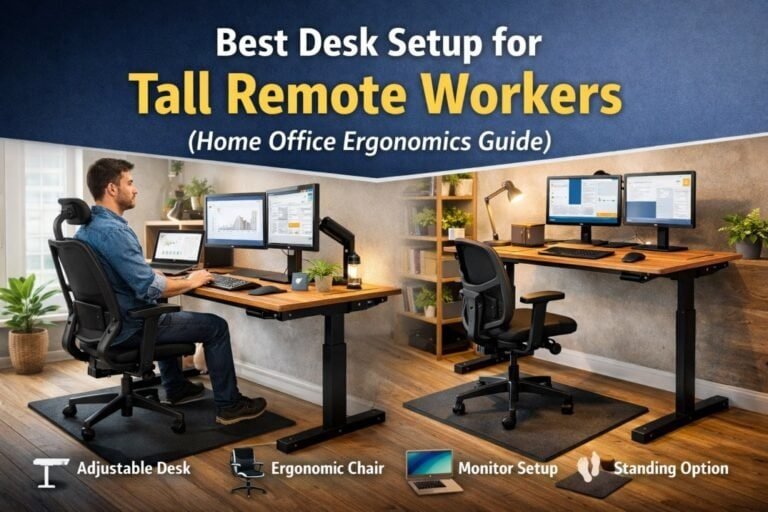
For a complete overview, see our guide to best ergonomic desk setup for tall people.
FAQs for Tall Users
Do taller people need thicker mats?
Yes. Taller individuals typically benefit from 0.75″–1″ mats due to higher load transfer through the heel.
Are expensive mats worth it?
For tall users standing daily, yes. High-density polyurethane lasts significantly longer.
Can anti-fatigue mats help lower back pain?
When paired with proper desk height and posture, they reduce compressive fatigue that contributes to lumbar strain.
Conclusion
Choosing one of the best anti-fatigue mats for tall people is not about comfort alone — it is about reducing joint load, preserving circulation, and supporting long-term standing ergonomics. When combined with correct desk height, monitor positioning, and keyboard alignment, the right mat completes a fully optimized tall-user workstation.