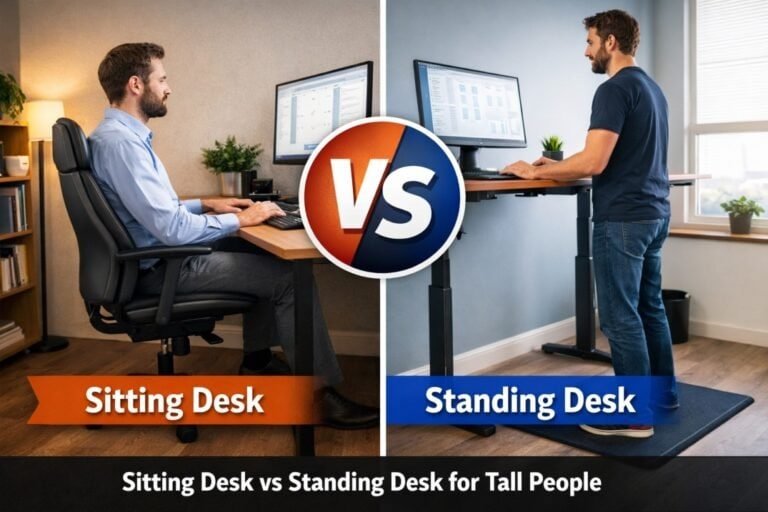
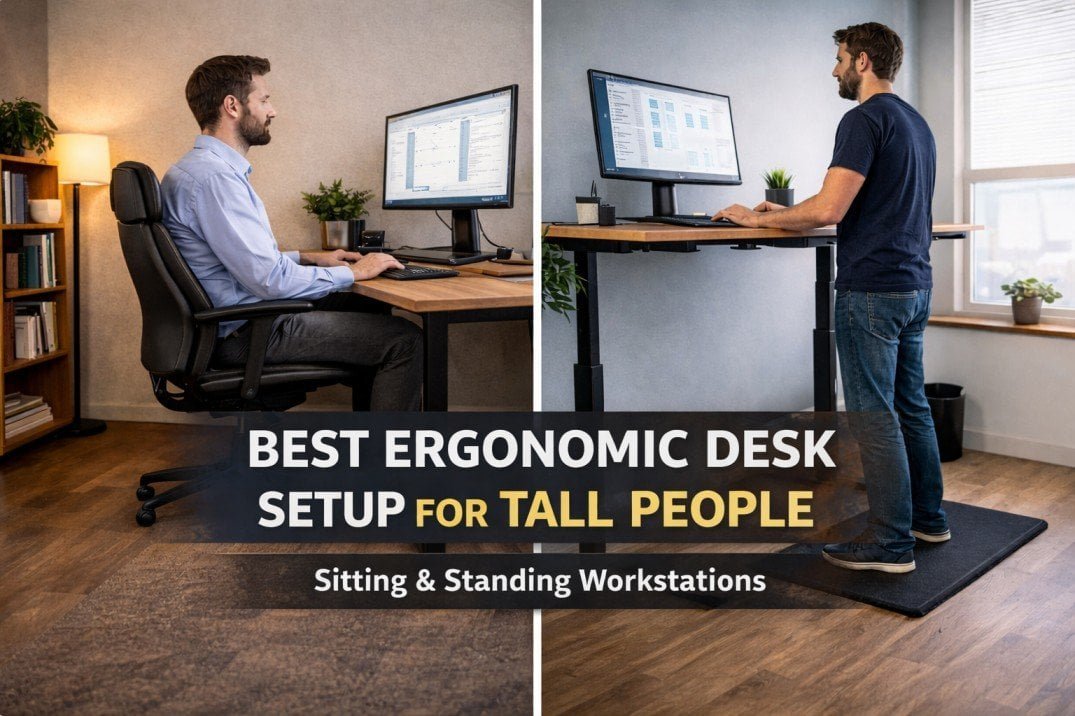
Best Ergonomic Desk Setup for Tall People: Complete 2026 Guide
Introduction
The best ergonomic desk setup for tall people is essential for preventing back pain, shoulder strain, and long-term posture problems caused by standard-sized workstations. Many desks and chairs are designed for average-height users, leaving taller individuals forced to slouch, crane their necks, or work with poorly aligned equipment due to an incorrect correct desk height for ergonomic setups.
This guide explains how tall users can build a truly ergonomic desk setup by adjusting desk height, chair position, monitor placement, and accessories correctly—whether working seated, standing, or both.
Why Ergonomics Matter More for Tall People
Tall users experience unique ergonomic challenges that shorter users often do not, including:
- Desks that sit too low, causing hunching
- Monitors positioned below eye level
- Chairs that lack adequate seat depth or back support
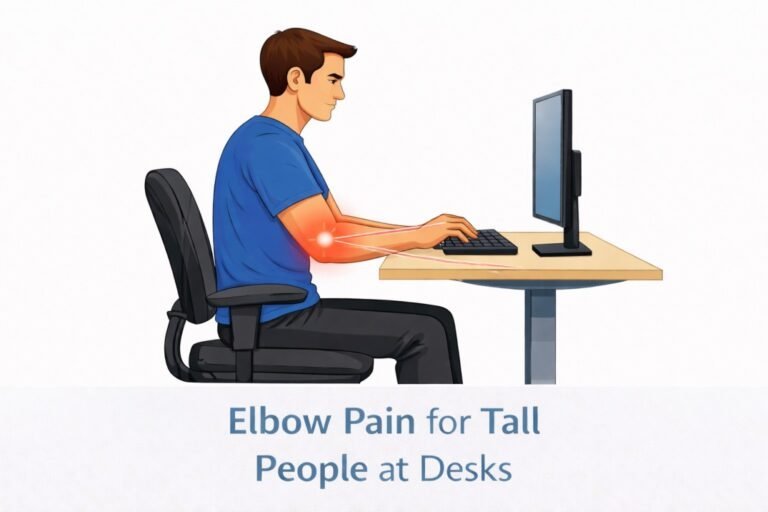
- Wrist and elbow strain from improper arm angles
Without a properly designed ergonomic desk setup, tall people face a higher risk of chronic neck pain, lower back issues, and reduced productivity.
Accessories play a critical role in maintaining neutral posture, which is why we also recommend reviewing the best desk accessories for tall people with neck and shoulder pain as part of a complete setup.
According to ergonomic research published by the National Institute for Occupational Safety and Health, maintaining neutral joint alignment and proper desk height is critical for reducing musculoskeletal strain during prolonged desk work.
Ideal Desk Height for Tall People
An ergonomic desk must accommodate proper arm and wrist alignment. Understanding the correct standing desk height for tall people is essential for preventing shoulder strain, wrist discomfort, and long-term posture issues.
Recommended Desk Height Guidelines
- Elbows should rest at 90–100 degrees
- Forearms should remain parallel to the floor
- Wrists should stay neutral while typing
For tall users (6’0”+), this typically requires:
- Seated desk height: 29–32 inches
- Standing desk height: 44–50 inches (depending on height)
Adjustable standing desks are strongly recommended, as many fixed desks cannot reach adequate heights for taller users.
When fixed-height desks sit too high, installing one of the best keyboard trays for tall people creates proper forearm support and prevents shoulder elevation.
Many tall professionals improve posture significantly by switching to one of the best desk converters for tall people that offers extended vertical range.
Proper Chair Setup for Tall Users
A chair is just as important as the desk.
Chair Features Tall People Need
- Adjustable seat height and depth
- High backrest with lumbar support
- Adjustable armrests
- Weight and height rating that supports taller frames
Chair Positioning Tips
- Feet flat on the floor (or footrest if needed)
- Knees at or slightly below hip level
- Lower back fully supported
A poorly fitted chair can negate even the best ergonomic desk setup for tall people.
Monitor Height and Screen Positioning
Incorrect monitor height is one of the most common ergonomic mistakes tall users make.
Monitor Setup Best Practices
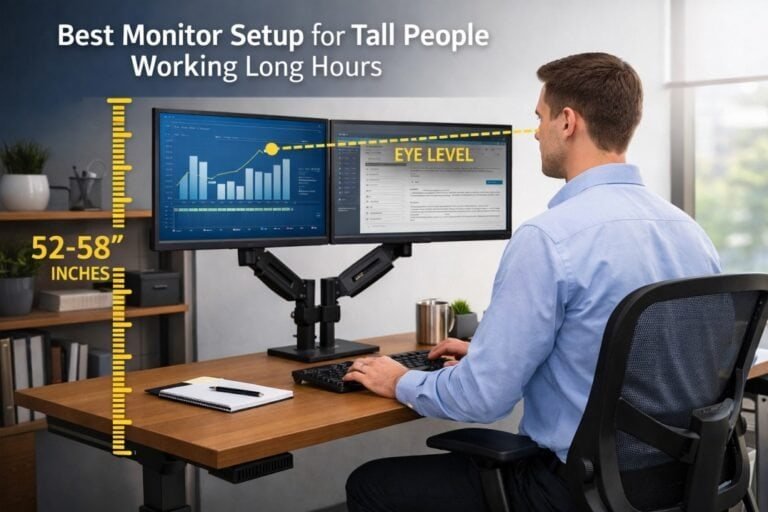
- Top of the screen at or slightly below eye level
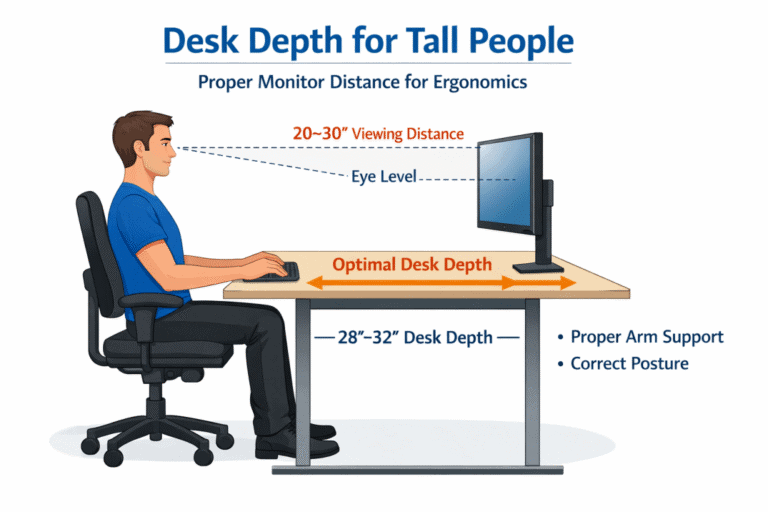
- Screen distance: 20–30 inches from eyes
- Dual monitors aligned at the same height
Tall users often need monitor arms or risers to achieve correct positioning, especially when using standing desks.
Keyboard, Mouse, and Arm Alignment
Proper input positioning reduces wrist, elbow, and shoulder strain.
Best Practices
- Keyboard positioned directly in front of the body
- Mouse at the same height as the keyboard
- Elbows close to the body
- Shoulders relaxed, not raised
Ergonomic keyboards and vertical mice can further improve comfort for tall users working long hours.
Standing Desk Setup Tips for Tall People
Standing desks offer benefits, but only when used correctly.
Standing Ergonomic Guidelines
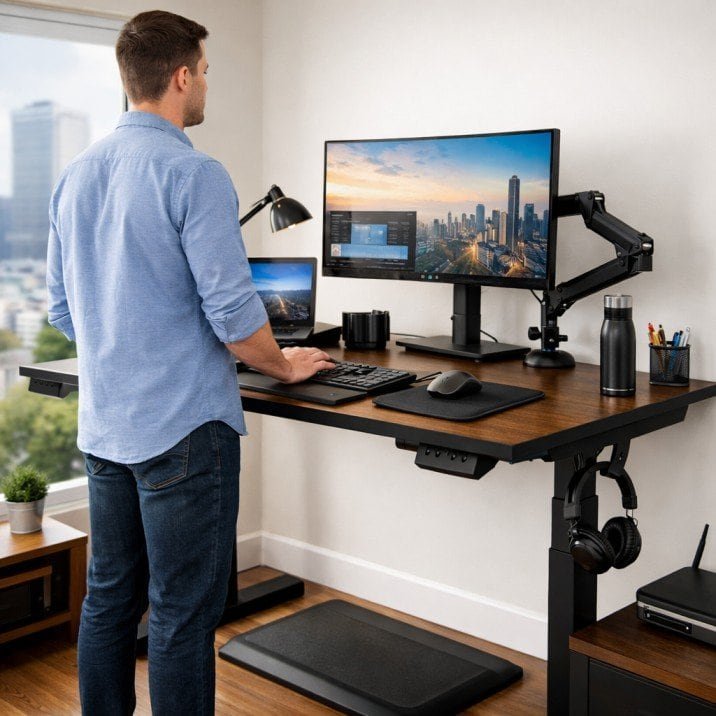
- Desk height aligned with elbow height
- Monitor raised to eye level
- Anti-fatigue mat under feet
- Weight evenly distributed
Avoid standing all day. The best ergonomic desk setup for tall people includes alternating between sitting and standing every 30–60 minutes.
Floor support matters just as much as desk height, which is why we recommend reviewing the best anti-fatigue mats for tall people.
Common Ergonomic Mistakes Tall People Should Avoid
- Using desks that do not adjust high enough
- Lowering the chair too much to compensate for desk height
- Ignoring monitor height
- Standing too long without breaks
These standing desk mistakes for tall people increase strain rather than reducing it.
Conclusion
The best ergonomic desk setup for tall people focuses on adjustability, alignment, and movement. With the right desk height, properly positioned monitors, supportive seating, and balanced sitting-standing routines, tall users can work comfortably without compromising posture or health.
Investing in an ergonomic setup is not about luxury—it is about long-term comfort, productivity, and injury prevention.
For tall users, regularly reassessing desk height, monitor position, and posture over time is essential, especially as work habits and daily routines evolve. A well-adjusted setup ensures both sitting and standing positions remain supportive and sustainable long term.