Best Keyboard Trays for Tall People (2026 Buying Guide)
Best keyboard trays for tall people are not simply smaller desk add-ons — they are precision tools for maintaining neutral wrist, elbow, and shoulder alignment at higher desk heights. Standard keyboard trays are often too shallow, lack sufficient drop range, or restrict leg clearance, making them unsuitable for taller users.
This guide explains what tall users actually need in a keyboard tray, which specifications matter most, and how to choose a tray that supports long-term wrist and shoulder health.
Why Tall People Need Adjustable Keyboard Trays
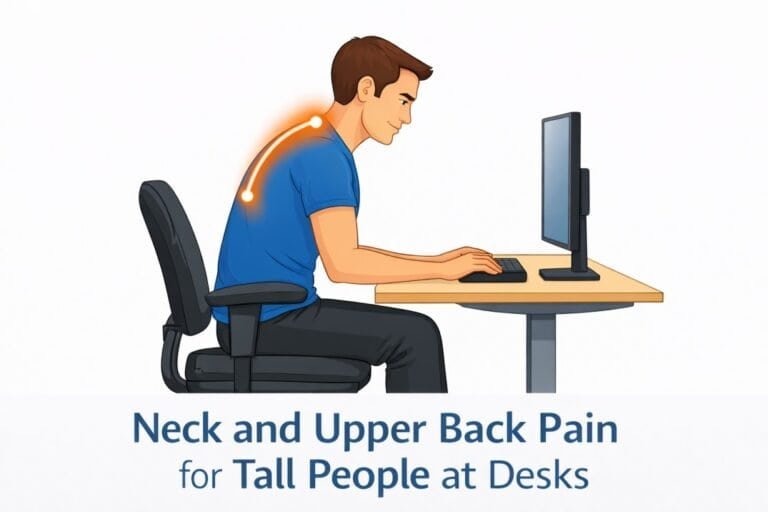
Tall users frequently raise their desks higher to match elbow height. When the desk surface rises, the keyboard rises with it — often too high for neutral wrist positioning.
Without proper keyboard positioning:
- Wrists extend upward (increasing strain)
- Shoulders elevate subtly throughout the day
- Elbows drift away from the torso
- Upper trapezius tension increases
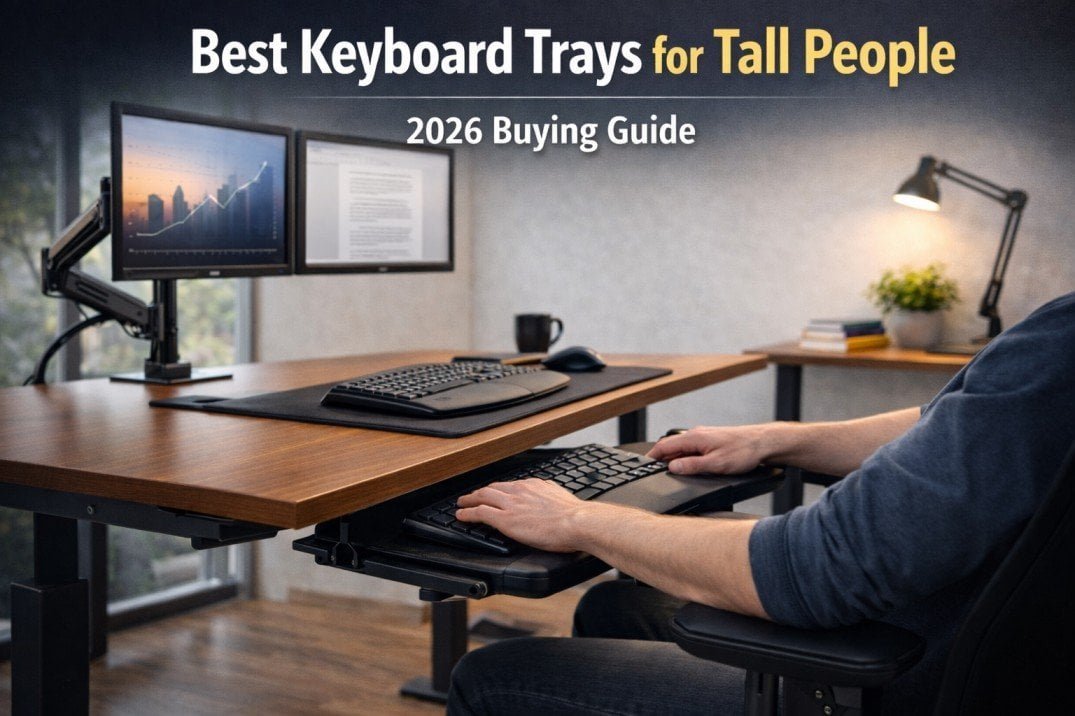
A properly designed keyboard tray allows the keyboard to sit slightly below elbow height, preserving neutral alignment.
Keyboard positioning is one of the most overlooked elements in the best ergonomic desk setup for tall people, yet it directly influences shoulder and wrist fatigue.
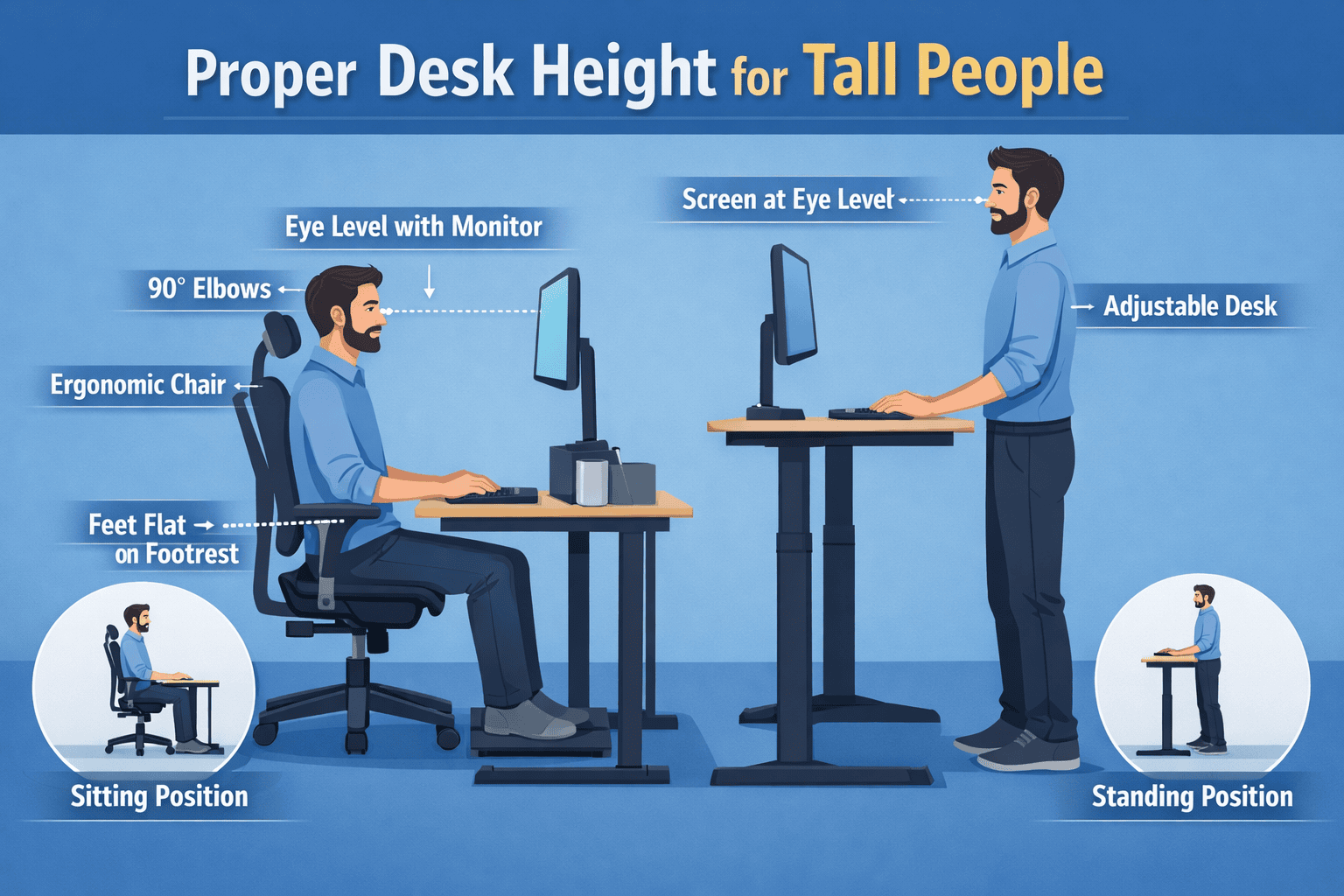
As explained in our complete guide to best desk height for tall people, correct elbow alignment is the foundation of an ergonomic workspace.
Best Keyboard Trays for Tall People: What to Look For
Not all trays work for taller individuals. Focus on these critical specifications:
1. Vertical Drop Range (Most Important)
Tall users need trays that drop at least 5–7 inches below the desk surface.
Why it matters:
- Prevents elevated shoulders
- Reduces wrist extension
- Allows proper forearm support
Trays with minimal drop range often fail tall users even if labeled “ergonomic.”
2. Full-Size Platform Depth
Look for trays that support:
- Full-size keyboards
- Separate wrist rests (optional)
- Mouse extension or side platform
Shallow trays force awkward wrist positioning. Shallow desks compound keyboard positioning issues, as discussed in our guide on desk depth for tall people, where limited surface area often forces compromised posture.
3. Leg Clearance and Knee Space
Tall users typically require:
- Greater thigh clearance
- Adjustable mounting tracks
- Minimal under-desk obstruction
Before installing a tray, verify that it will not reduce knee space when seated.
4. Tilt and Angle Adjustability
A slight negative tilt (front edge lower than back) helps maintain neutral wrist posture. This becomes especially important for tall users working long hours.
Poor wrist alignment can indirectly contribute to shoulder elevation and neck and upper back pain for tall people, especially during extended typing sessions.
When comparing the best keyboard trays for tall people, vertical adjustment range and negative tilt capability matter more than brand name.
Keyboard Trays vs Fixed Desk Height Adjustments
Many tall users try to solve wrist discomfort by lowering the entire desk. This often creates new problems with monitor alignment.
The better solution is separating:
- Monitor height control (via monitor arms)
- Keyboard height control (via adjustable trays)
After adjusting your tray, ensure your screen aligns properly using our monitor height guide for tall people.
When paired with the best monitor arms for tall people, adjustable keyboard trays allow independent control of screen and typing height for true ergonomic balance.
Common Keyboard Tray Mistakes Tall People Should Avoid
❌ Choosing trays with insufficient drop range
❌ Ignoring knee clearance
❌ Using trays without proper negative tilt
❌ Installing trays too far forward
❌ Relying on shallow “sliding shelf” designs
Several of these issues overlap with the broader setup errors outlined in our article on standing desk mistakes tall people should avoid, particularly when desk height is not calibrated first.
Many tall professionals purchase standard trays without checking drop range, which prevents them from truly benefiting from the best keyboard trays for tall people.
Are Keyboard Trays Necessary for Standing Desks?
For standing use, trays are often unnecessary if desk height is correct. However, for seated work at elevated desk heights, trays are highly beneficial for tall users.
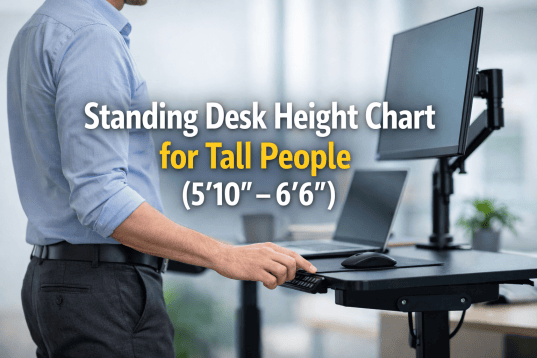
Proper keyboard alignment starts with setting the best standing desk height for tall people, then fine-tuning typing position with an adjustable tray if needed.
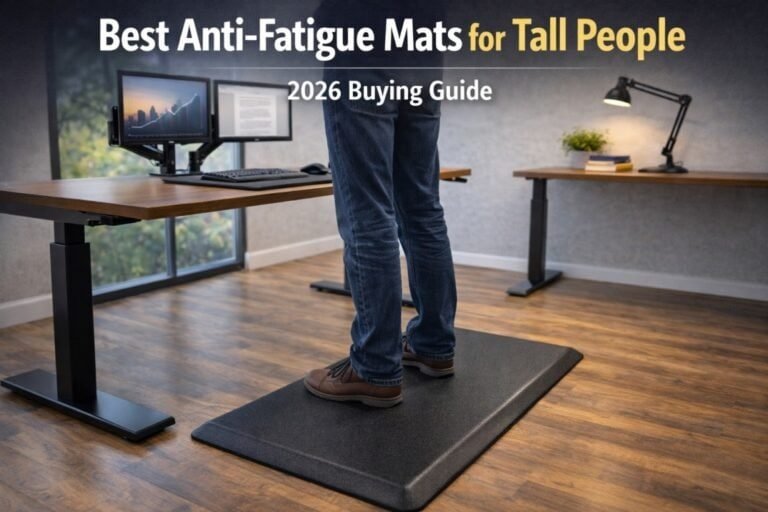
If you alternate between sitting and standing, pairing a tray with anti-fatigue mats for tall people improves overall comfort.
Evidence-Based Ergonomic Perspective
Occupational ergonomics research consistently supports neutral wrist and elbow alignment to reduce musculoskeletal strain.
According to NIOSH computer workstation ergonomics guidance, maintaining neutral wrist posture and relaxed shoulders significantly reduces the risk of repetitive strain injuries.
Who Should Use a Keyboard Tray?
You likely need one if:
- You are 6’2” or taller
- Your desk height matches elbow height but typing feels elevated
- You experience wrist extension or shoulder tension
- Lowering the desk compromises monitor alignment
Final Thoughts: Are Keyboard Trays Worth It for Tall Users?
For tall individuals working long hours at desks, a properly selected keyboard tray is not a luxury — it is a corrective ergonomic tool.
When chosen correctly, keyboard trays:
- Reduce wrist extension
- Lower shoulder elevation
- Improve typing comfort
- Support long-term musculoskeletal health
Choosing one of the best keyboard trays for tall people is not about convenience — it is about correcting structural desk-height limitations.