Best Desk Accessories for Tall People With Neck and Shoulder Pain
INTRODUCTION
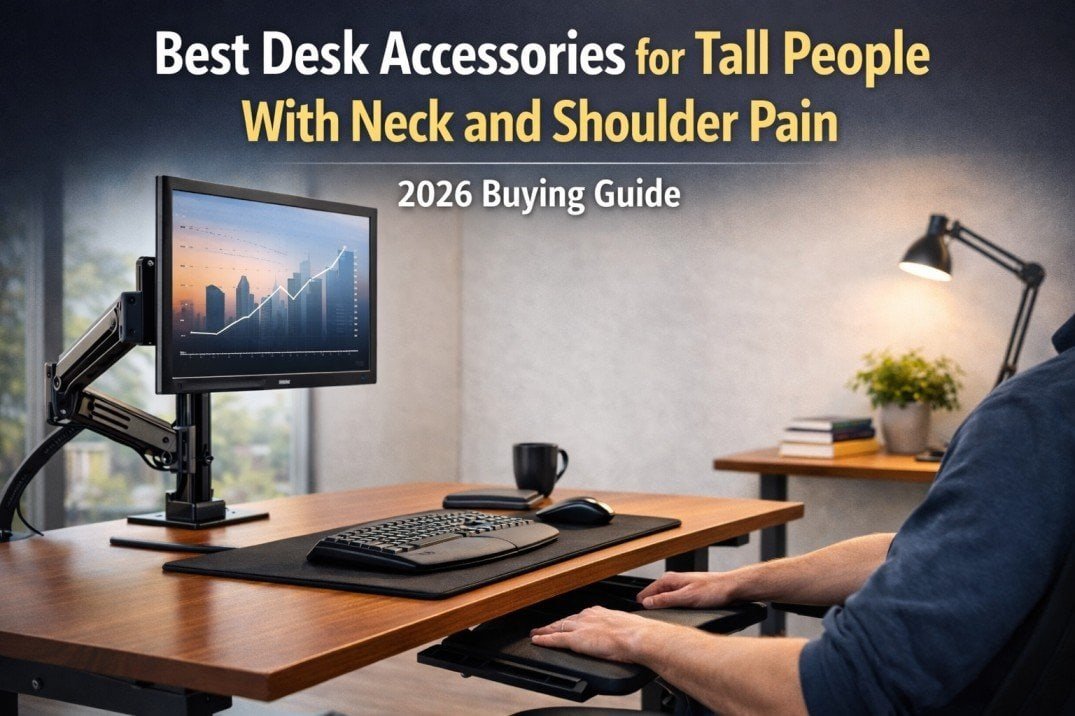
Best desk accessories for tall people with neck and shoulder pain are essential when a desk setup fails to scale properly for taller body proportions. Standard desks, monitors, and chairs are designed around average-height users, leaving tall people vulnerable to forward head posture, elevated shoulders, and chronic upper-body strain during desk work.
The right desk accessories can dramatically reduce this strain — but only if they address the underlying ergonomic mismatches rather than masking symptoms. This guide focuses on desk accessories that actually solve neck and shoulder pain for tall people, not generic add-ons that look ergonomic but fail in real-world use.
Many of these issues originate from incorrect desk sizing, which is why understanding the best desk height for tall people is essential before choosing accessories.
Best Accessories for Tall People With Neck and Shoulder Pain
Choosing the right desk accessories is not about adding more gear — it’s about correcting height mismatches, supporting longer limbs, and restoring neutral posture. For tall users, the right accessories reduce strain where desks alone fall short.
Why Desk Accessories for Tall People With Neck and Shoulder Pain Matter
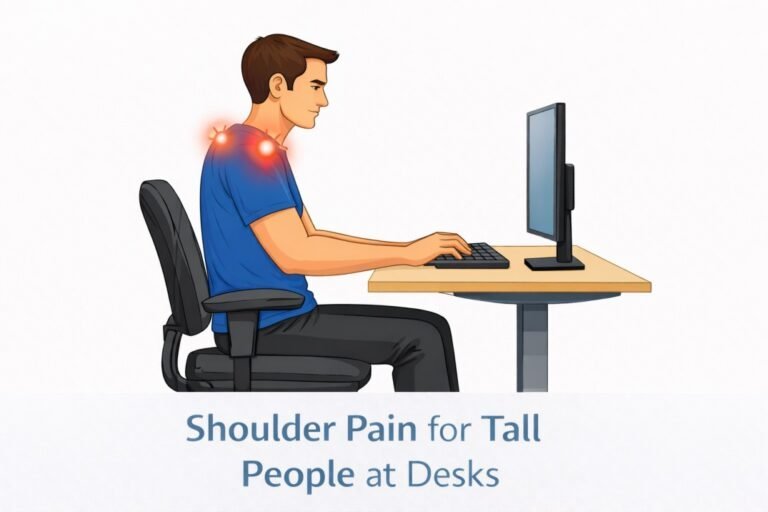
Tall users sit higher, reach farther, and place more load on the upper body than average-height users. Without proper accessories:
- Monitors sit too low
- Arms remain unsupported
- Neck muscles stay engaged
- Shoulder tension becomes constant
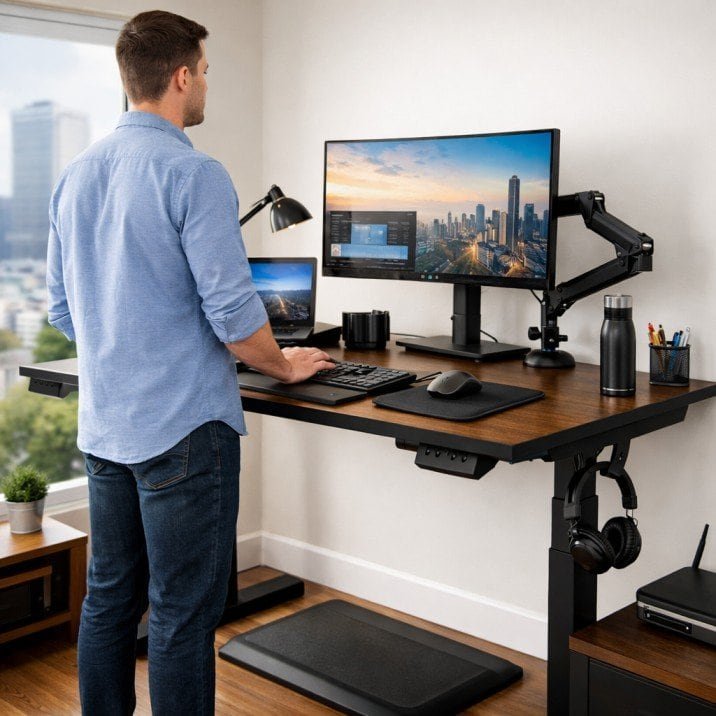
This is why accessories play a larger corrective role for tall people than posture reminders or stretching routines. When selected correctly, the best desk accessories for tall people with neck and shoulder pain work together to support proper monitor height, forearm positioning, and relaxed shoulder posture throughout the workday.
These problems are discussed in detail in our guide on neck and upper back pain for tall people at desks, where setup issues are often the root cause.
Monitor Arms — The Most Important Accessory for Neck Relief
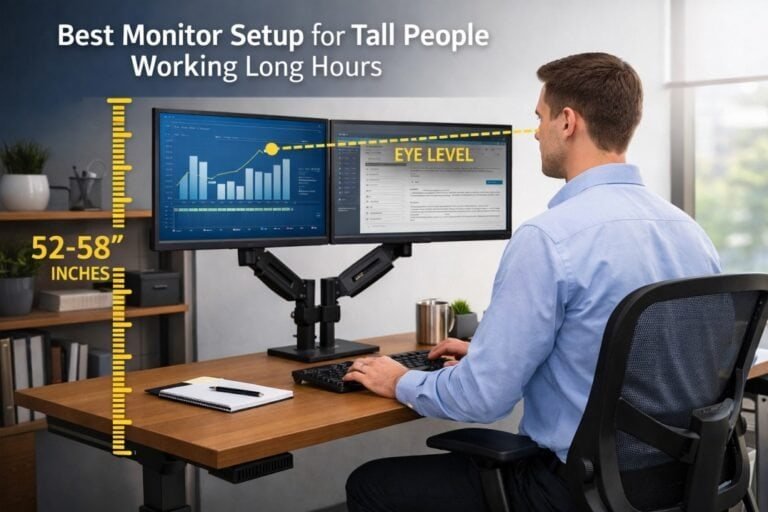
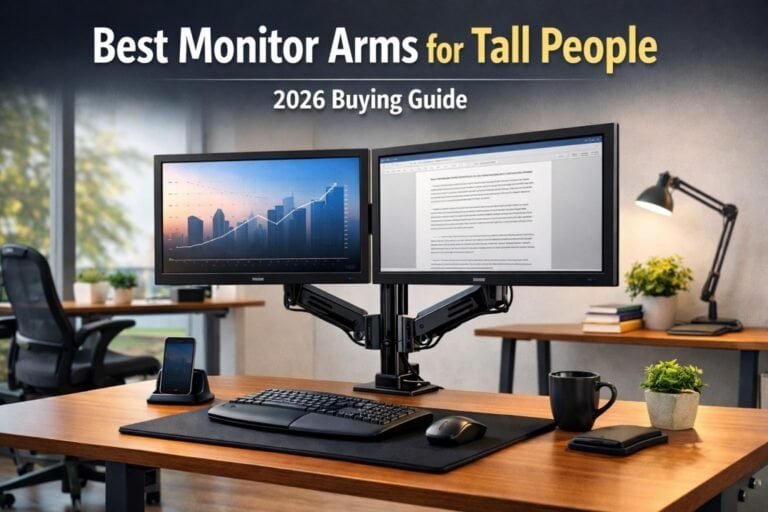
For tall users dealing with chronic upper-body strain, the best desk accessories for tall people with neck and shoulder pain are the ones that correct monitor height, support the forearms, and prevent shoulder elevation during desk work. A quality monitor arm allows tall users to raise the screen to true eye level while maintaining proper viewing distance. Fixed monitor stands rarely provide enough vertical adjustment for taller torsos.
Why monitor arms help:
- Prevent forward head posture
- Reduce neck flexion
- Improve screen centering
Correct screen placement is critical, which is explained further in our guide to the best monitor setup for tall people working long hours.
Keyboard Trays — When Desk Height Can’t Be Adjusted Enough
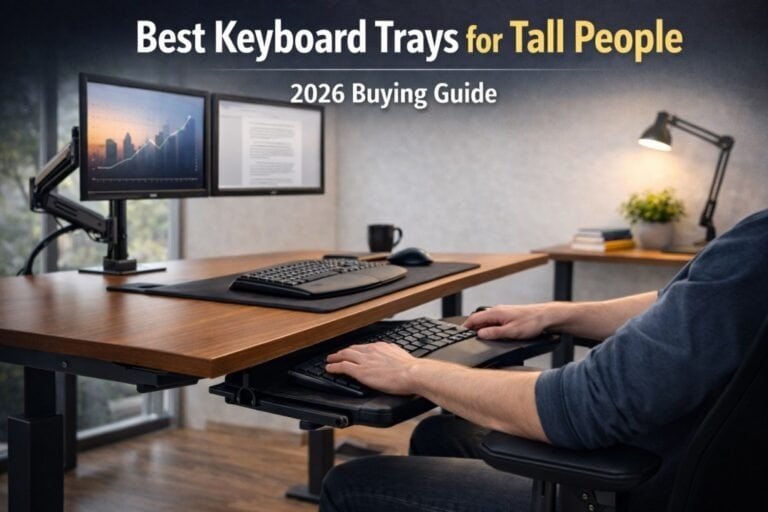
For tall users working at non-adjustable desks, keyboard trays can reduce shoulder elevation by lowering the typing surface closer to elbow height.
However, not all keyboard trays work for tall people.
What to look for:
- Height-adjustable mounting
- Wide platform for natural arm spacing
- Negative tilt support
This becomes especially important for users dealing with shoulder pain for tall people, where arm elevation is a major contributor.
Forearm Support and Desk Edge Cushions
Hard desk edges create pressure points along the forearms, increasing elbow and wrist strain. For tall users who rest their arms while typing, forearm support can reduce muscle load significantly.
Effective options include:
- Full-width forearm supports
- Soft desk edge cushions
- Wide mouse platforms
Poor forearm support is a common trigger for elbow pain for tall people, especially during long work sessions.
Choosing the right desk accessories for tall people with neck and shoulder pain helps reduce muscle load, improve posture, and prevent chronic discomfort during long desk sessions.
Footrests — An Underrated Tool for Shoulder Alignment
Footrests are often overlooked, but for tall users working at slightly low desks, they can help stabilize posture by improving lower-body alignment.
When the lower body is unsupported:
- The upper body compensates
- Shoulders tense
- Neck strain increases
Footrests are most effective when paired with proper desk and chair height.
Accessories That Don’t Actually Help Tall Users
Not all “ergonomic” accessories are useful for tall people.
Be cautious with:
- Fixed-height monitor risers
- Narrow armrests
- Small mouse pads with wrist rests
Many of these mistakes are explained in standing desk mistakes tall people should avoid, especially when transitioning between sitting and standing.
Choosing Accessories That Work Together
Accessories should support the desk setup — not fight it.
A good system includes:
- Desk height matched to elbow height
- Monitor raised to eye level
- Arms lightly supported
- Neutral neck posture
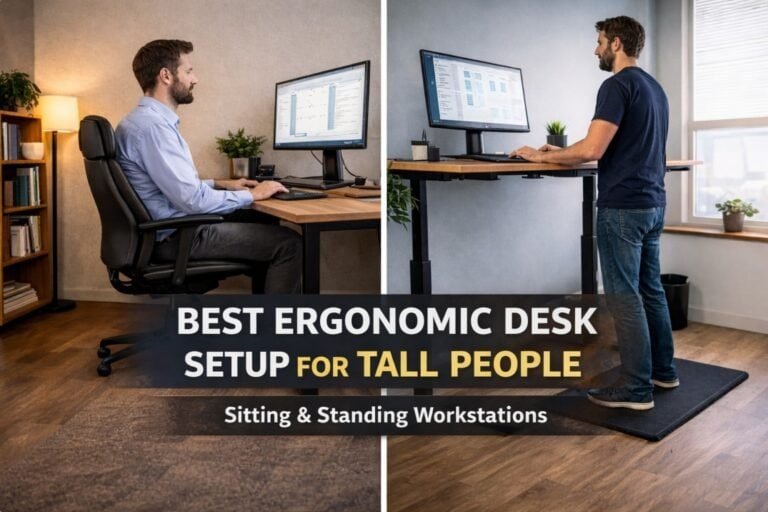
For a complete reference, see the best ergonomic desk setup for tall people, which explains how each component interacts.
Evidence-Based Ergonomic Perspective
Research in occupational ergonomics consistently shows that proper monitor height and forearm support reduce upper-body muscle activity during desk work.
According to the National Institute for Occupational Safety and Health (NIOSH), reducing sustained neck flexion and unsupported arm posture significantly lowers the risk of musculoskeletal strain during computer use.
Final Thoughts — Accessories Should Fix the Setup, Not Mask Pain
For tall users, neck and shoulder pain is rarely caused by weak muscles or poor habits. It is almost always the result of a workstation that does not scale to body height.
The right desk accessories correct these mismatches and allow tall users to work comfortably without constant tension or fatigue.