Standing Desk Accessories for Tall People: Must-Have Ergonomic Upgrades
Introduction
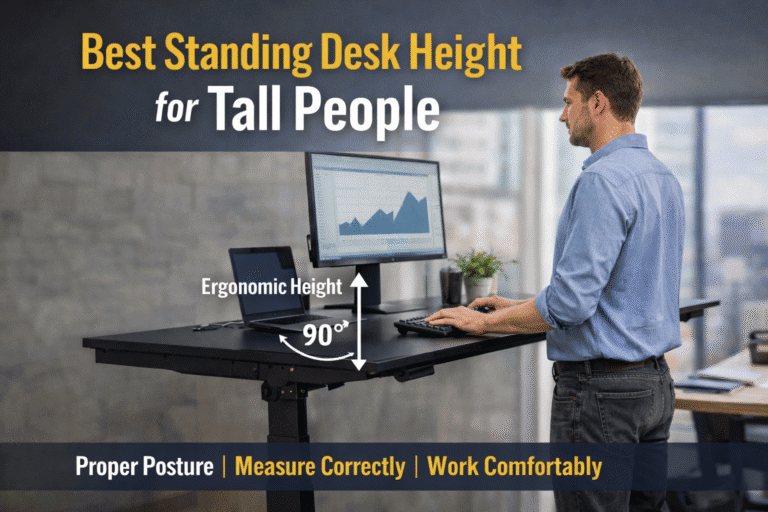
A standing desk alone is not enough to create an ergonomic workspace—especially for tall people. Even with the correct desk height setup for tall users, missing or poorly chosen accessories can lead to neck strain, wrist discomfort, poor posture, and fatigue over time. In 2026, tall professionals increasingly rely on standing desk accessories designed for extended height ranges to improve comfort, stability, and long-term ergonomic health.
Standing desk accessories for tall people are designed to bridge the gap between desk height, monitor position, and body alignment. From monitor arms to anti-fatigue mats, the right accessories help tall users maintain neutral posture, reduce strain, and stay comfortable throughout the workday.
This guide breaks down the most important standing desk accessories for tall people, explains why they matter, and shows how to choose options that actually work for taller body proportions.
Why Tall People Need Specialized Standing Desk Accessories
Tall users face unique ergonomic challenges that average-height setups do not address. Desks may not rise high enough, monitors sit too low, and standard accessories often fail to scale properly for longer limbs and higher eye levels.
Without the right accessories:
- Monitors sit below eye level, forcing neck flexion
- Keyboards and mice strain wrists and shoulders
- Standing for long periods becomes uncomfortable
- Small posture issues compound into long-term pain
Proper standing desk accessories for tall people help correct these issues by extending adjustability, improving alignment, and supporting healthier movement patterns.
If you’re not ready to invest in a full electric desk, consider one of the best desk converters for tall people to achieve proper standing height without replacing your entire workstation.
Monitor Arms (Essential for Tall Users)
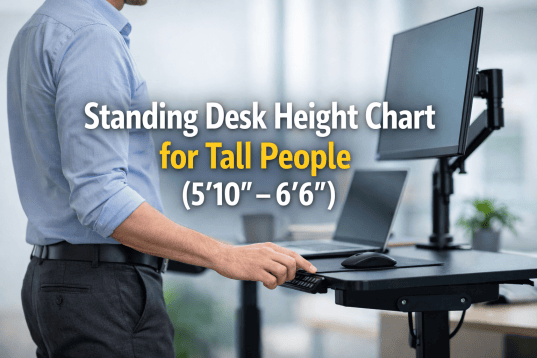
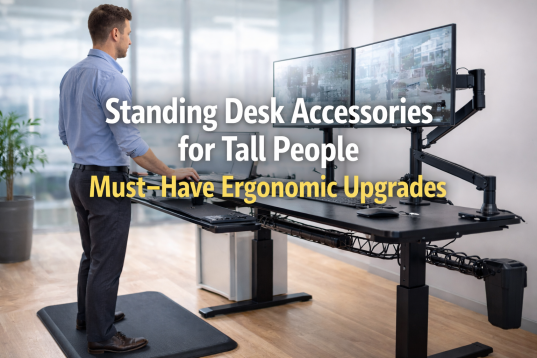
Monitor height is one of the most common problems tall people experience when using standing desks. Even tall desks often leave monitors too low once placed on standard stands.
Why Monitor Arms Matter
- Allow precise vertical adjustment
- Keep the top of the screen at or slightly below eye level
- Improve viewing distance and neck posture
- Free up desk space
Tall users should look for monitor arms with extended height range and strong weight capacity, especially when using large displays.
For users experiencing persistent upper-body tension, our guide to the best desk accessories for tall people with neck and shoulder pain explains how these tools work together to reduce strain during long desk sessions.
Without proper arm support, tall users often experience increased muscle load, which can result in shoulder strain during long desk hours. Over time, this lack of forearm support can also contribute to chronic elbow strain during desk work, especially for tall users who rely heavily on their arms to stabilize posture while standing. Among standing desk upgrades, monitor arms designed for tall people are essential for aligning screen height as desks move between sitting and standing positions.
Tip: If your monitor cannot reach eye level while standing, no desk height adjustment will fix your posture.
Keyboard Trays and Ergonomic Input Positioning
Many tall users raise their desk to accommodate elbow height, only to find that keyboard placement still feels awkward. This often leads to shoulder elevation or wrist extension.
Benefits of Keyboard Trays for Tall People
- Allow lower keyboard positioning without lowering the desk
- Support neutral wrist angles
- Reduce shoulder tension
- Improve typing comfort during long sessions
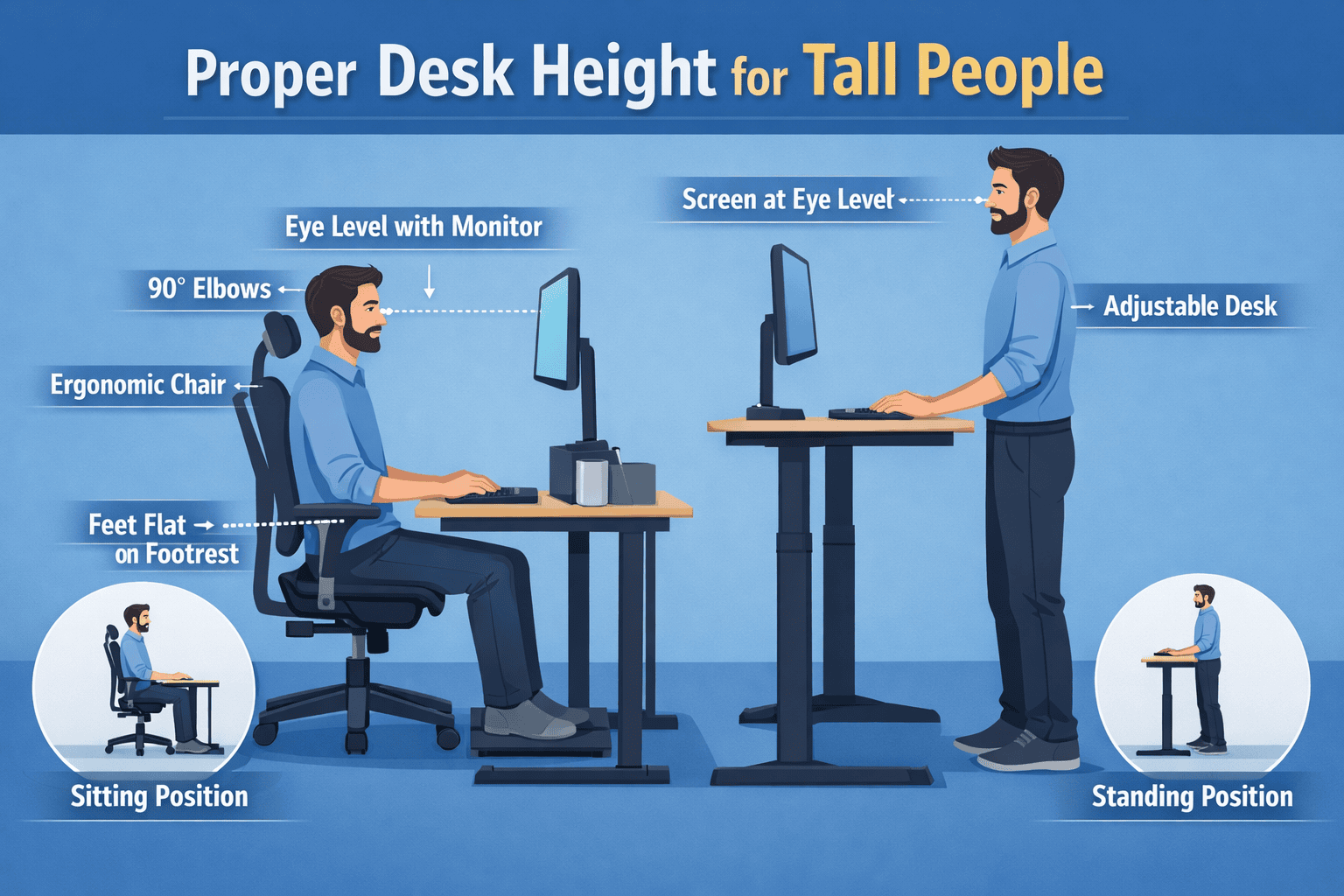
Adjustable keyboard trays with negative tilt support work best for tall users, especially when paired with a properly adjusted standing desk height for tall people.
Anti-Fatigue Mats (Non-Negotiable for Standing Comfort)
Standing without proper floor support increases pressure on the feet, knees, and lower back—particularly for taller individuals with higher body weight distribution. According to ergonomic research published by occupational health authorities, improper workstation setup is a leading contributor to neck, shoulder, and lower back strain for standing desk users.
What to Look For
- Thick, supportive foam (not overly soft)
- Beveled edges for safety
- Large surface area for natural movement
Anti-fatigue mats help tall users:
- Reduce lower body fatigue
- Encourage subtle movement
- Maintain standing comfort for longer periods
This accessory becomes even more important when alternating between sitting and standing throughout the day. For prolonged standing sessions, many professionals invest in one of the best anti-fatigue mats for tall people to reduce lower-body strain.
Footrests and Movement Accessories
Standing still is not ergonomic. Tall people benefit from accessories that promote movement and posture variation.
Useful Options
- Adjustable footrests
- Balance boards (for experienced users)
- Rocker bases
These tools allow tall users to shift weight, bend one leg, or change stance—reducing lower back strain and improving circulation.
Cable Management and Workspace Organization
As desk height increases, cable tension becomes more noticeable. Poor cable management can pull devices, limit desk movement, or create clutter.
Why This Matters for Tall Setups
- Taller desk heights require longer cable slack
- Standing desks move more frequently
- Organized cables reduce wear and device strain
Cable trays, adhesive clips, and under-desk baskets help maintain a clean, functional workspace at taller standing heights.
Accessories That Work Best When Paired With the Right Desk
Even the best accessories cannot compensate for a desk that does not meet tall-user height requirements. If your desk struggles to align with elbow height or lacks stability at maximum extension, accessories only provide partial relief. Accessories work best when paired with ergonomic chairs for tall users that provide a stable seated foundation.
For seated transitions, many tall professionals add one of the best keyboard trays for tall people to maintain ergonomic elbow positioning throughout the day.
For a complete ergonomic setup, accessories should complement a desk that already meets tall-user specifications. If your desk is too low for your height category, review our tall desk height data study before compensating with accessories.
Common Accessory Mistakes Tall People Should Avoid
- Using fixed monitor stands instead of adjustable arms
- Ignoring keyboard height and wrist alignment
- Standing without a supportive mat
- Choosing accessories designed for sitting-only setups
- Assuming “one-size-fits-all” ergonomic products will scale properly
Avoiding these standing desk mistakes for tall people ensures accessories actually improve comfort rather than introduce new issues.
Frequently Asked Questions
Do tall people really need monitor arms?
Yes. Monitor arms are one of the most important standing desk accessories for tall people because they allow proper eye-level positioning.
Can accessories fix a desk that is too short?
No. Accessories help optimize ergonomics, but the desk itself must reach the correct standing height.
Should accessories be added all at once?
Start with essentials—monitor arm and anti-fatigue mat—then expand based on comfort needs.
Conclusion
Standing desk accessories for tall people play a critical role in building a comfortable and sustainable workspace. When chosen correctly, these tools enhance posture, reduce strain, and allow tall users to take full advantage of standing desks without discomfort.
By pairing the right accessories with a properly sized desk and making small adjustments over time, tall users can create a standing workstation that supports long-term health, productivity, and comfort.