Are Standing Desks Good for Tall People? Benefits, Risks, and Best Practices (2026 Guide)
Introduction
Are standing desks good for tall people? Many taller professionals ask this question when looking to improve posture, reduce back strain, and create a more ergonomic workstation. While standing desks offer several ergonomic benefits, tall users often face unique challenges related to desk height, monitor positioning, and long-term comfort if the setup is not properly adjusted.
Many standing desks on the market are built around average height ranges, which can create ergonomic challenges for taller users. Are standing desks good for tall people? This depends on proper desk height, adjustability range, and ergonomic setup. If a desk does not adjust high enough, it can force awkward posture and negate potential health benefits. This guide explains whether standing desks are truly good for tall people, outlines the benefits and risks, and shares best practices for using them correctly.
Are Standing Desks Good for Tall People?
Standing desks can be very beneficial for tall people, but only when they offer sufficient height adjustability and are set up correctly. The core issue is not standing itself, but alignment.
For tall users, an improperly adjusted standing desk can lead to shoulder tension, wrist strain, and lower back discomfort. When the desk height matches elbow height and the monitor is positioned correctly, standing desks can support neutral posture and reduce long-term musculoskeletal stress.
In short, standing desks are good for tall people when they are chosen carefully and configured properly. Our guide on Standing Desk vs Sitting Desk for Tall People can help you to find the comparison in details.
Benefits of Standing Desks for Tall Users
When the desk height and accessories are properly matched to body dimensions, tall users can experience several benefits.
Improved Posture Support
Standing desks allow tall people to avoid hunching forward over low desk surfaces. With the correct standing desk height for tall people, the spine remains upright and shoulders stay relaxed.
Reduced Back and Neck Strain
Sitting for long periods often compresses the lower spine, especially for tall users using standard desks. Standing desks help redistribute load and encourage more natural spinal alignment.
Increased Movement and Circulation
Standing work naturally encourages small movements such as shifting weight and changing posture. This improves circulation and reduces stiffness, which is particularly beneficial for tall users who often feel cramped in seated setups.
When set up correctly, standing desks can be good for tall people by supporting healthier posture and reducing long-term discomfort.
Potential Risks of Standing Desks for Tall People
Despite their advantages, standing desks are not automatically safe for tall people if used incorrectly.
Insufficient Height Range
One of the most common standing desk mistakes for tall people is using a desk that does not rise high enough. This forces users to bend forward or raise their shoulders unnaturally.
Prolonged Standing Without Breaks
Standing all day can cause fatigue, leg discomfort, and joint stress. Tall users may feel this more intensely due to longer leverage on joints.
Poor Monitor and Accessory Placement
Even with the proper desk height for tall professionals, improper monitor positioning can strain the neck. Tall users often require monitor arms or risers to achieve proper screen alignment.
When Standing Desks Work Best for Tall People
Standing desks are most effective for tall users when they meet three conditions:
- Adequate Maximum Height
The desk must adjust to elbow height without forcing shoulder elevation. - Stability at Tall Settings
Taller setups place more stress on desk frames. Stability becomes critical. - Flexible Sit-Stand Use
Alternating between sitting and standing throughout the day reduces fatigue and supports long-term comfort.
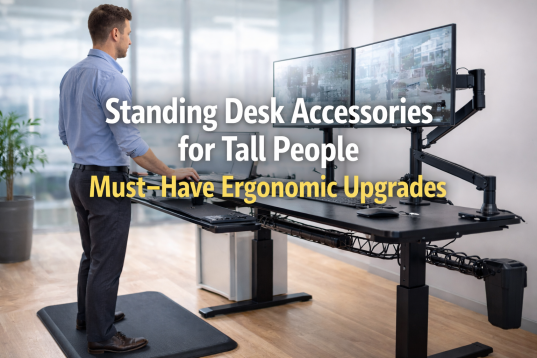
When these conditions are met, standing desks become a practical ergonomic solution rather than a liability. If you’re shopping for adjustable options that meet these height requirements, see our guide on the best standing desks for tall people.
How Tall People Can Use Standing Desks Safely
To maximize benefits and minimize risks, tall users should follow a few best practices.
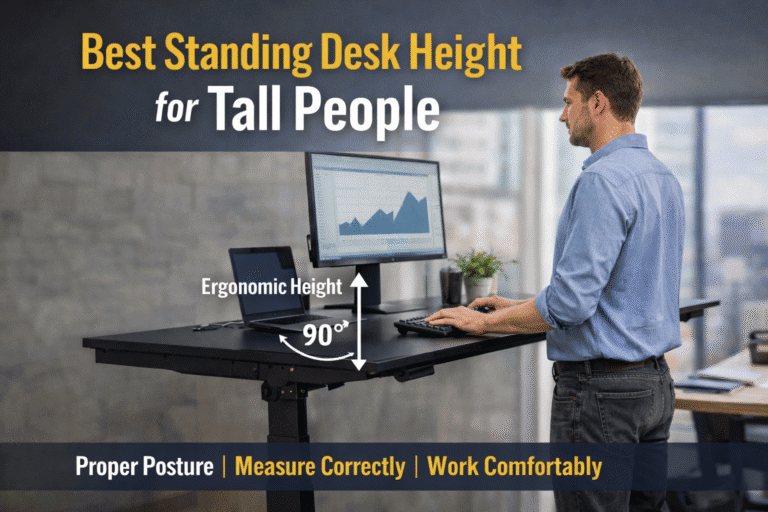
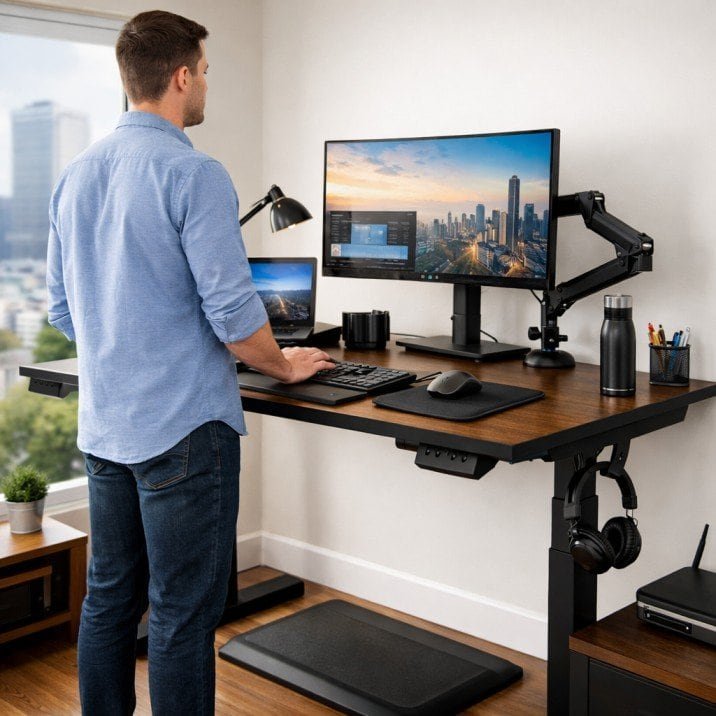
Start by setting the desk height based on elbow alignment rather than overall body height. This approach aligns with widely accepted ergonomic research, which shows that elbow-height alignment reduces strain on the shoulders, wrists, and neck during standing work.
Next, ensure the monitor is positioned at or slightly below eye level. Tall users frequently benefit from adjustable monitor arms to avoid neck strain.
Finally, avoid standing continuously. Rotating between sitting and standing every 30–60 minutes provides the best balance between movement and recovery.
If you are unsure how to calculate the correct height, refer to our detailed guide on standing desk height for tall people, which explains the process step by step.
Frequently Asked Questions
Are standing desks better than sitting desks for tall people?
Standing desks are not inherently better, but they provide more flexibility. Tall people benefit most from adjustable desks that allow both sitting and standing positions.
How high should a standing desk be for tall users?
The correct height depends on elbow position, not total height. Using elbow height ensures proper posture and comfort.
Can standing desks cause pain for tall people?
Yes, if the desk height is incorrect or if standing time is excessive. Proper setup and regular movement are essential.
Conclusion
Are standing desks good for tall people? The answer depends on choosing adjustable equipment and following proper ergonomic practices consistently. The key lies in selecting a desk with sufficient height range, maintaining proper posture, and avoiding prolonged standing without breaks.
By understanding both the benefits and risks, tall users can make informed decisions and build workstations that support comfort, productivity, and long-term health.